What did Ableton actually open up?
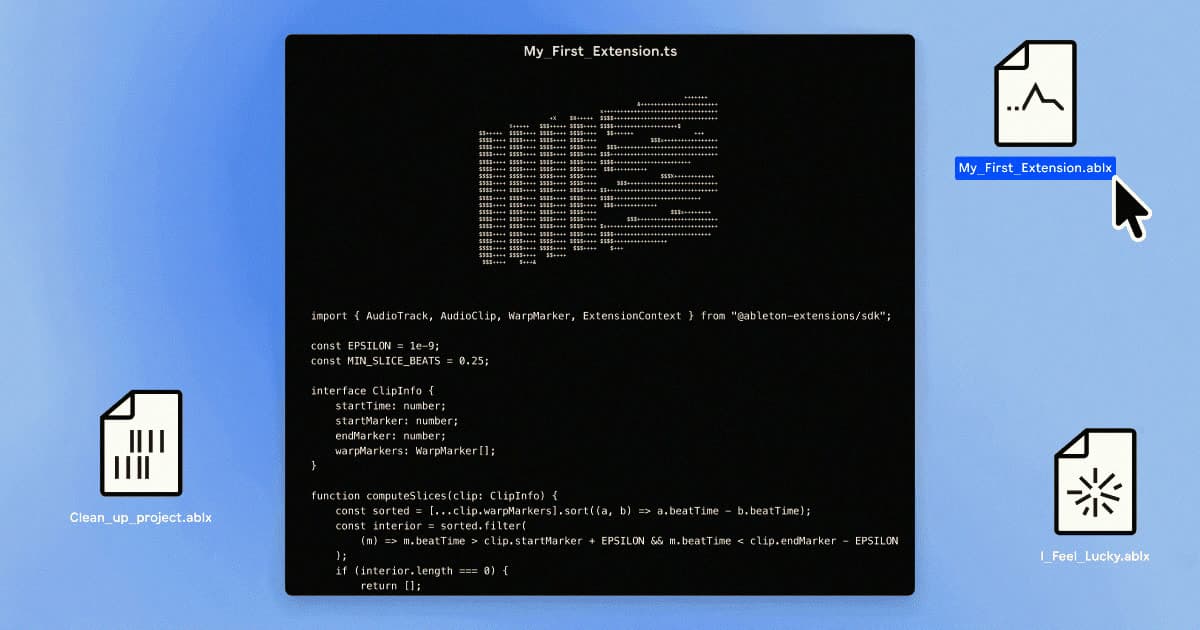
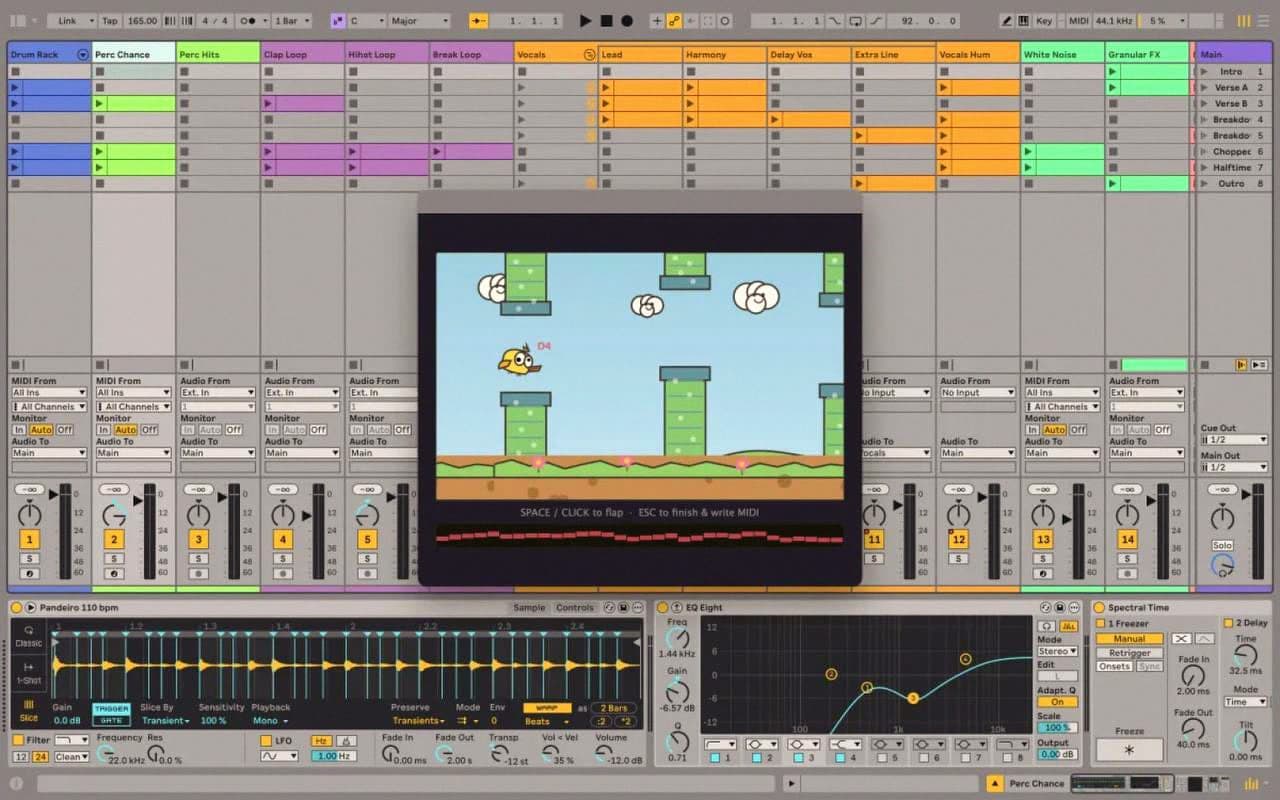
Around 12 June 2026, Ableton put its Extension SDK in the open, and the timing matters because the tools landed almost immediately. An Extension is a script you trigger from a contextual menu item inside Live. Once it runs it can reach into Live's devices, read and rewrite your Session and Arrangement, and touch the file system, with a Web view handling its interface. They are written in TypeScript on Node.js, and to author one you need Live Suite.
That last detail keeps it serious. This is not a toy plugin format, it is a real scripting surface for the people who already spend their lives in Live.
How is this different from Max for Live?
The cleanest line going around fits on a sticker: Max for Live gives you devices, Extensions gives you scripts. Max for Live is where you build an instrument or an effect, a thing that sits in your signal chain and makes sound. Extensions sit one level up, automating the boring parts of your workflow and rearranging the set itself.
Max for Live gives you devices, and Extensions gives you scripts.
Think about the difference in plain terms. A device processes audio. A script renames forty clips, strips the dead air out of a vocal take, or rebuilds a transition while you go make coffee. You no longer need to learn Max patching to bend Live to your habits.
What can you actually do with them today?
The first wave is already practical. Strip Silence (ellismosss) cleans dead air. Assign Track Name to Clips (chymeramusic) handles the naming chore everyone hates. AkStretch and PaulStretch for Live (hueypeard, olilarkin) push extreme time-stretch for those long ambient smears. There is a Transition Tool (petespaced), an MLR Grid Slicer (danthompson41) for chopped, monome-style slicing, a Chord Voicing Helper and a Chord Progression Helper (federico-pepe), and an Ableton Score Editor. The community hub at liveextensions.co is where they are being shared and found.
For a house or techno producer, the appeal is obvious. The stuff that eats your evening, silence trimming, clip naming, slicing loops, building transitions, is exactly what scripts are good at batching.