What exactly is Acid Drip?
Acid Drip is a small acid groovebox you build yourself. Lonesoulsurfer, aka Marcus Dunn, published every file on GitHub around 18 June 2026, so there is no product to buy: you source the parts, solder it up and load the code. The brain is a Raspberry Pi RP2040, a cheap dual-core microcontroller, and the clever move is using both cores at once. One core runs an acid bassline synthesizer derived from "Badass Bass," an open-source bass engine that has been floating around for roughly ten years. The other runs a drum machine based on Matt Bradshaw's DrumKid. Both engines lean on the Mozzi audio library.
How do you actually play it?
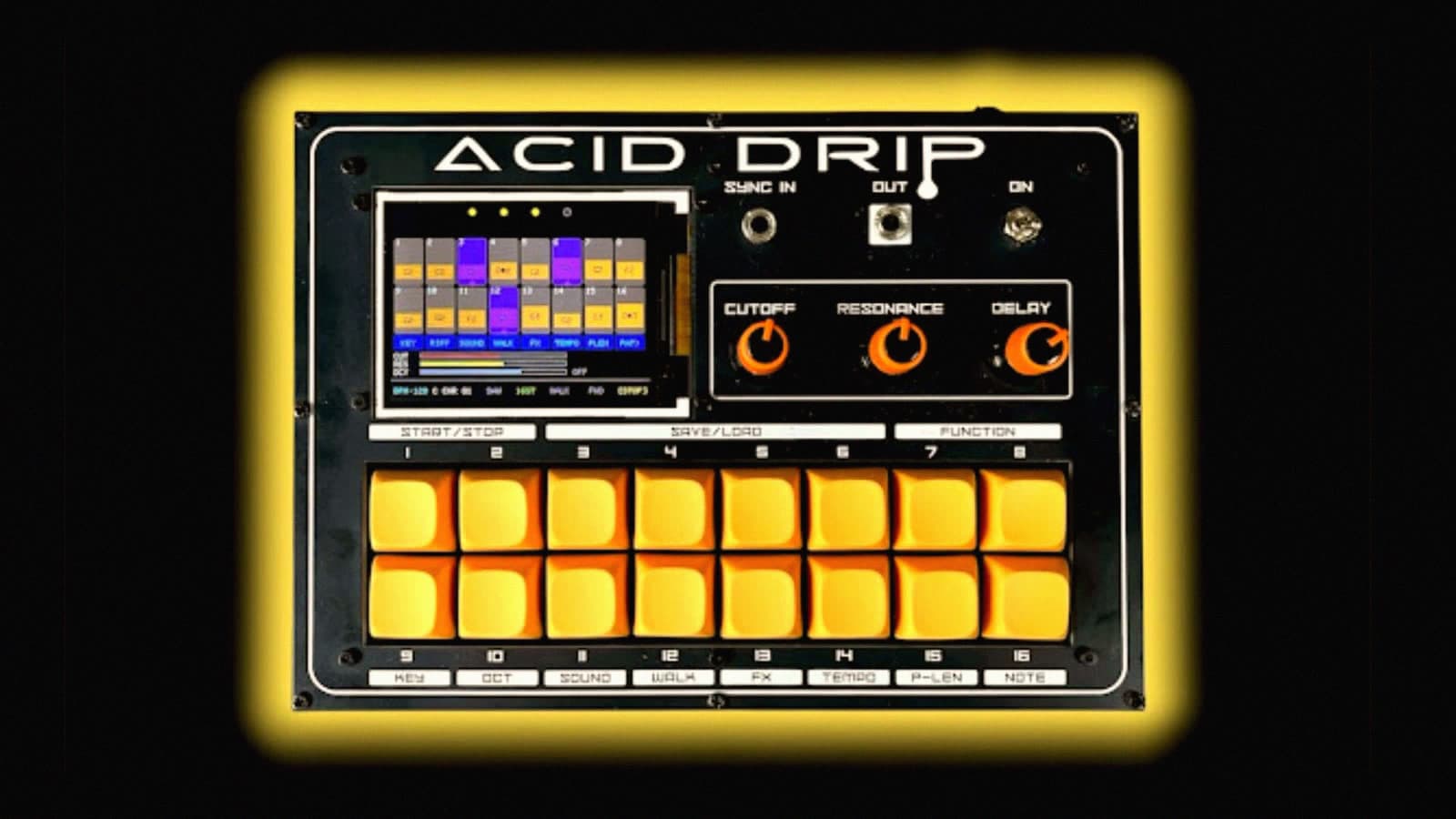
A 16-step acid sequencer drives the bassline while a 16-pattern groove generator handles the drums, and the two run together rather than taking turns. You program and trigger steps on 16 Cherry MX pads, and shape the sound live with dedicated knobs for cutoff, resonance and delay. A 320x240 ILI9341 TFT screen shows what you are doing. On the back there is a 3.5mm main output and a sync input, so it slots into a wider setup and stays in time with the rest of your gear.
An acid box where one chip squeezes out both the squelch and the drums is exactly the kind of resourceful hack the open-hardware scene lives for.
Which version should you build?
The unit in the photos is Version 1. Version 2 adds an extra mixer potentiometer, which gives you more hands-on control over the balance between the bassline and the drums. Both are documented in the same repository, so you can pick the layout you prefer before you start cutting holes in a case.