What does MPC 3.9 actually add to the workflow?
Akai Professional dropped MPC 3.9 OS on June 18, and the headline is straightforward: every standalone MPC and Akai Force unit already out in the world just became a multi-oscillator synthesizer, free of charge. The update builds on the existing MPC Engine infrastructure, the filters, envelopes, and LFOs that producers already know, and slots ten new oscillator types directly into that signal path.
The ten engines cover a lot of ground. The Warm Sine and Digital Sine give you pure tones from fuzzy to clinical. The Saw Square is analog-modeled and morphable between sawtooth and square; that one will get used a lot. There is also a Digital Saw, a Pulse oscillator with variable pulse-width modulation, and a Noise Oscillator with its own variable filter. On the synthesis side: FM2 (two-operator FM), Ring Modulation (three operators), a Single-Cycle Oscillator for algorithmic waveform shaping, and a Mono Wavetable engine that accepts custom wavetable imports. Stack up to 8 of these per keygroup and run them alongside samples in hybrid mode on the same track. That is a serious amount of sound design territory for a $0 update.
"Every standalone MPC on the planet woke up this morning with a built-in synthesizer."
Beyond oscillators, 3.9 adds individual time signatures per sequencer clip and a new linear arranger with expanded arrangement tools. VST3 and AU plugin support land in MPC Software as a beta.
What changed on the hardware side?
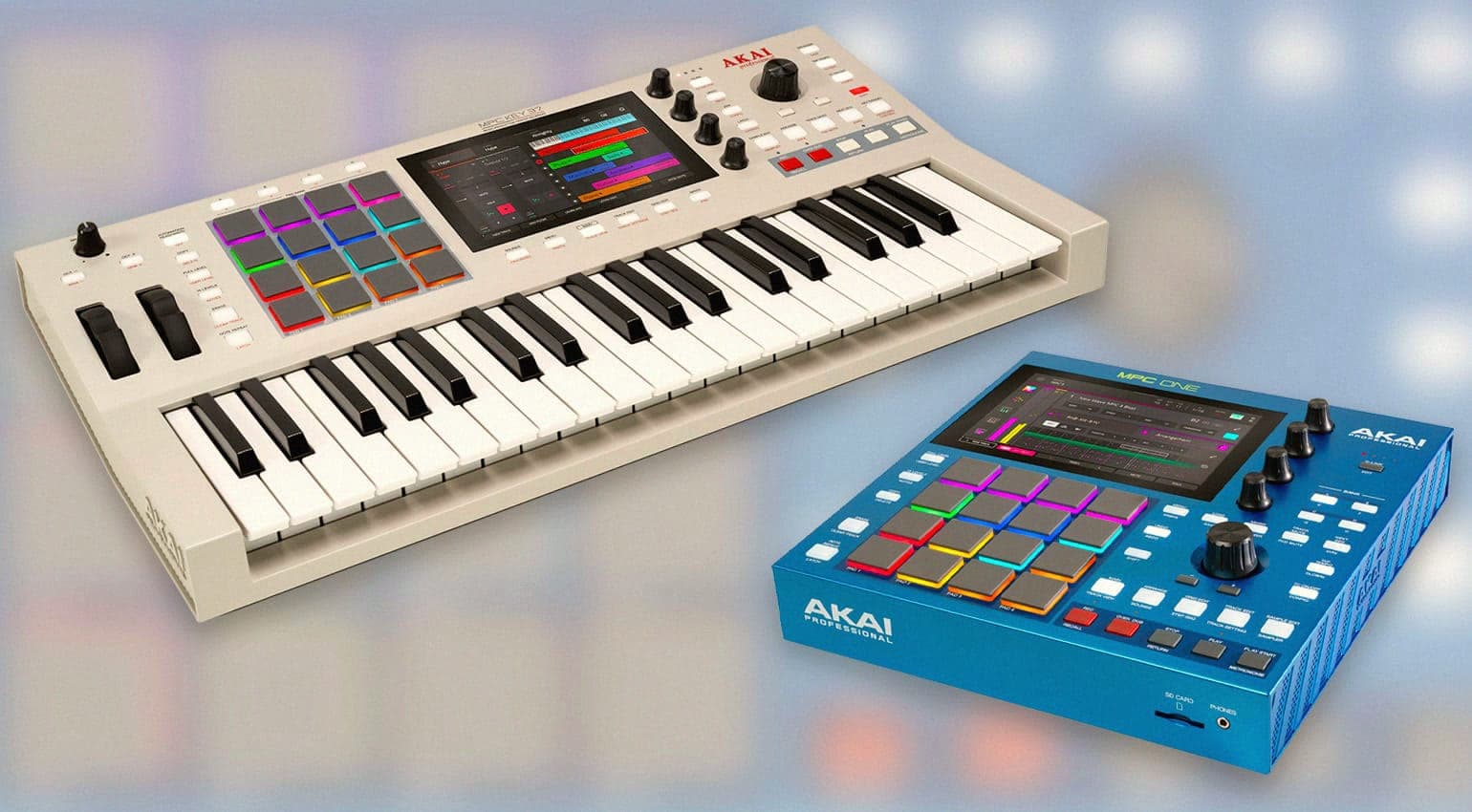
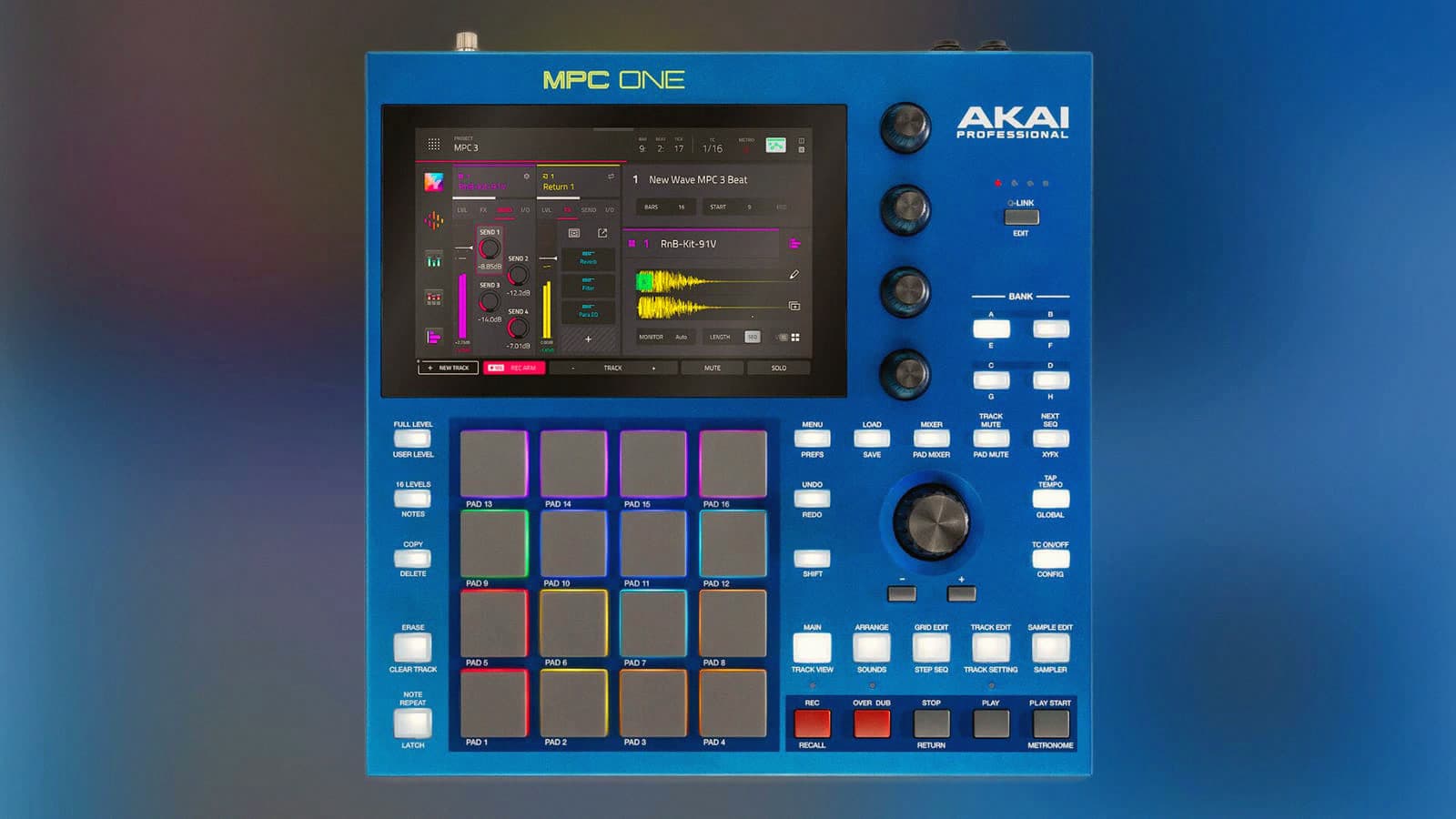
The two new boxes arrived alongside the OS. The MPC One G2 replaces the entry-level standalone slot at $799. Its 8-core processor is four times faster than the MPC One+, RAM doubles to 4GB, and internal storage jumps from 16GB to 64GB. A 7-inch multitouch display, USB-C, Wi-Fi 802.11ac, and Bluetooth 5 complete the spec sheet. It runs up to 32 simultaneous plugin instruments and 16 stereo audio tracks in standalone mode, ships with 11 instrument plugins, 9 expansion packs, and more than 20GB of sounds. The colorway is classic blue, a nod to the MPC4000 and MPC1000.
The MPC Key 37 G2 hits at $999 and shares the same 8-core chip and 4GB/64GB spec. What it adds is a 37-key synth-action keybed with velocity and aftertouch, pitch and mod wheels, 16 MPC pads, and 8 CV/gate outputs for modular integration. It ships with 13 instrument plugins and 6 expansion packs. The cream white colorway references the original 1980s MPC lineage directly.
Who actually benefits from 3.9 right now?
Owners of existing standalone hardware are the obvious winners. An MPC Live, Live II, X, or One user wakes up with synthesis tools they did not pay extra for. The FM2 and wavetable engines alone are production-ready instruments; the hybrid sample-plus-oscillator mode opens up layered texture work that previously required routing between separate devices. For producers who have lived in the MPC workflow for years, 3.9 is a meaningful expansion of what the box can do, without touching the session structure they already know.