What exactly did Akai tease?
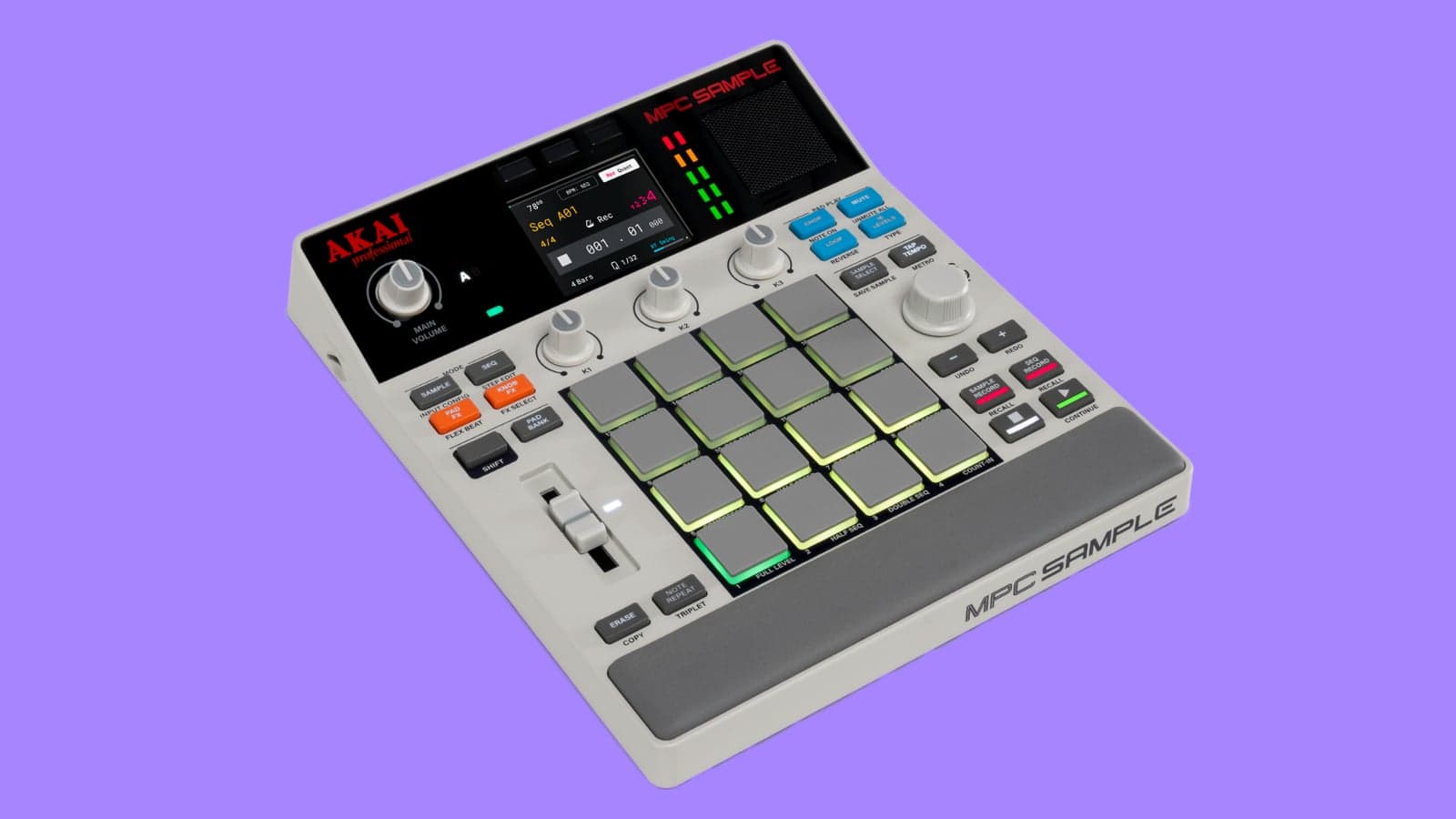
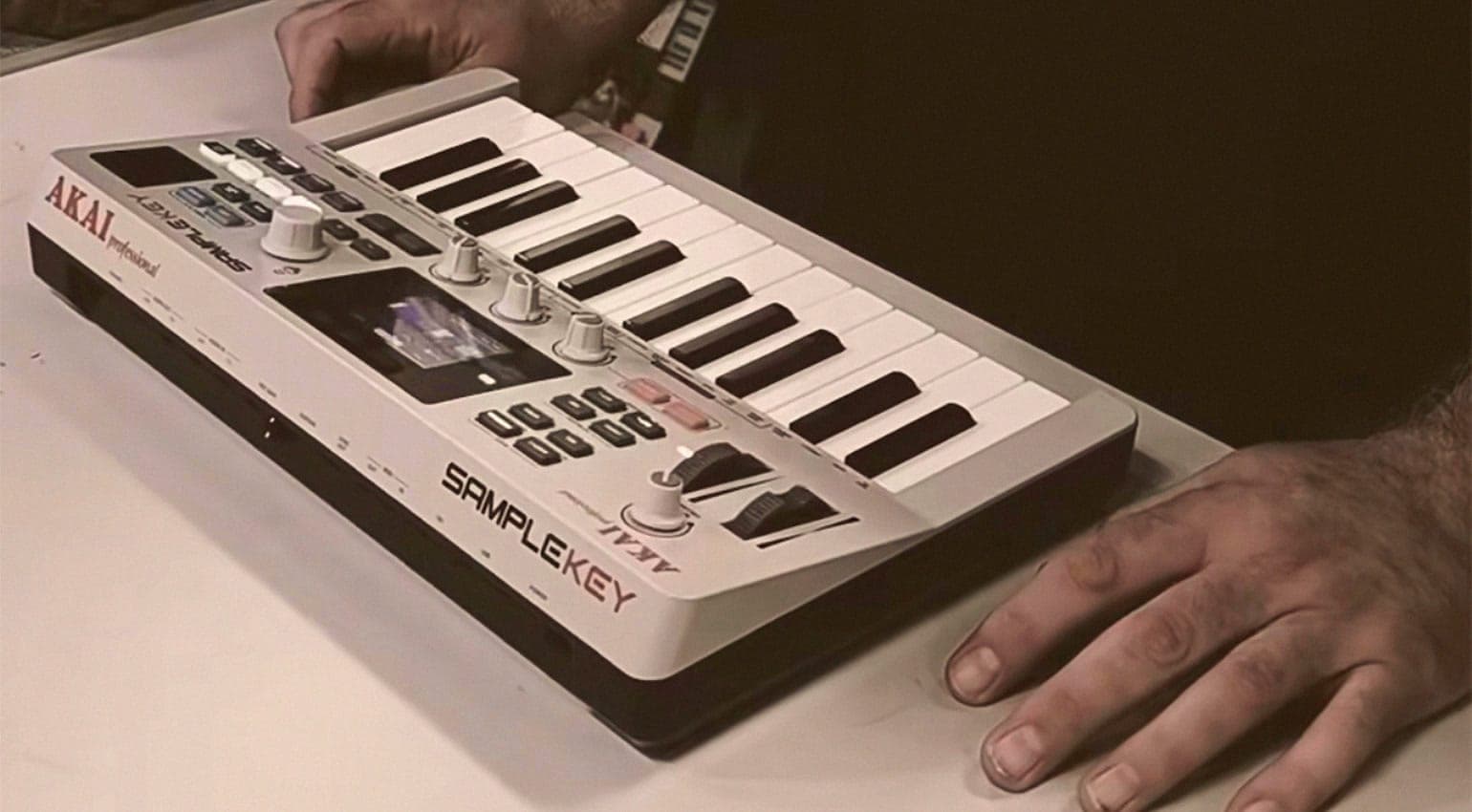
Akai Professional used two Instagram videos this week to introduce the SampleKey, a two-octave, 25-key counterpart to the MPC Sample pad sampler it shipped back in March. Swap the MPC Sample's 4x4 pad grid for a mini keybed, keep the pitch and mod wheels, three knobs, a bigger encoder plus a second one on the left side, a built-in speaker and the same central display, and that is the shape of it. It can sample on individual keys with automatic key splits, which is about the only sampling detail confirmed so far. Pricing, full specs and a release date are still unannounced.
Is the SampleKey actually open source?
That is the real story, not the hardware. Akai's Dan Gill told the camera the firmware is opening up to "the AI and vibe-coding community," letting outside developers write new features and swap in entirely different sound engines. Akai's own team built the proof: a wavetable synth, an FM engine and a virtual analog engine, all running as alternate firmware on the same box, with the MPC Sample lined up getting identical treatment. One Akai staffer used Anthropic's Claude to turn the keybed into a chord machine, the pitch wheel picking the chord type; another loaded a homebrew port of Native Instruments' Massive onto it.
"It can be whatever you want." On the SampleKey's firmware, per Akai's Dan Gill
But "open source" is doing a lot of work in Akai's own framing that the company hasn't backed up yet. It has not said whether it will publish the stock firmware's source code, or whether modding stays boxed inside whatever SDK and tools Akai decides to hand out. That is the gap between a manufacturer genuinely relinquishing control of its own product and one running a sanctioned hackathon it can shut down whenever it wants.
Why is this happening now?
Akai's tease landed one day after Behringer previewed its own open-firmware sampler, the Kick, per MusicRadar, and the timing reads like a reply more than a coincidence. For years, "open" in hardware sampling meant third-party reverse-engineering done without a manufacturer's blessing. Now two of the biggest names in affordable samplers are racing to hand the keys over themselves, at least on paper, because the DIY and vibe-coding crowd has grown loud enough to shape a roadmap instead of just hacking around one from the outside.