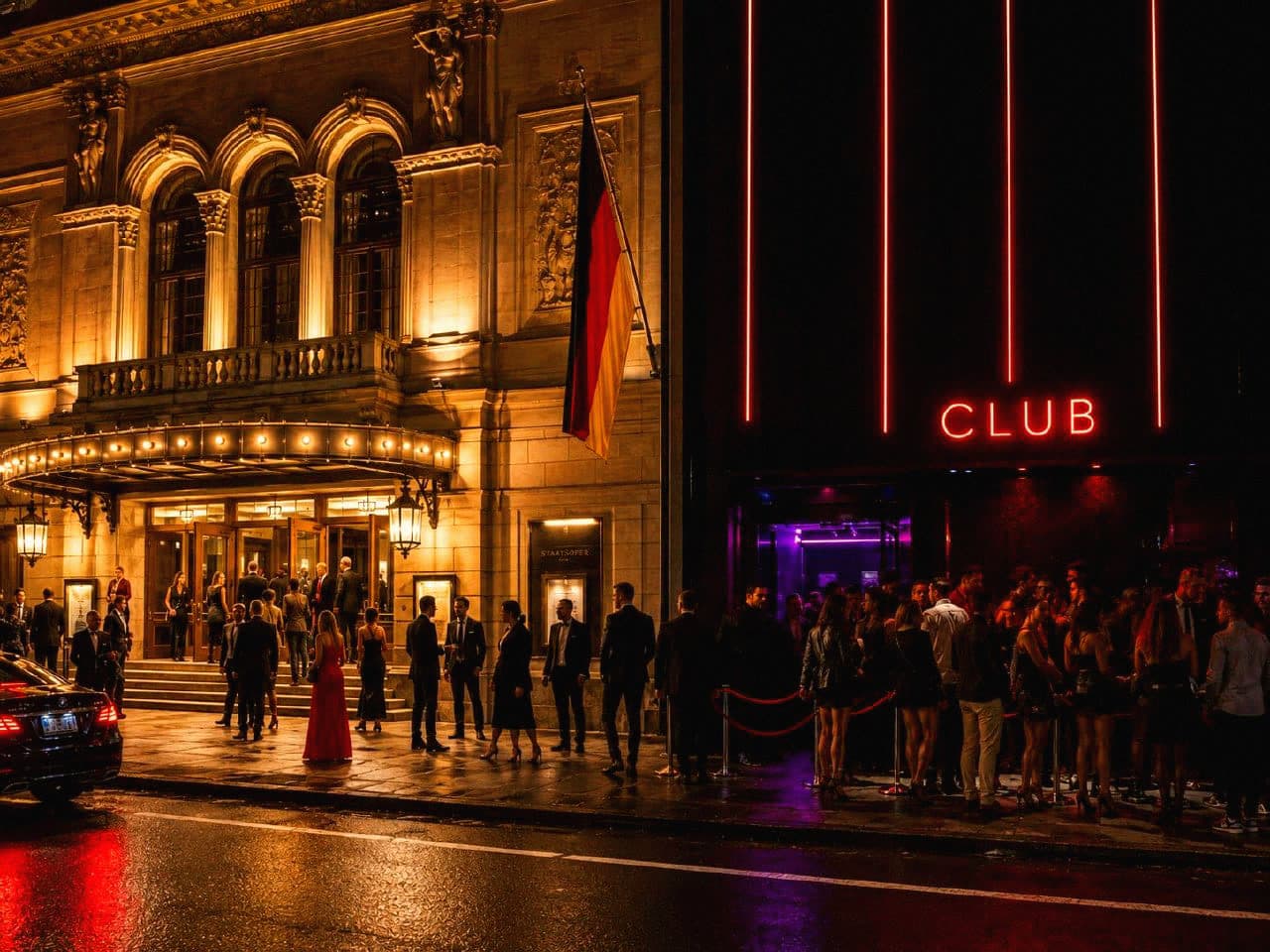
What exactly did the German cabinet approve?
On May 31, 2026, Chancellor Friedrich Merz's cabinet signed off on an amendment to the Baugesetzbuch, Germany's Building Regulations Law. The change moves nightclubs out of the Vergnügungsstätte category (adult entertainment, a legal bucket that grouped clubs with casinos, strip clubs and brothels) and into a new classification recognizing venues of cultural and artistic value, placing them on the same legal footing as museums and opera houses.
The practical consequences go further than the label: clubs would gain the scope to operate in mixed-use and certain residential zones, they would carry stronger legal armour against rent escalation and predatory developers trying to push them out, and they would become eligible for tax breaks currently unavailable to entertainment businesses. The vote in the federal cabinet is the first hurdle cleared. Bundestag and Bundesrat still need to pass the bill, but cross-party support makes the outlook reasonable.
Culture Minister Wolfram Weimer, a conservative journalist and publisher whose enthusiasm for the measure caught observers off guard, put it plainly: "This is an important step toward protecting and expanding the live music scene in Germany and sends a strong signal to the cultural and creative industries."
Who fought for this and why now?
[[org:livekomm|LiveKomm]], the association representing over 800 independent live music venues across Germany, has been pushing this reclassification for years. Board member Marc Wohlrabe framed the argument in terms anyone running a venue would recognize: "The club owners we represent operate more like a theatre, curating artists, and deserve instead to be designated as cultural centres alongside opera, theatre, and high culture."
The timing is inseparable from Clubsterben. Germany has been watching its club infrastructure collapse in slow motion. Watergate Berlin shut after 22 years on the last night of 2024, a loss felt far beyond Berlin. SchwuZ, a queer institution, went bankrupt in August 2025. Mensch Meier followed. Each closure is the same story: rising rents, pressure from developers, no legal framework to push back. The federal move is a direct response to that pattern.
Berlin had already acted on its own: in 2021 the city passed an equivalent declaration recognizing clubs as cultural venues. The federal bill would extend that logic to the whole country, covering cities and regions where a Berlin-style city-level measure was never politically feasible.
Does legal status actually protect a club?
"Berlin had the same protection since 2021 and still lost Watergate. The floor is asking whether cultural status is enough, or just enough to feel good about."
This is the real debate in the underground right now. Berlin's 2021 declaration did not stop Watergate from closing. The club's situation involved specific lease dynamics and landlord pressure that cultural status, as a city-level instrument, could not override. Proponents of the federal bill argue that federal law carries more teeth: a nationwide reclassification changes what developers can legally do, affects planning decisions, and creates a basis for challenging evictions in court.
Sceptics say the mechanism still depends on enforcement and on club owners having the legal resources to exercise their new rights. A legal title does not automatically freeze a rent increase or block a compulsory purchase. What it does do is shift the default, tilt the planning conversation, and give clubs a foothold in the courts they did not have when they were legally equivalent to a strip club.
The bill is not law yet. Until the Bundestag and Bundesrat votes are done, nothing changes on the ground. But the direction of travel is the clearest signal Berlin and German club culture have had from the federal government.