What did AlphaTheta actually remove?
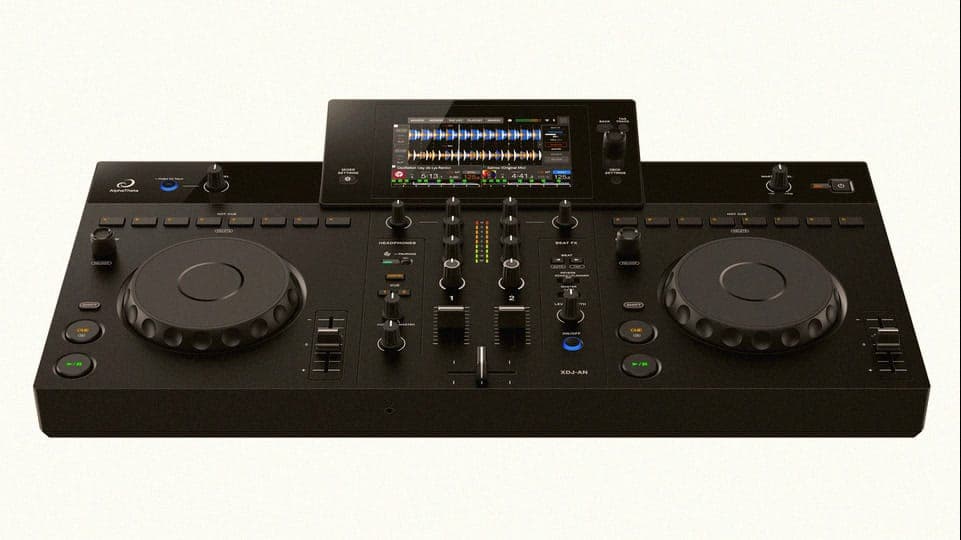
The jog wheel. The searchable waveform. The bank of hot-cue pads. On the AlphaTheta XDJ-AN, all of it is gone, replaced by a mount that clips a smartphone onto the deck and hands it the job. What is left on the hardware is closer to a stripped transport: play, cue, a tempo fader, a crossfader. Browsing a library, dropping a loop, firing a hot cue, syncing a beat: that all happens by touching the phone screen, not the machine. DJ TechTools called it out directly in its review, framing the XDJ-AN as a device built around what a phone can already do rather than what a CDJ has always done.
Why strip out the parts DJs actually touch?
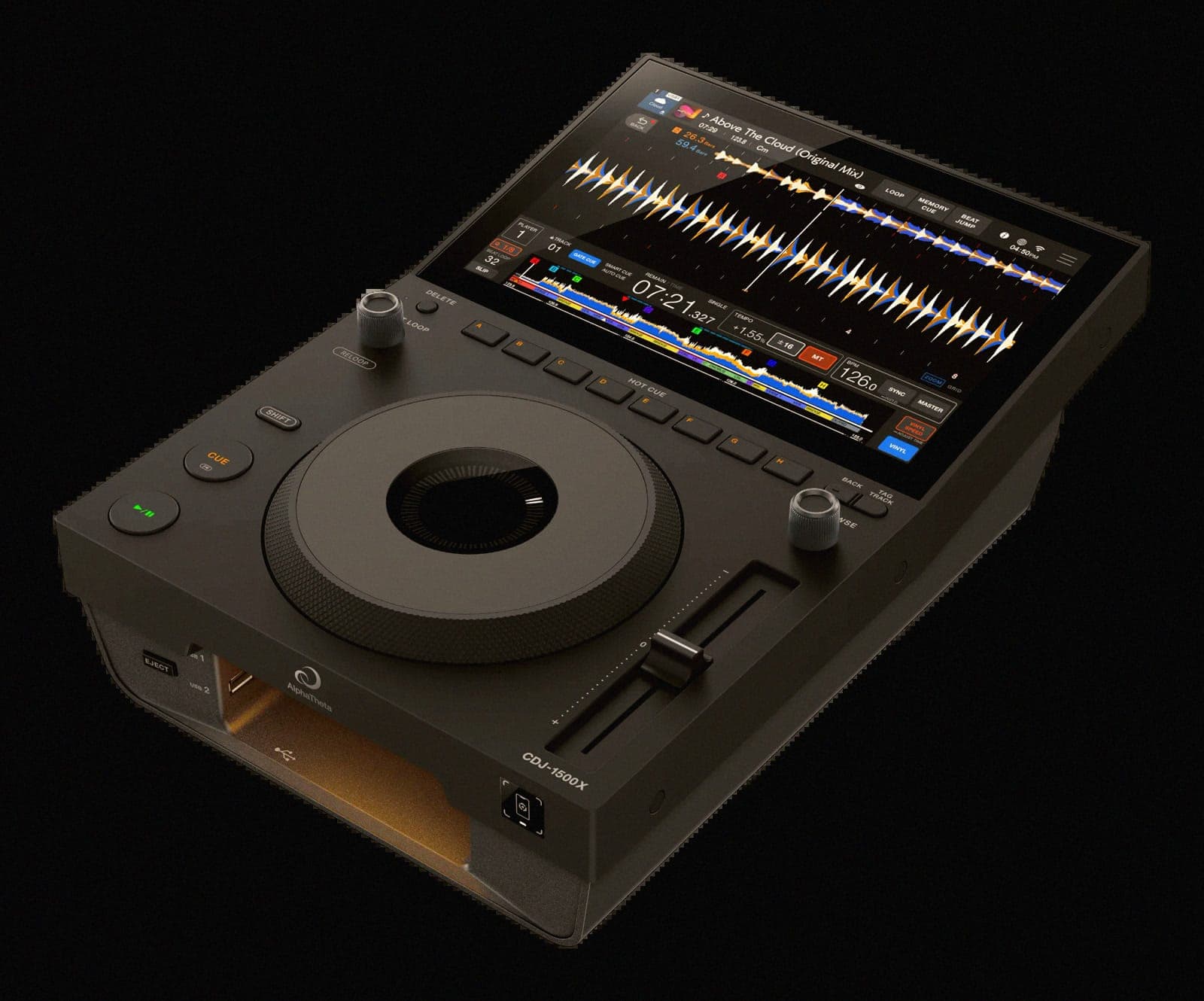
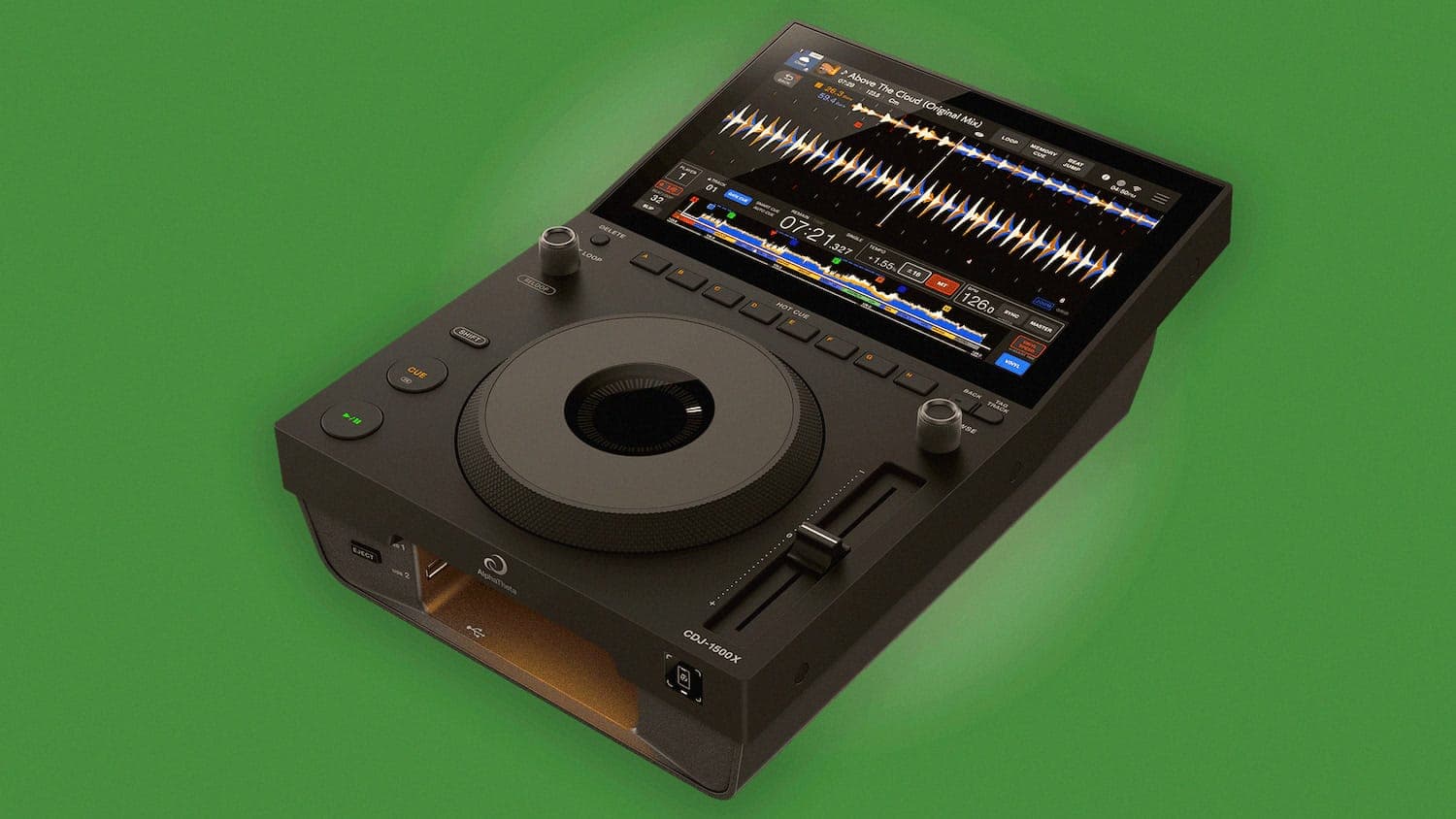
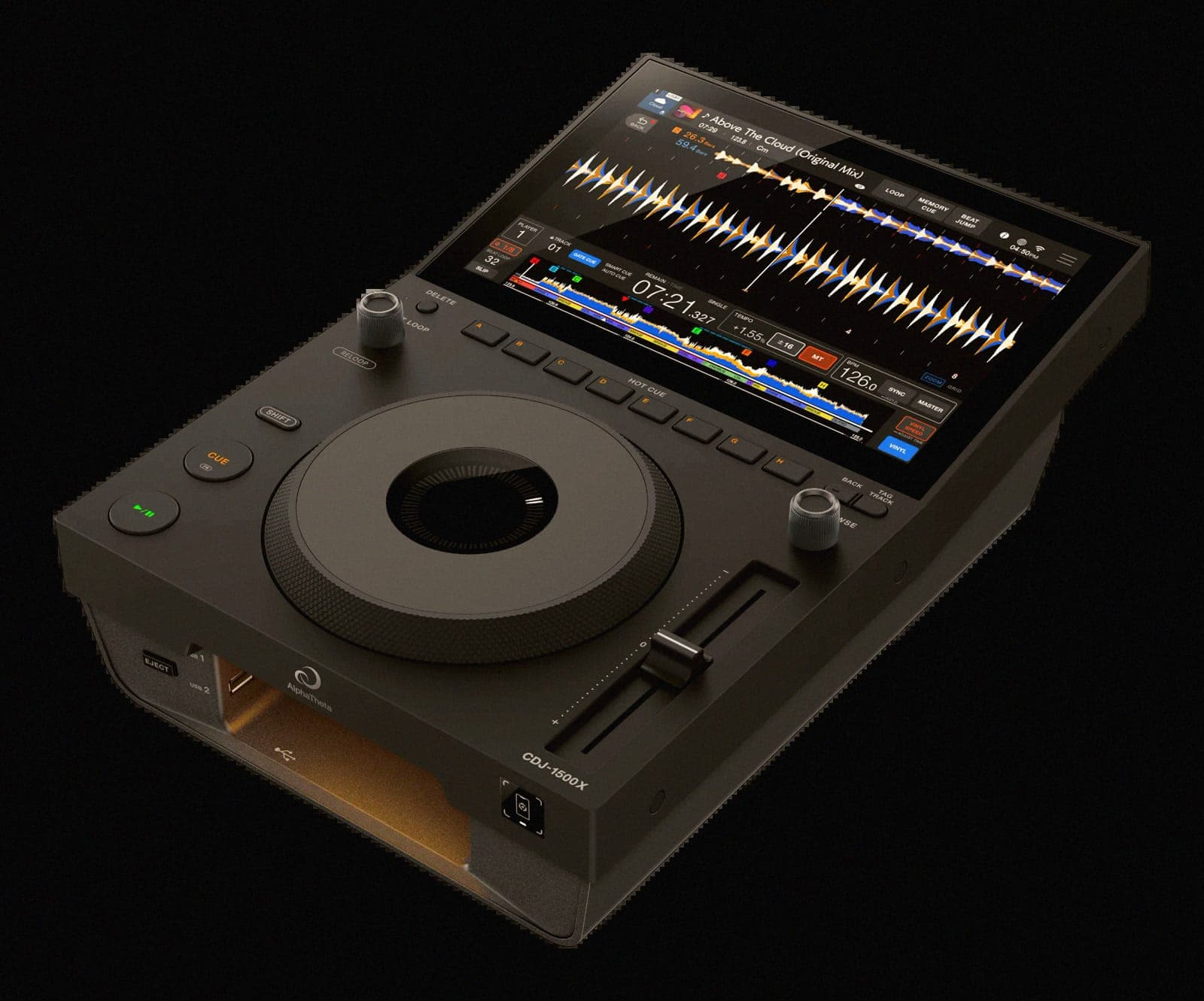
Because AlphaTheta is chasing a different buyer than the one who owns a pair of CDJs. At 1,149 euros, 999 pounds or 1,099 dollars before tax, the XDJ-AN undercuts the CDJ-1500X that AlphaTheta launched just seven days earlier, and it skips analogue outputs entirely: USB-C is the only way in or out, so there is no RCA jack to fall back on if the phone link drops. That is a bet that a bedroom DJ moving up from a laptop cares more about a light, mixer-adjacent box that syncs to a phone they already own than about the tactile vocabulary club DJs spent years learning on a jog wheel. It is also the second AlphaTheta launch in eight days built around a phone or a cloud connection rather than a self-contained deck, after the CDJ-1500X's CoBeat feature let crowds queue tracks straight from their own phones.
Does this replace a real DJ setup?
Not for a booth running two CDJs and a mixer, and AlphaTheta is not pretending otherwise: this sits in the bedroom-to-small-bar tier, not the main-room one. But the direction is the tell. A generation of gear used to add screens and connectivity around a fixed hardware core. The XDJ-AN inverts that: the phone is the core, and the hardware is the accessory clipped around it.
Take away the jog wheel and the pads, and what is left is not a DJ controller anymore. It is a phone mount with a crossfader.