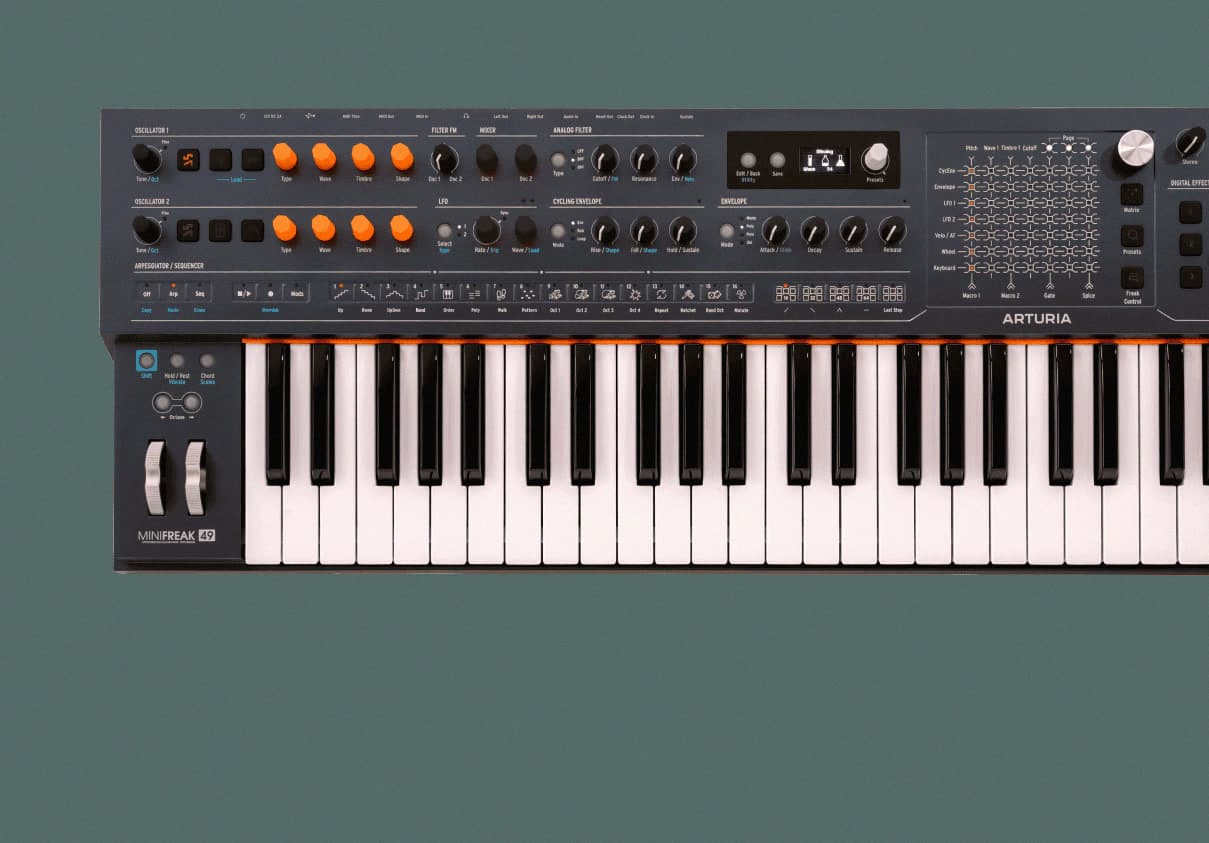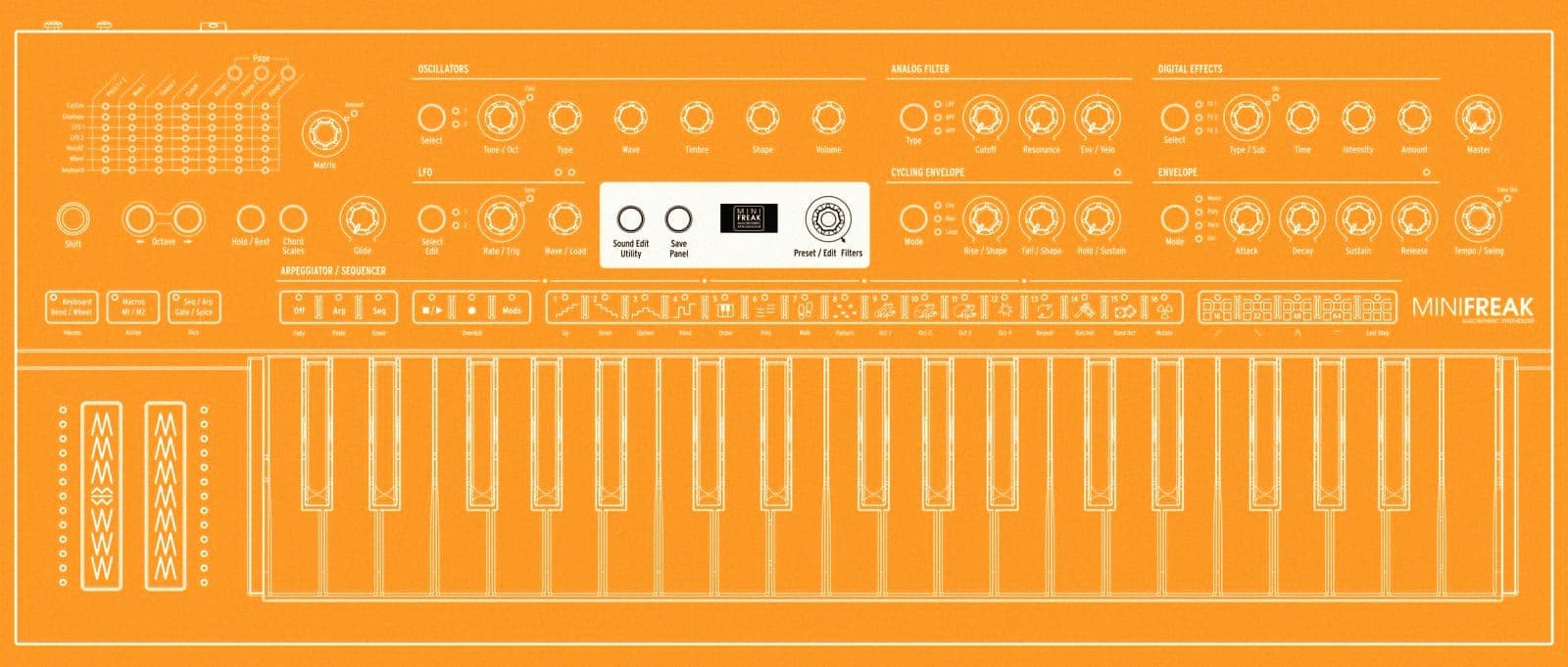
MiniFreak was already unusual for a sub-$600 synth: eight oscillator modes, a proper mod matrix, and a granular engine that appeared for free in a firmware update rather than a paid upgrade. Firmware 5.0 pushes the same idea further. As of September 2026, owners can drag their own samples and wavetables straight into the box, no longer limited to Arturia's factory content.
What does firmware 5.0 actually add?
Two import paths. First, sample import: drop a WAV, AIFF or FLAC file onto the engine, or use the dedicated Import button, and MiniFreak trims it to six seconds and converts it to 12-bit / 32kHz for use inside its existing oscillator and granular engines, per Synth Anatomy and heise online. That resolution is deliberately lo-fi. This isn't Arturia turning MiniFreak into a clean sampler; it's raw material for the synth's oscillators to chew on, in the same spirit as the granular engine that landed with firmware 3.0.
Second, wavetable import: mono wavetables at 24-bit, 512-point resolution, imported files marked with a USR prefix to keep them separate from the factory bank. Crucially, that format lines up with wavetables exported from Arturia's own Pigments software synth, so a sound designed in Pigments can be dropped straight onto the hardware.
Why give this away for free?
Arturia has form here. The granular synthesis engine that arrived in firmware 3.0 was, per heise, “probably one of the biggest and most sound-changing updates” MiniFreak ever got, and it cost nothing. Free firmware that meaningfully changes what the hardware does is now part of how Arturia keeps a three-year-old product line relevant against newer competition from Polyend, Korg and the modular-adjacent groovebox crowd. It also quietly deepens the Pigments-to-MiniFreak pipeline, giving owners of both a reason to keep using Arturia software rather than a third-party wavetable editor.
The update ships with 23 new presets built specifically to show off the imported content.
Rollout is staged: software users get 5.0 first at MiniFreak V startup, and hardware owners then flash it over USB through that same software, alongside the new factory bank.
What does this mean for producers running MiniFreak live or in the studio?
For anyone building sets or tracks around field recordings, vocal chops or one-off textures, MiniFreak now behaves less like a fixed-content synth and more like a compact sample-mangling instrument, without needing a separate sampler in the chain.