What does the graphical sequencer actually let you do?
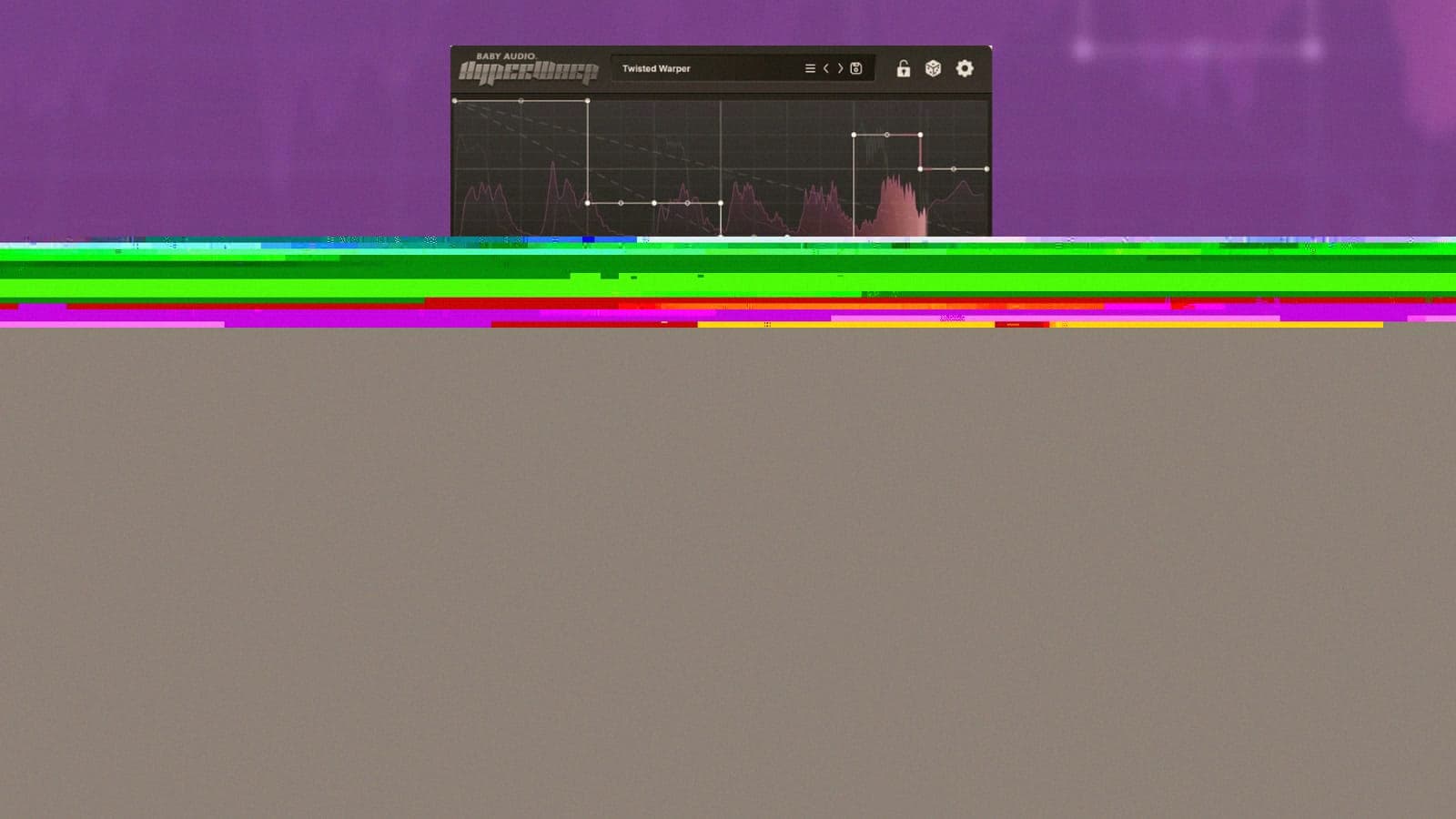
Most time-manipulation plugins hand you a handful of knobs and a tempo-synced LFO, then leave you to automate pitch, grain size and feedback blind, hoping the curve you drew in a tiny automation lane turns into the stutter you heard in your head. Baby Audio's new HyperWarp throws that workflow out. Its graph interface puts the time axis directly on screen: producers draw speed shifts, stutter steps and direction changes as a literal line across the plugin, and the grain engine chases that line in real time.
That is a genuinely different way of building a glitch. Instead of nudging an LFO rate and hoping, you sketch the rhythm you want: a stepped staircase for a chopped vocal, a smooth ramp for a pitch-bent breakdown, a jagged saw for a stutter that snaps back on the one. The plugin also ships with graph randomizers that generate stepped or smooth sequences on their own, so producers can start from a shape and hand-edit it rather than programming from zero.
Why does this matter for house and techno producers?
Stutter and glitch effects are a staple of the DJ edit and the breakdown build, the moment a loop catches, stumbles and snaps back into the groove. Getting that right usually means automating a granular or pitch-shift plugin parameter by parameter across a handful of bars, rendering, listening, and starting over. HyperWarp's seven effect profiles cover that entire range from a barely-there pitch wobble to a full granular breakdown, and because the sequence is drawn rather than automated, it is something a producer can iterate on in seconds rather than minutes.
"Draw speed shifts, stutter steps and direction changes to reimagine their audio as glitchy rhythmic sequences or fluid, time-warped motion effects."
That line, from Baby Audio's own description of the plugin, is really a pitch to anyone who builds tension through time manipulation rather than filters or reverb, which in house and techno production right now is most of the people building breakdowns and risers.
What's actually in the box?
HyperWarp launched October 6 at an introductory price of $49, against a regular $99 MSRP, through November 30. It comes with more than 190 presets built by producers and sound designers, so the graph is a starting point rather than a blank page for anyone who wants to learn the effect profiles by ear first. It runs as VST, VST3, AU and AAX on Mac, including native Apple Silicon, and Windows, across all major DAWs, and is sold directly through Baby Audio's own store as well as Plugin Boutique and AudioDeluxe.