Push a key on most MIDI controllers past the initial strike and the aftertouch sensor, if there is one, reads the whole keybed as a single number. Polyphonic aftertouch breaks that: each key tracks its own pressure independently, so leaning into one note inside a chord can swell just that note, the way a string section breathes under a sustained chord. Until now, getting that kind of per-note control in hardware meant Expressive E's Osmose or Osmose CE controllers, which sell for $1,199 to $1,999, or one of the rare Native Instruments Komplete Kontrol MK3 keyboards that offer it. Behringer has just announced a 61-key controller with the same per-key pressure tracking, targeting $199.
What does polyphonic aftertouch change for a bedroom producer?
MPE-aware software, from Omnisphere to Pigments to Surge, has been able to read per-note pressure, pitch bend and timbre for years. The missing piece was always affordable hardware to send that data from. A $199 keybed that tracks each key's pressure independently puts that kind of live, per-note sculpting of pads and leads in reach of anyone who could already justify a basic controller, not just whoever could stretch to a four-figure one.
Is the Polykeys 61 actually open hardware?
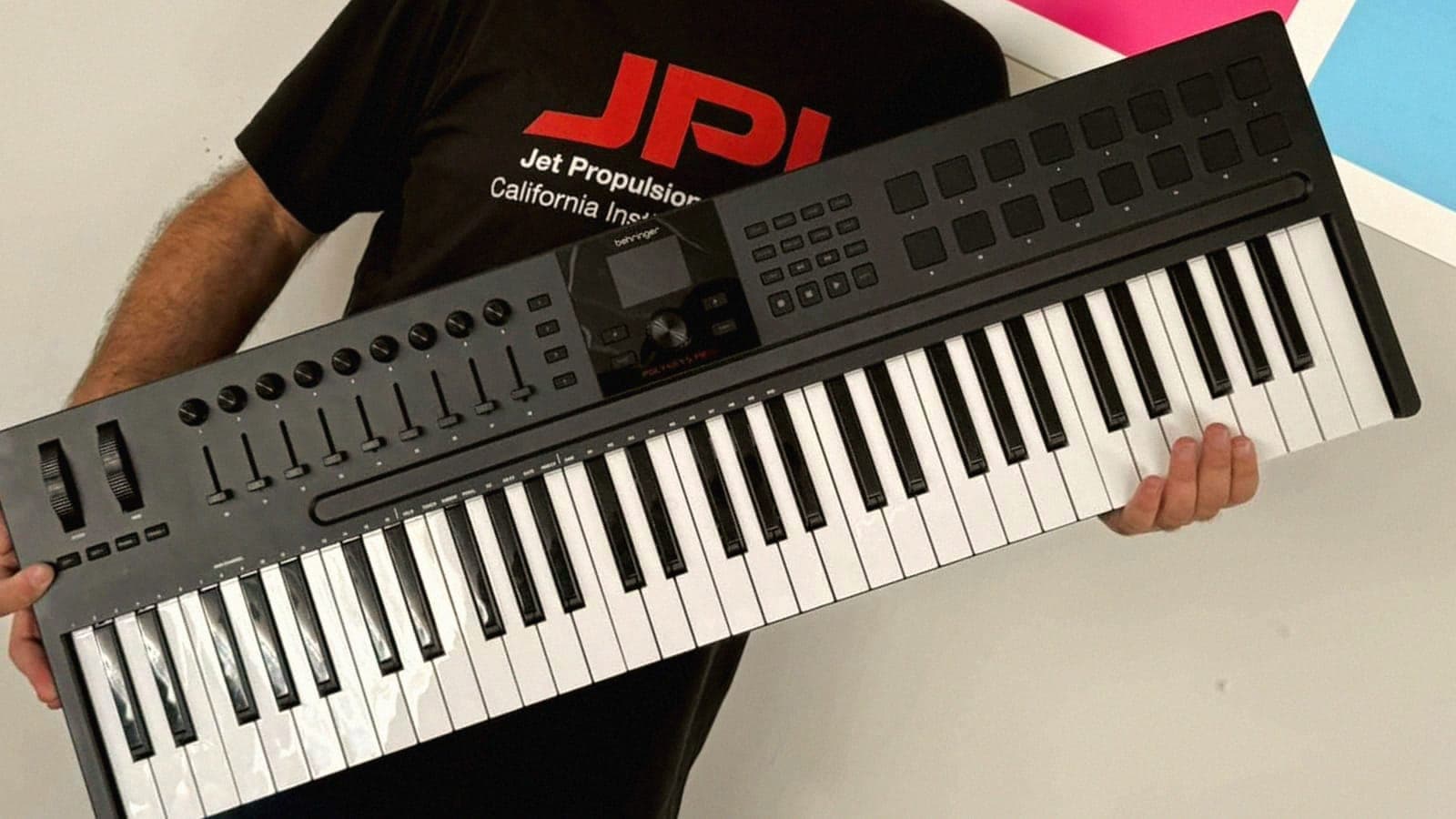
Behringer says the Polykeys 61's hardware and firmware design files will be released publicly as open source. The keyboard first surfaced in May 2026, when it briefly appeared on Behringer's own website under the name PK61 during a site redesign, months before Behringer confirmed the spec and the $199 target price in a November Facebook post crediting co-developer Luigi Scarano. Past the keybed, it carries a built-in ribbon controller, nine sliders, nine knobs, sixteen pads, pitch and mod wheels, a display and CV output, in a layout that echoes Arturia's KeyLab Mk3 line.
Synth Anatomy, which broke the pricing and spec details, said the keyboard fills "a genuine gap in the market, particularly for affordable polyAT MIDI keyboards."
What's still unproven?
Behringer has not given a ship date, filing the Polykeys 61 as TBA, and has not yet said where the design files will actually live. Specs on paper are one thing; how clean the per-key pressure tracking feels under real fingers, note by note, is another, and that only gets settled once units are in players' hands.