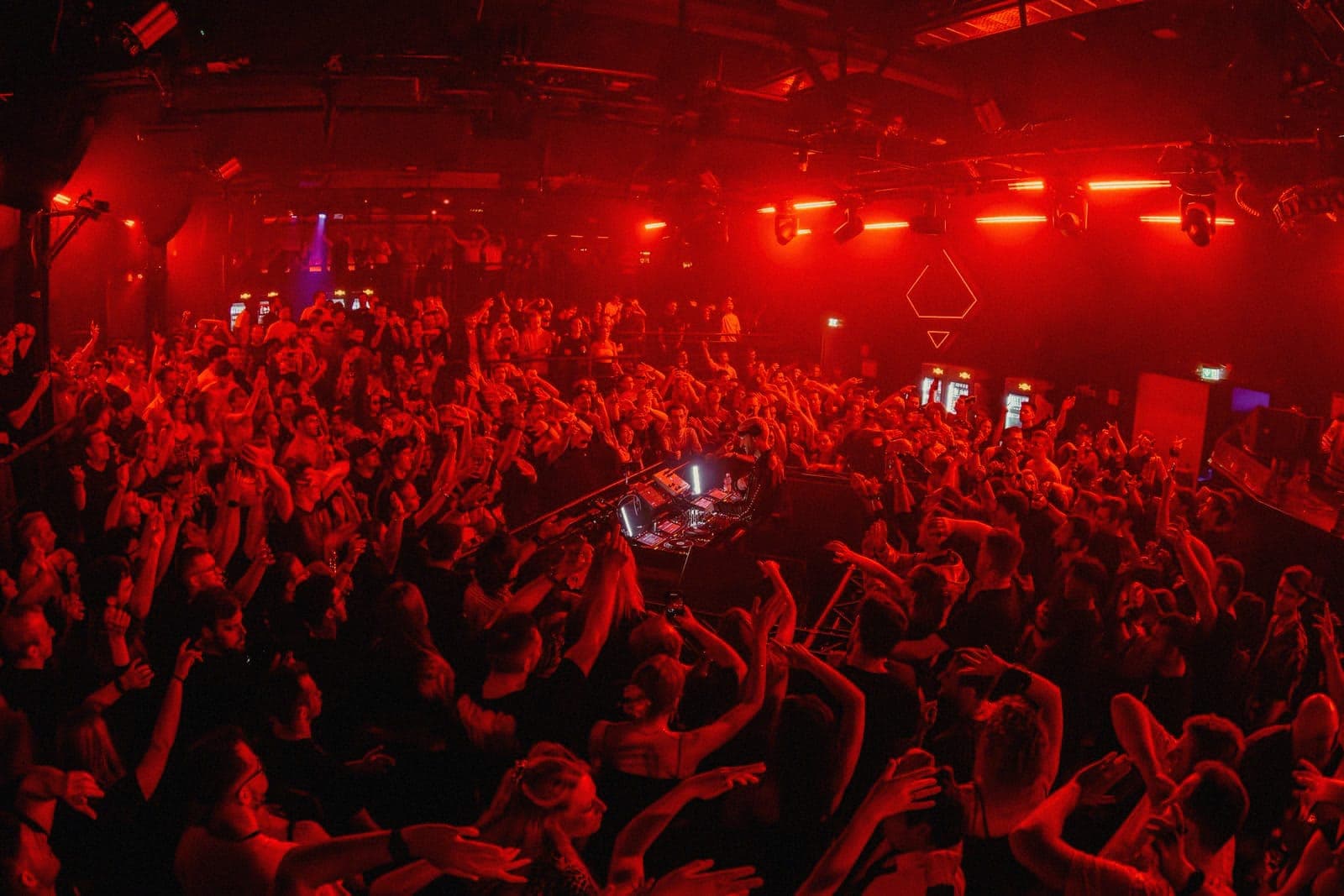
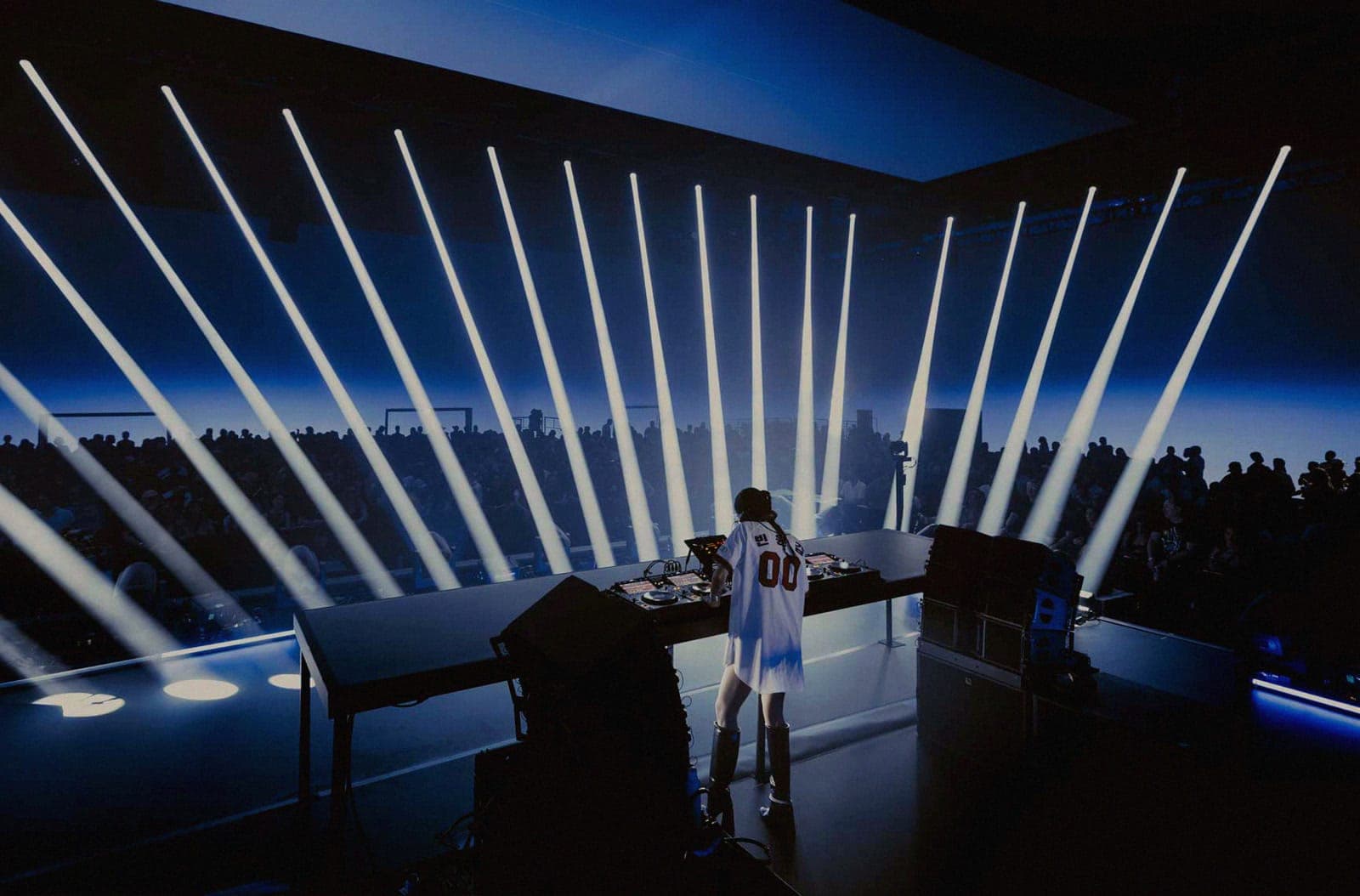
What does a 360-degree main floor actually do?
The clever part is that the DJ does nothing different. They still play an ordinary stereo mix. The room does the rest. L-Acoustics' Source Separate technology takes that stereo signal and decomposes it in real time into multiple discrete elements, then places them across a ring of speakers around the whole space plus a layer overhead. A hi-hat can sit off to your side, a vocal can hang in the centre, a pad can drift over your head. This is not a pre-authored surround mix like a film soundtrack. It re-spatialises normal stereo on the fly, which is why any DJ can walk up and play their set and have it bloom into three dimensions.
How is it built?
Bootshaus put the system on its main floor as a permanent install, not a one-night demo. The design uses L-Acoustics A Series boxes: forward hangs carry the punch you want hitting you straight on, secondary stacks placed around the side walls and the rear lock in the horizontal ring, and a set of X12 coaxial enclosures overhead build the vertical height layer. Together they turn a normal rectangular room into a sphere of sound rather than a wall of it pointed at the crowd.
Is immersive club sound the future, or a gimmick?
This is where the room divides. Spatial audio has been creeping into electronic music for a few years now, on festival stages and in specialist installs, and the fair question is whether dancers actually feel it or whether it is a line on a press release. The honest answer is that it depends entirely on restraint. Done well, height and width give a mix air and let elements breathe. Done badly, processing smears the very directness that makes a club kick land in your chest. A permanent install at a club of this size is a real bet that the first outcome wins.