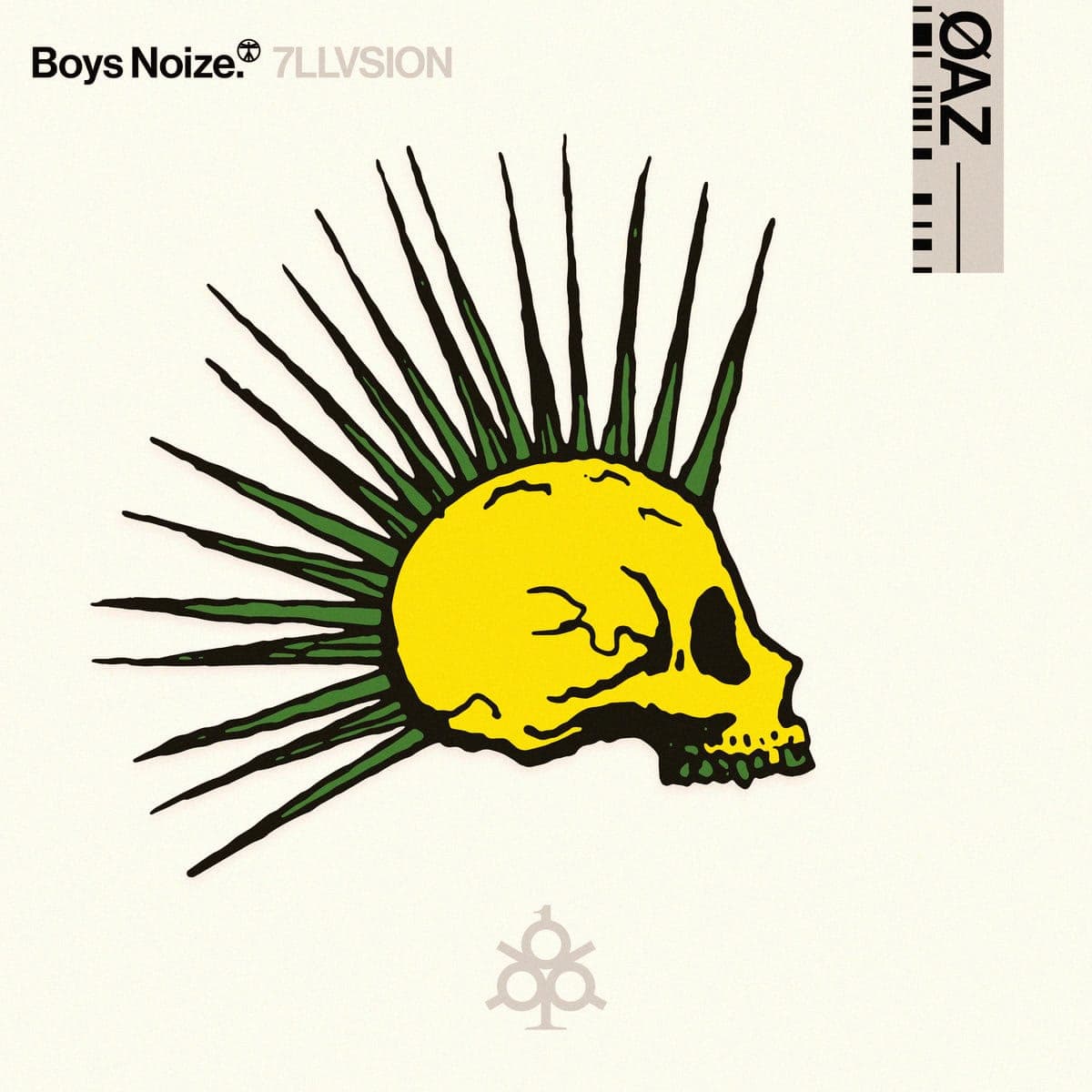
Alex Ridha has spent two decades as one of techno's most bankable names, touring arenas, scoring a Grammy-winning Tron: Ares and trading production credits with Nine Inch Nails. So when he tells The Fader that techno "feels a bit cooked right now," it lands differently than the usual podcast complaint about oversaturated lineups. This is someone with nothing left to prove and no label boss to please, using his own money and his own imprint to say it louder: with a record.
7LLVSION, out now on his own ONES and ZEROS, is Ridha's first solo album since 2021's +/-, and he built it almost entirely away from the sound that made him famous. Instead of peak-time kicks, he went back to Conny Plank's studio lineage: Can, DAF, the EBM and Cold Wave that soundtracked German clubs before techno existed as a genre name. He layered in 1980s synth-wave, post-punk grit and what he calls the "radical feeling" of Brazilian rhythm. None of it reads as nostalgia. It reads as an argument.
What is Ridha actually arguing against?
His complaint in The Fader isn't abstract. He says the integrity of electronic music's communities is "going down the toilet" because commercial interests have moved in on a sound that used to police itself through scarcity and word of mouth. That's a notably specific grievance from a guy who plays main stages and has a Coachella slot behind him with Nine Inch Nails as Nine Inch Noize. Ridha isn't outside the commercial machine critiquing it. He's inside it, which is exactly why the complaint carries weight with other insiders who've watched the same drift: bigger rooms, bigger brand deals, smaller rooms for the sound that made any of it interesting in the first place.
Boys Noize didn't retreat from clubs to make this point. He stacked the record with collaborators built for the floor: Brutalismus 3000 on "Nachstenliebe," Mayah Alkhateri of Kiss Facility on "Ycore," ABRA, and ZEP from Rotterdam across two tracks including the lead single "1+1+1." He's said every song had to earn a spot in his own DJ sets without hesitation, which is a very different brief from "make an art-techno side project." This is dancefloor music that refuses to sound like current dancefloor music.
Does this actually change anything, or is it just one guy's opinion?
One album doesn't reroute an industry built on festival slots, agency rosters and streaming playlists. But Ridha isn't a bedroom producer venting on a podcast; he's a headliner with the reach to put his money where his mouth is, and the timing matters. Techno's commercial ceiling has never been higher, and the genre's biggest names have never had more incentive to chase it. A record from inside that tier, built explicitly to reject the current template, gives the rest of the scene's "it's gotten too commercial" grumbling an actual reference point to point at.
"I feel like techno's a bit cooked right now. But it's fine, there's always been commercial music."
Why it matters
When a headliner with Ridha's commercial standing publicly diagnoses his own genre as over-cooked and then releases a record proving the alternative, it hands every A&R, booker and DJ in the room a concrete case study in what "authentic" is supposed to sound like right now: Cold Wave and EBM, not another peak-time template.
What we think
Ridha has earned the right to say this out loud, and the album backs the claim up instead of just complaining about it. The real test isn't whether 7LLVSION sounds good on a laptop, it's whether other headliners with his level of commercial security start making the same move instead of chasing the algorithm.