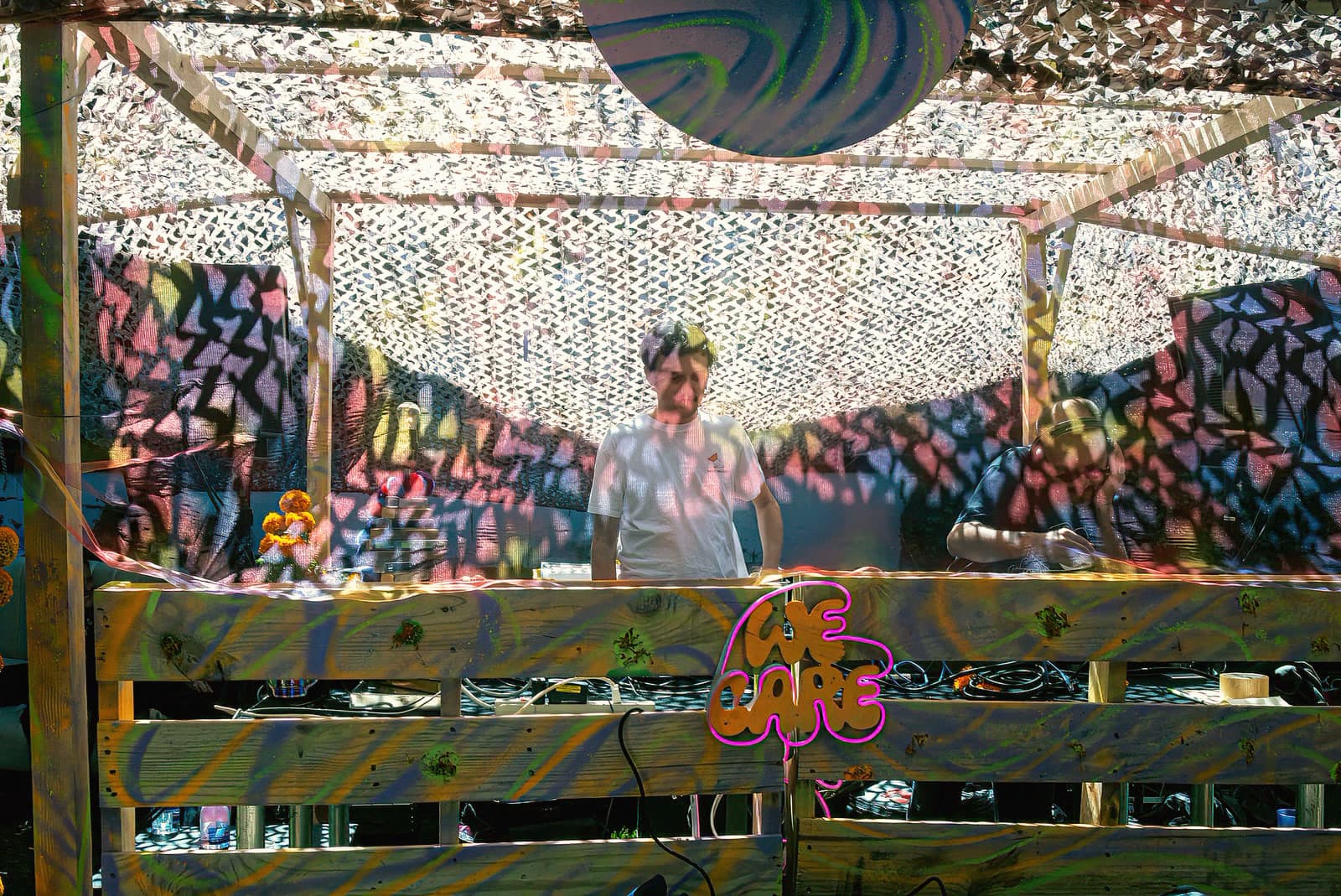
Most of Mexico City's electronic music calendar is built to be seen: festival brands, VIP tables, a line of cameras at the door. Jay Tripwire played something else entirely this weekend, 90 minutes outside the city in the hills of Milpa Alta, at an event most of the city's clubbers will never hear about unless they already know who to ask.
That's the point of CAPRÍSONO. Run by the local collective Mundo Capricho, the gathering just closed its third edition on November 14 and 15, which already separates it from the one-off pop-up raves that flare up and vanish around Mexico City every season. Three editions means a crew that has figured out logistics, repeat trust with a crowd, and a reason to keep coming back to the same mountain.
Why build a festival where almost nobody can find it?
Milpa Alta is one of Mexico City's most rural boroughs, known for nopal farms and pine forest, not nightlife. Getting to CAPRÍSONO required private transport, and first-phase tickets were capped at 700 Mexican pesos with a hard limit of four per order, a deliberate brake on the event scaling into exactly the kind of commercial circuit it was built to avoid. Shakolin, Sibil and GOG joined Jay Tripwire among the 16 acts spread across more than 20 hours, split between the Buscando Libertad dancefloor stage and Juntxs, the ambient and downtempo room for the come-down hours.
The music stayed narrow by design too: deep house, hypnotic techno, experimental electronic, none of the big-room EDM crossover that fills Mexico City's commercial venues. Sound ran through a Funktion-One rig, the system underground crews specify when the goal is clarity on a mountainside with no walls to help it, not raw volume.
Deep house and hypnotic techno across a Funktion-One system, 20-plus hours, a crowd capped by design rather than by a venue's fire code.
What does a third edition actually prove?
Anyone can throw one party in a field. Getting a crowd back for a third year, in a location with no infrastructure to speak of, with a ticketing cap that caps revenue on purpose, says the organizers are optimizing for something other than growth. In a scene where private equity is buying up festival brands and club chains, a collective choosing to stay small on purpose is itself the story.