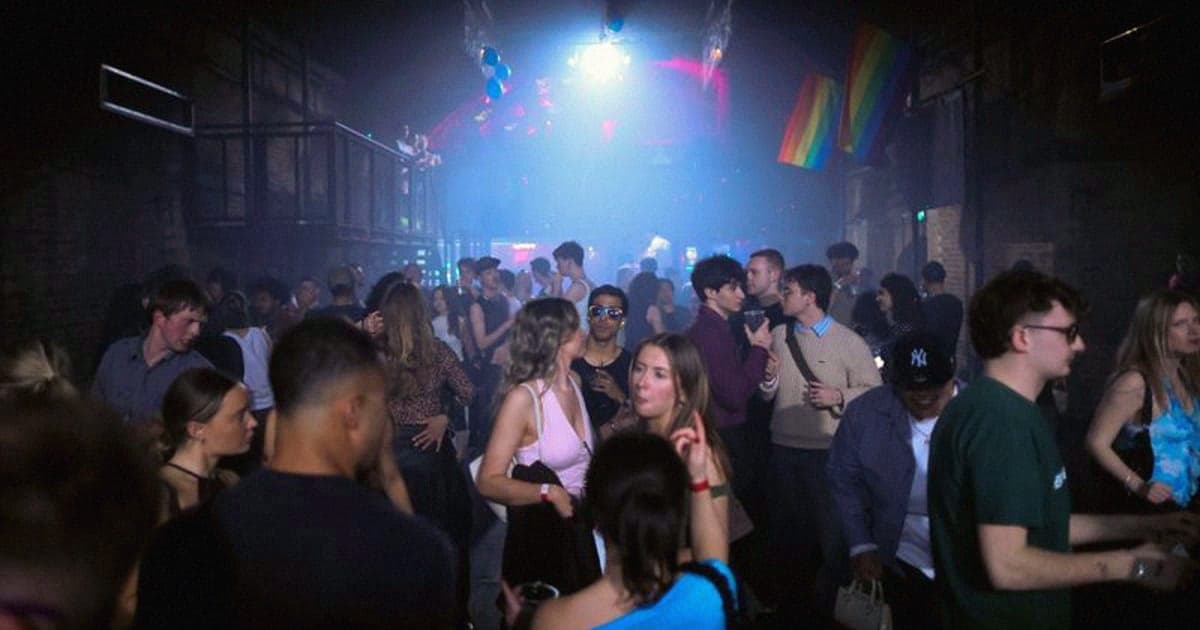
Berlin built its global reputation on the idea that the door price was almost beside the point: you paid to get in, and the club made its real money keeping you on the floor and at the bar until sunrise. A new study from Clubcommission Berlin and the research firm Goldmedia, surveying 163 clubs and organizers from Clubcommission's 181-member base (102 completed responses), shows that model has quietly inverted.
In 2017, roughly 60% of a typical Berlin club's revenue came from food and drink, with tickets accounting for about 21%. In 2026, tickets generate around 59% of revenue as bar spend has fallen away. It is the same business wearing a different skeleton, and it is a much more fragile one: a club living off door revenue has to sell every single ticket, while a club living off the bar could survive a soft night on volume drinkers.
Why is the money drying up if the door numbers hold?
The study's occupancy numbers are the strangest part of the picture. 83% of events still reach at least 50% capacity, proof that demand for Berlin nightlife hasn't collapsed. But only around 25% of events clear 75% occupancy, the threshold where a club actually turns a real profit on the night. Attendance and profitability have decoupled: rooms are filling up enough to look busy on Instagram and still losing money on the books.
That gap is squeezing clubs from both directions. 92% of respondents agree that rising ticket prices are pushing out lower-income clubgoers, the exact demographic that used to prop up bar sales through the night. Push door prices higher to cover costs, and you thin out the crowd that would have bought the drinks that used to cover costs. Only 61% of clubs now cover their operating expenses at all, down sharply from 79% in 2017, and 39% closed last year in the red.
"Berlin's club culture is not dying; it is under pressure to transform."
Who's paying the price behind the decks and behind the bar?
The headline closure number is less dramatic than the mood suggests: 24 Berlin clubs have shut since 2020, against roughly 25 openings in the same window, so the raw count of venues has held close to flat. The damage shows up instead in the workforce. 36% of club staff, the bar backs, door staff, technicians and promoters who actually run a night, work as mini-jobbers, Germany's precarious part-time employment category with no guaranteed hours and minimal social insurance. Only 8% hold full-time, socially-insured jobs in the sector. A scene can keep its venue count stable while hollowing out the people who staff it, and that is what the data shows happening.
What is Clubcommission actually asking for?
The study isn't just a diagnosis, it comes with a six-point ask: legal recognition of clubs as cultural venues rather than pure entertainment businesses, tenure and security of tenancy so venues aren't priced out by redevelopment, direct funding, better working conditions for staff, access equity for lower-income clubgoers, and stronger political visibility for the sector. 86% of surveyed clubs want systematic access to state-owned properties, the cheapest lever a city government actually controls, to help stabilize the real estate side of the equation.
23% of respondents say they are actively weighing closure within the next year. That's not a scene in freefall, but it is a scene where a quarter of the operators who built Berlin's reputation are running the numbers on whether to keep going.