Why do strangers on a dancefloor start to feel like family?
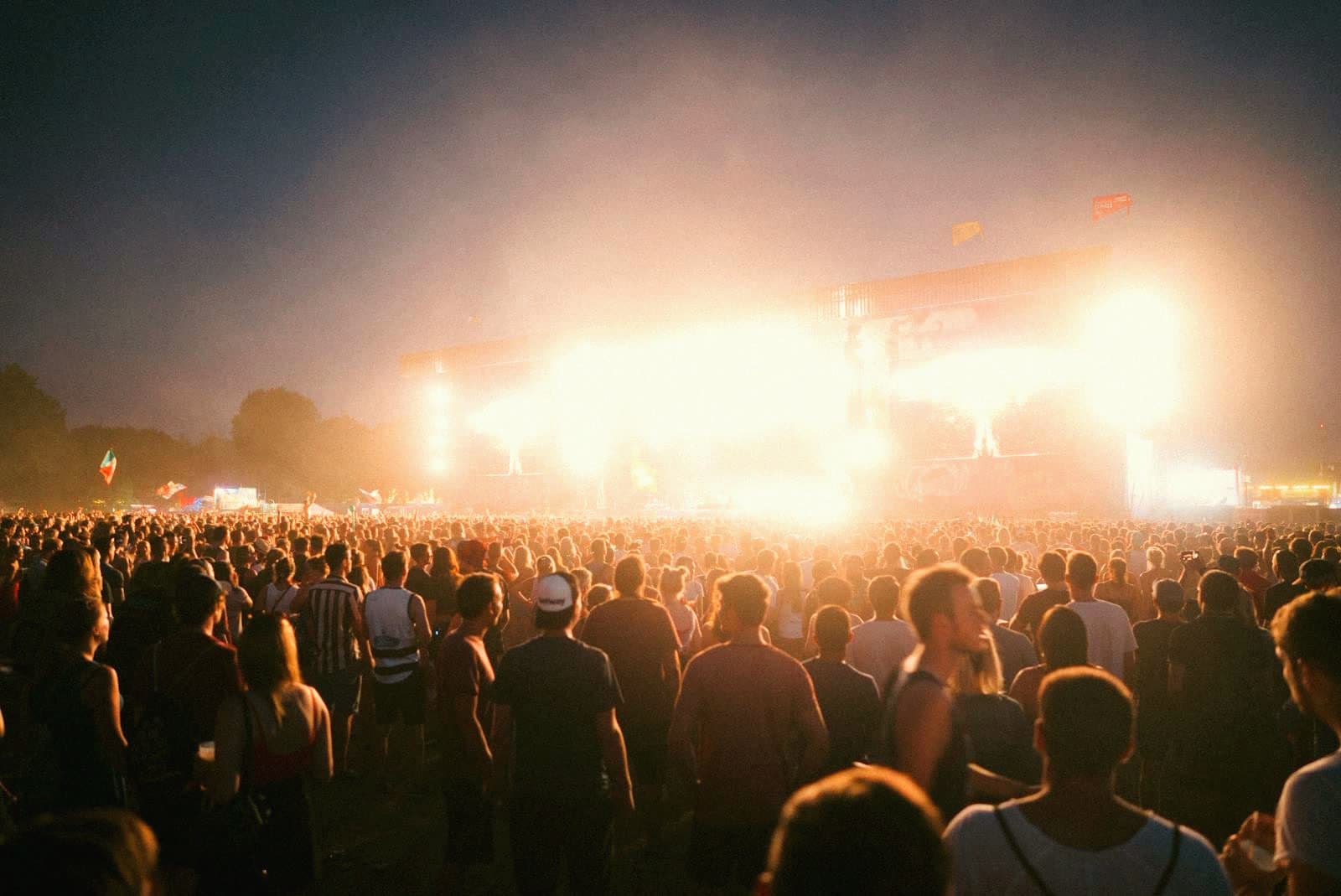
A century ago Émile Durkheim watched people fall into the same movements at a religious rite and named the charge that ran through them. When a group gathers and moves to one rhythm, he argued, something appears that no single person in the room produces alone, and the wall between yourself and everyone else goes thin. He called it collective effervescence, and he treated it as the engine under ritual itself, the reason people walk away from a gathering feeling altered and bound to the strangers they stood beside. He was writing about ceremonies and harvest festivals. He might as well have been standing in a warehouse at 3 AM.
The underground built its whole ritual around that charge without needing the theory: the slow warm-up that gathers the room, the long climb, the peak where the crowd stops being a set of individuals, the comedown where people who never met swap numbers like old friends.
What is actually happening in your body when the room moves as one?
This is where it stops being poetry. Oxford anthropologist Bronwyn Tarr and her colleagues put the feeling on a lab bench. In one study they had Brazilian teenagers dance in threes to 130 BPM electronic music, told to move either in sync or out of sync, with high or low physical effort. Moving in time and moving hard each raised the dancers' pain threshold, a standard proxy for endorphins, and each made them report feeling closer, with the strongest effect when they did both. A follow-up silent-disco experiment with 94 people found the same split: only the in-sync dancers felt the closeness and the pain-threshold lift, while out-of-sync dancers felt neither.
The clinching detail came when the team blocked the body's opioid system with naltrexone and the pain-threshold effect vanished. That is the fingerprint of endorphins, the same internal chemistry that bonds you to the people you already love, switched on by nothing more than moving in time with others.
Move in rhythm with a room full of strangers and your body pays you in the exact chemistry it uses to keep the people you love close.
Why does the underground do this better than a stadium?
The mechanism has conditions, and a good club night meets almost all of them by accident of form. A steady four-to-the-floor pulse held for hours gives a room the time it needs to lock into one rhythm. A dark floor with no stage to stare at turns dancers toward each other instead of toward a screen. Repetition and volume do the rest, pulling hundreds of separate nervous systems onto the same beat.
It also explains, precisely, what kills the feeling. A phone raised for a whole track drops you out of the room's rhythm and back into your own head. A VIP rope splits a crowd into the people moving together and the people watching them from a table. A headline slot cut to ninety minutes never gives the floor long enough to reach the part that bonds it. None of these are just aesthetic complaints. They are the mechanism being switched off.