What does PunchBox 2 actually do?
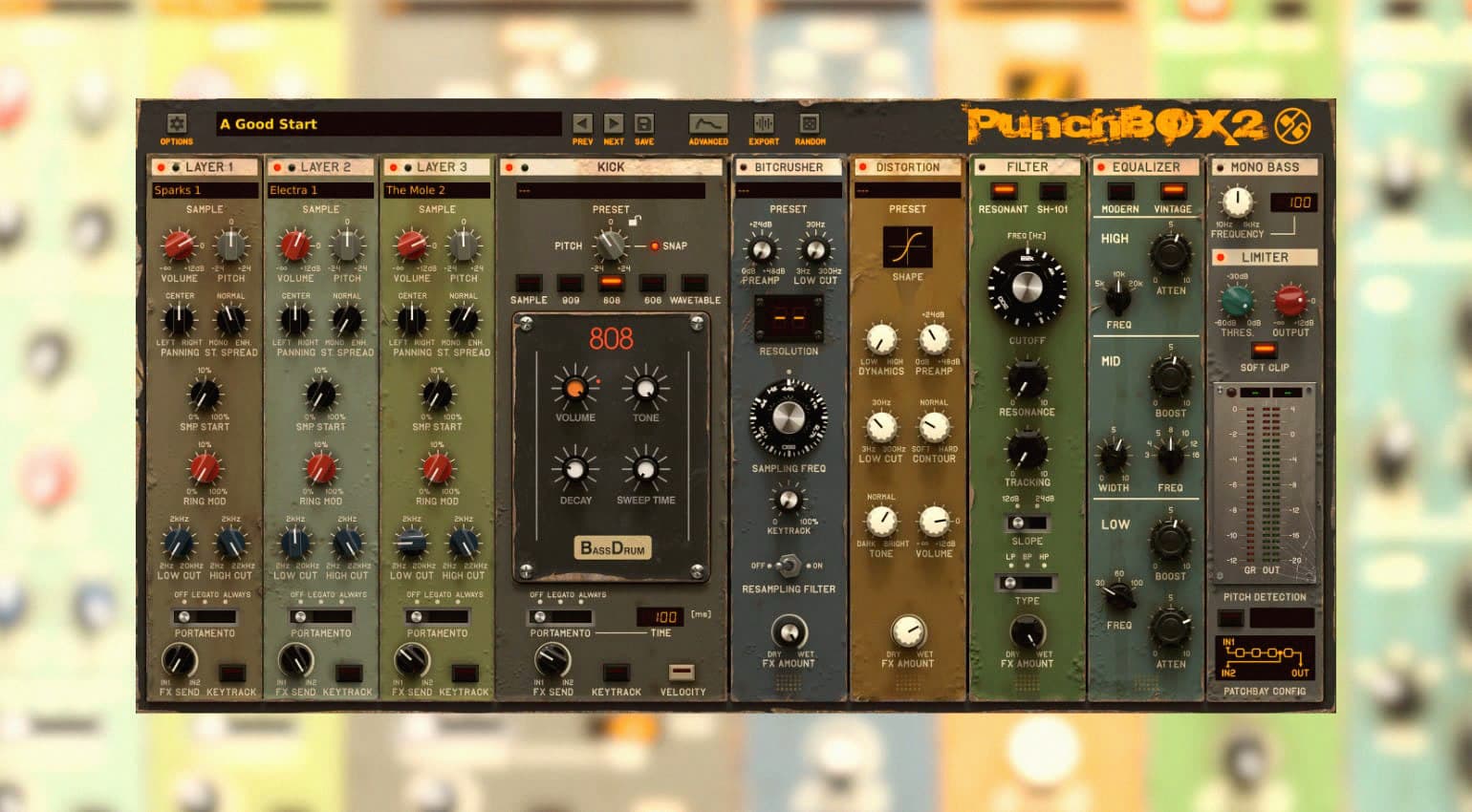
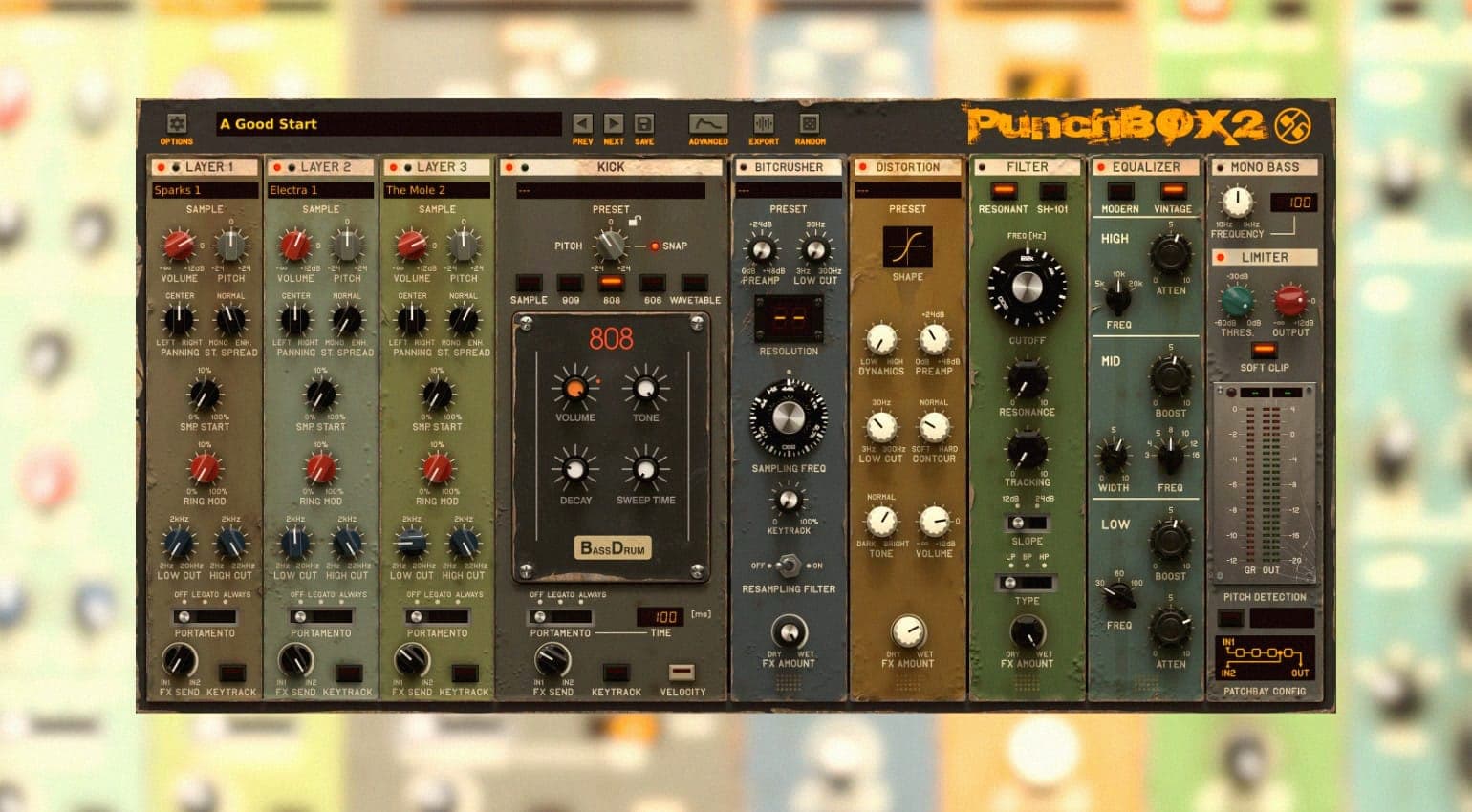
The kick is where house and techno live or die, and D16 Group has spent this second version turning that one sound into its own instrument. At the centre sits a kick generator with five engine modes: a sample layer, faithful 909, 808 and 606 models, and a new wavetable engine for kicks that move and morph instead of just thumping. You stack up to three sample-and-synth layers, tune each one, and shape the result in the redesigned Advanced Editor, now with a waveform preview and multi-stage envelopes so you can draw the exact pitch and amplitude curve of the hit.
A kick is not one sound. It is a pitch sweep, a click, a body and a tail, and PunchBox 2 lets you build each of those by hand.
What is new since the first PunchBox?
This is not a preset refresh. The wavetable engine is genuinely new, and so is the Patchbay Config system, which gives you ten routing layouts to send signal through the synthesis and effects stages in different orders. There is real-time pitch detection so the plug-in tunes a sample to your track without guesswork, a Sticky Sample Browser that keeps your place while you audition, and drag-and-drop wave export that renders a finished kick straight into your DAW. Multi-output routing adds five stereo outs, so the sample layers, the synth body and the effects can each land on their own channel at mixdown.
Is the effects section enough to finish a kick?
D16 built the processing in rather than making you chain external plug-ins. On board you get a bitcrusher, distortion, a filter, an equalizer, a dedicated mono-bass stage to keep the low end centred, a limiter and a soft clip. With 1,506 samples, 1,120 master presets, 243 kick presets, 66 wavetables and separate banks for the effects, most producers will land on a usable starting point before they touch a knob, then carve from there.