Why does a vocal synth that skips AI matter right now?
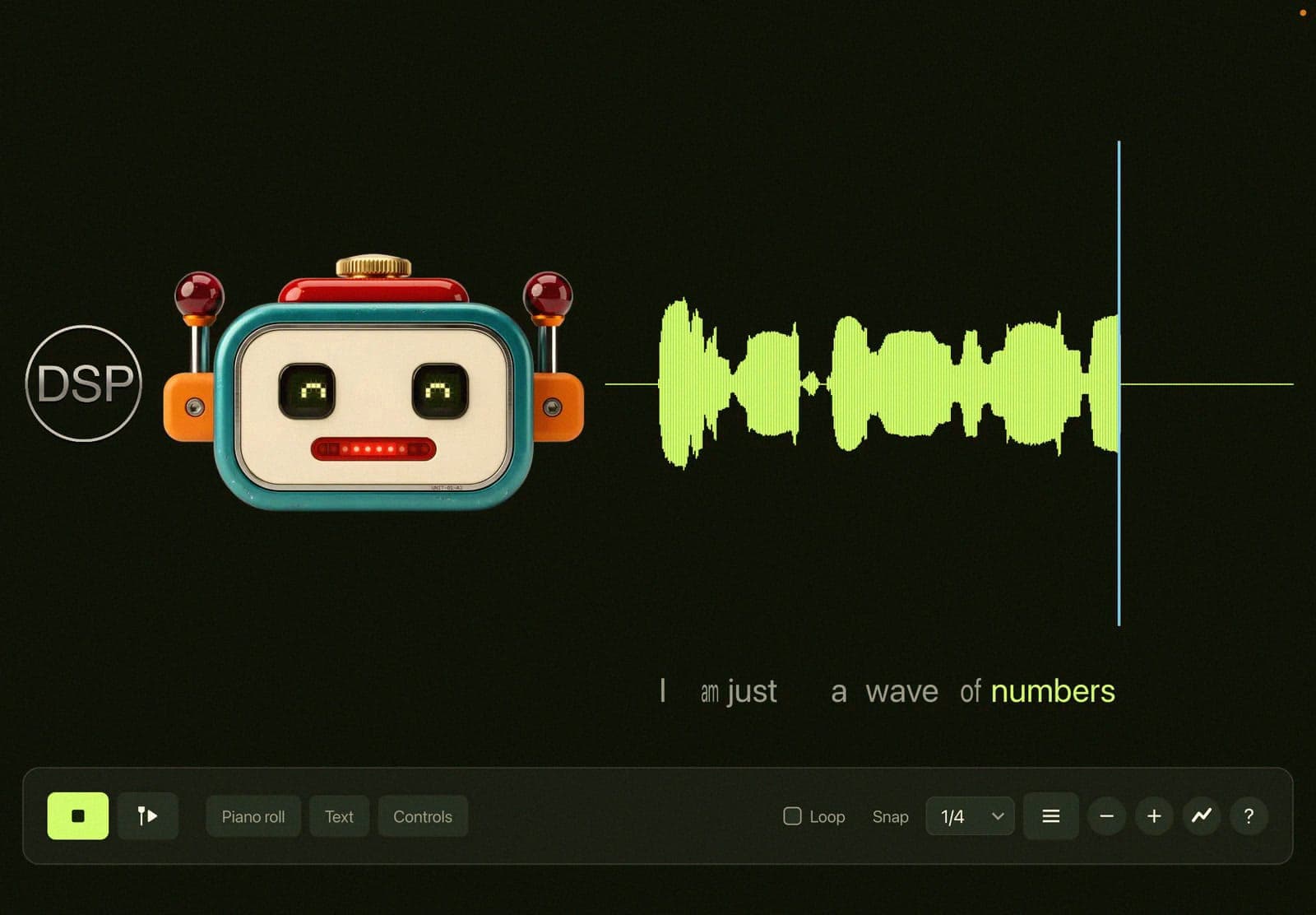
Every singing voice tool on the market right now wants to sell you an AI model trained on somebody's voice. Roboto, the free plugin discoDSP put out this week, does the opposite: it synthesizes singing from scratch, with no training data and no voice clone sitting behind it. Write a melody in the piano roll, type a word on each note, and the plugin sings the lyric back using pure signal processing, a glottal pulse source feeding five formant resonators, with shaped noise standing in for consonants. No samples, no neural net, no singer whose likeness got scraped.
That is a deliberate throwback. This is the same family of synthesis that powered 1990s singing software and, later, early Vocaloid engines, before the current wave of AI voice cloning took over the category. For producers who have watched AI voice lawsuits and licensing fights pile up over the past two years, a formant synth that sings convincingly without any of that baggage is a genuinely useful alternative, not just a nostalgia trip.
How does Roboto actually make a plugin sing?
Roboto ships with twenty voice presets split evenly: ten modern voices and ten "classic" presets built to sound like 1990s singing software, plus a talk-box mode that models a plucked string driven through a speaker and a tube circuit instead of a vocal tract at all. It sings in eight languages, English, German, French, Spanish, Japanese, Russian, Finnish and Swedish, each with its own pronunciation rules built into the engine.
Write a melody in the piano roll, type a word on each note, and Roboto sings it.
The plugin runs as VST3, AU or AUv3, or standalone, free of charge, on macOS, Windows, Linux, iPhone and iPad.
What is Blub, and why does it look like a 2001 freeware tracker?
The second release is less of a throwback and more of a revival. Blub, now in public beta at version 0.8, is a modular tracker for macOS built explicitly in the style of Jeskola Buzz, the beloved Finnish freeware tool that defined a whole generation of modular tracker workflows before development stalled in the 2000s. In Blub, AU and VST3 plugins sit alongside built-in machines (an arpeggiator, drum machine, sample tracker, several synths) on a zoomable canvas, wired together with cables, then played and automated through tracker-style patterns and a song sequencer.
It can import legacy Buzz, ProTracker, FastTracker II and Impulse Tracker files, a direct nod to that scene's archive of old songs, and it bundles an MCP server so AI coding agents can script the tracker itself. discoDSP is upfront that it is still rough: "Expect missing features, changes between versions and the occasional crash," with song file compatibility only promised from version 1.0 onward. It requires macOS Sonoma 14 or later, on Apple Silicon or Intel.