What does Phrase Detection actually change?
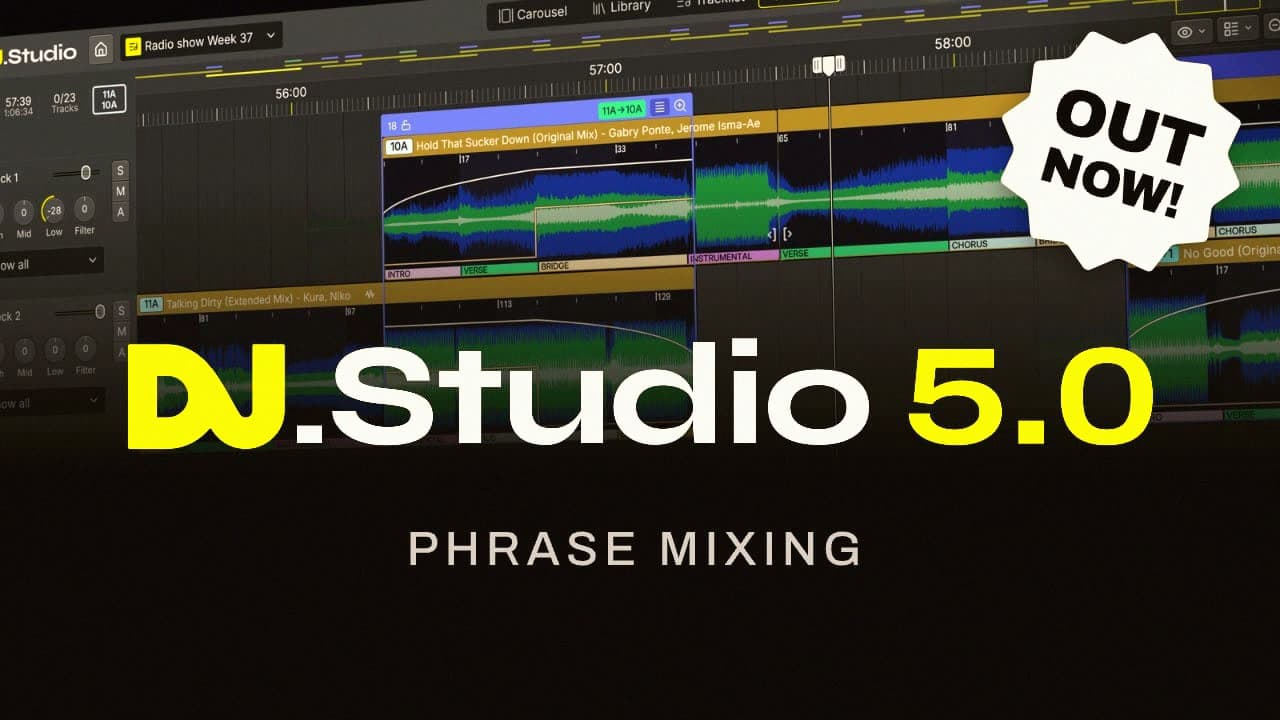
Until now, DJ software has been fundamentally illiterate about music. It knows where beat one is, it knows the BPM, and that is more or less where its understanding of a track ends. Phrase Detection in DJ.Studio 5.0 goes a layer deeper: it analyzes a track's structure and lays the intro, verse, chorus, bridge and outro straight onto the waveform. Per DJ LIFE Magazine, CEO Siebrand Dijkstra framed the point plainly: the software now shows a DJ "where your cue point belongs" instead of leaving them to scrub back and forth by ear hunting for the drop. For anyone who has spent twenty minutes nudging a cue point two bars earlier because the vocal came in on an odd phrase, that is the actual pain point being solved.
Why does a drifting beatgrid even matter?
A static beatgrid assumes a track holds one tempo from first beat to last. Plenty of house records do not, especially older disco and boogie cuts recorded to a live kit, or anything sampled off vinyl with the natural wow and flutter that comes with it. Smart Beatgrid is built for exactly that case: it finds the first beat more precisely than before and keeps the grid locked even as the track's actual tempo creeps or wobbles underneath it. That sounds like a small fix, but it is the difference between a mashup that phases out of time by the second chorus and one that holds all the way through.
Is this really built for mashup DJs?
The sample lanes make the intent obvious. DJ.Studio 5.0 supports up to 10 lanes at once, enough to stack an acapella, a drum loop and a hook from three different records on top of a base track, plus a dedicated Input Lane for recording a voice-over straight into the session. That is not mix-prep software anymore, that is a mashup studio. Combined with phrase-aware editing, it means a bootleg or edit producer can now align a vocal to the actual chorus of the instrumental rather than to a beat count they had to work out manually, which has been the single most time-consuming part of mashup culture since the genre existed.
What changed under the hood?
The whole audio engine was rewritten from scratch in native C++, trading the old framework for something that uses less CPU and memory and renders faster, DJ.Studio says a 60-minute mix now exports in under three minutes, roughly three times the speed of version 4. Alongside that, one unified library now connects to rekordbox, Serato DJ Pro, Traktor, Engine DJ, djay Pro, VirtualDJ and Mixed In Key, pulling tracks and playlists in and pushing finished mixes back out with cue points and beatgrids intact. DJ.Studio was never trying to replace the booth software you already play on. It is positioning itself as the prep layer that sits above all of them.