What is Bassliner, and why does 'not AI' matter?
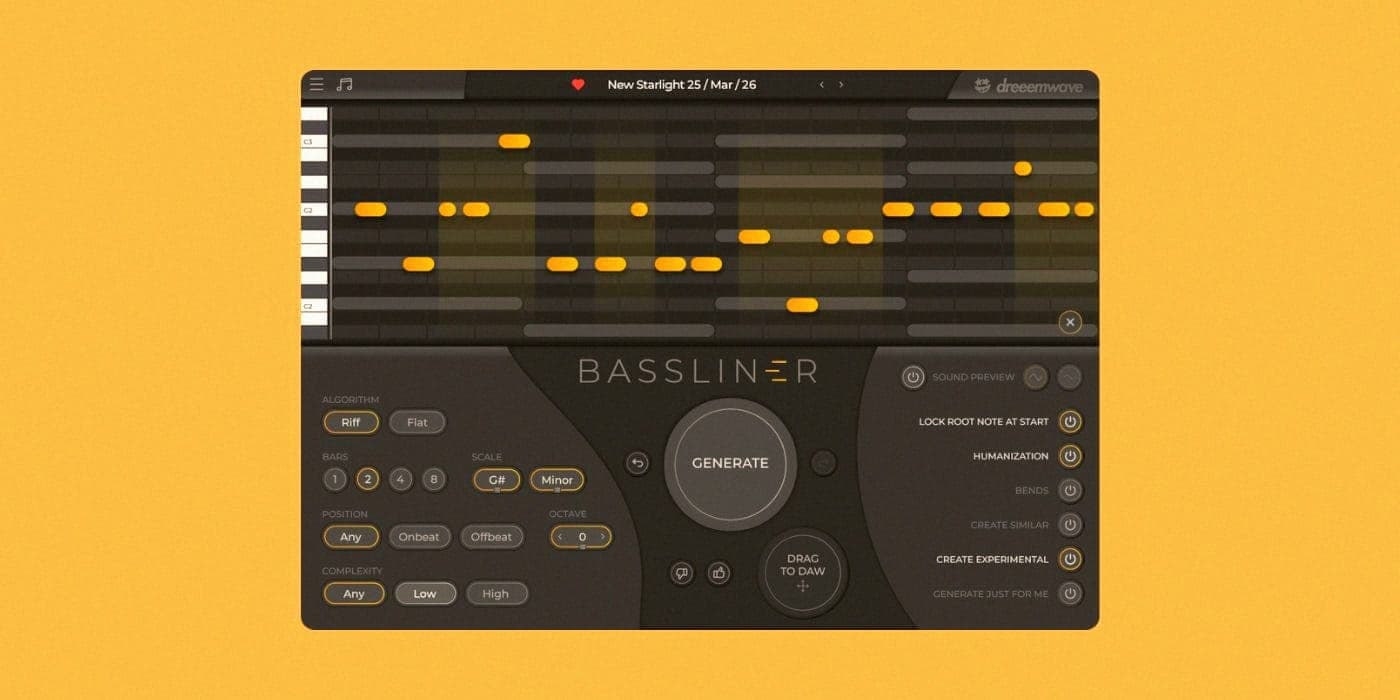
Bassliner is a MIDI bassline generator from Dreeemwave, a 24-euro plugin that runs as VST or AU in any major DAW. You generate a pattern, tweak it in a piano roll, and drag the MIDI into your project. Nothing about that is new. What the makers keep repeating in 2026 is what is under the hood: an algorithm built from six years of research into melodic perception, not a model trained on a pile of other people's songs. Because there is no training set, they argue, there is no copyright ambiguity over what comes out, and the MIDI is yours.
A year ago that would have been a footnote. With Suno and Udio fighting copyright suits in court and stores quietly filling with AI tracks, 'not AI' has turned into a feature you can put on the box.
How does it actually generate a line?
The part worth knowing is User Input Awareness: drop in a MIDI clip as a reference and the plugin writes patterns that follow your chord progression instead of guessing. On top of that sit the usual steering controls, riff or flat algorithms, scale, bar length, complexity, so you push it toward what you want rather than rolling the dice. It has been around in beta since late 2024 and has been updated since, and this release went out with support from Cableguys.
Is it really different from the AI it is distancing itself from?
Honest answer: a rule-based generator and a neural model both hand you ideas you did not play. The difference producers actually care about is provenance and rights. An algorithm grounded in math has no dataset to license or litigate, and you own the output clean.
The thing the scene is nervous about is not automation. It is where the material came from, and whether you are allowed to keep it.
Whether calling that 'not AI' is a principled line or smart positioning is exactly the argument, and it is a healthy one to be having.