What actually happened on September 20?
Berlin's state election handed Die Linke its strongest result in the city's postwar history: 25.7%, ahead of the CDU on 18.8%, the AfD on 16.3%, the Greens on 14.3% and the SPD trailing at 12.1%. Exploratory coalition talks between Die Linke, SPD and Greens started within days, per Rave the Planet's coverage of the vote and confirmed by Berlin's official election results portal.
What's new for the techno world is that this wasn't a footnote. For the first time, club and venue survival showed up as an actual line in multiple parties' platforms, not a footnote to a culture budget nobody reads.
Why is club funding suddenly worth campaigning on?
Because the numbers back it up. Only 61% of Berlin's clubs broke even in 2025, down sharply from 79% in 2017. Nearly a quarter, 23%, say they're weighing closure within the year. Clubcommission Berlin's questionnaire to the parties, referenced by Rave the Planet, turned a scene complaint into a documented crisis, and Die Linke responded with a platform plank: dedicated funding for curated programming, an expanded soundproofing fund, streamlined permits, and better access to noncommercial public space. The SPD and Greens both proposed structural support that goes beyond one-off project grants. The CDU leaned on existing mechanisms plus faster paperwork and secured venues on publicly owned land.
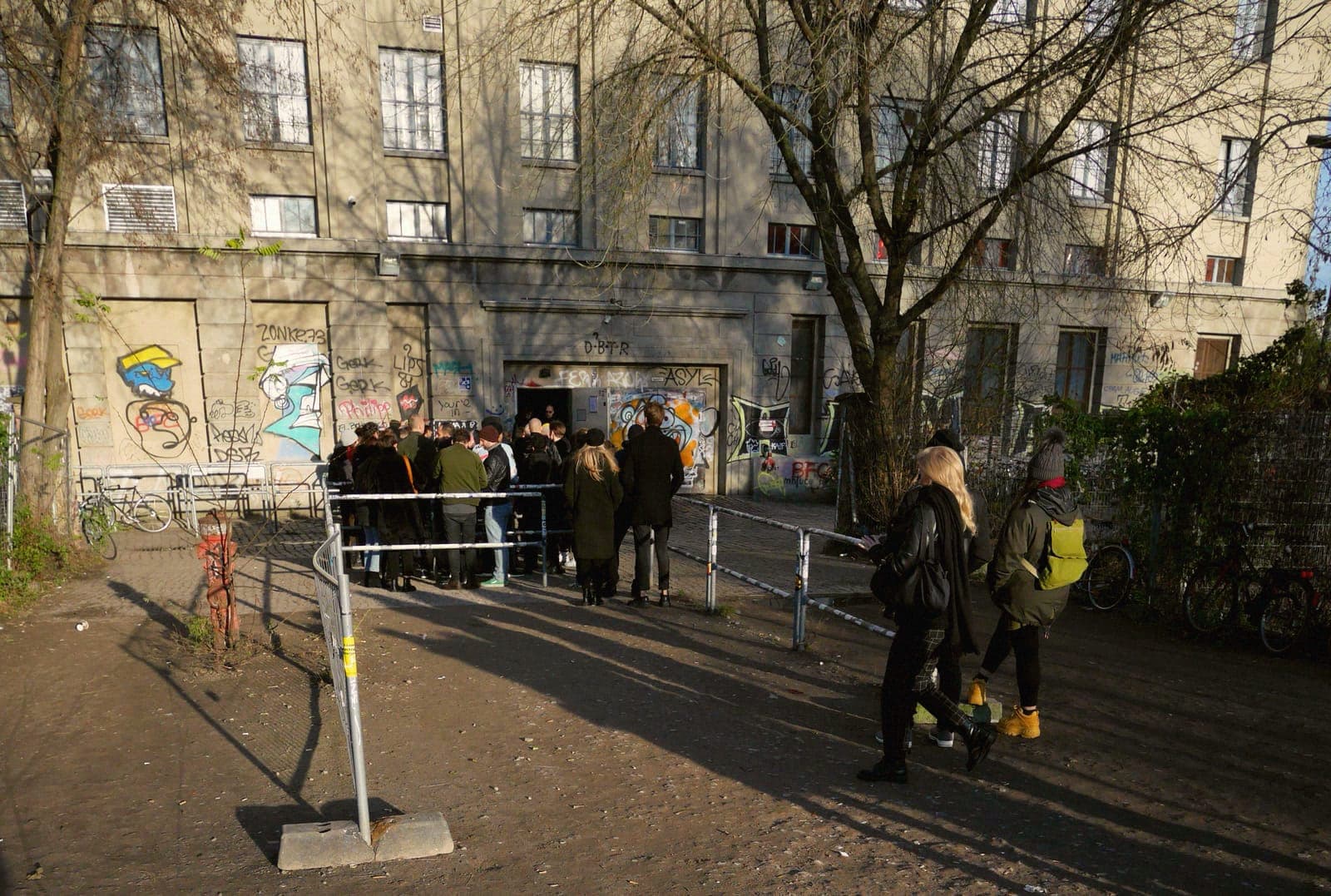
Berghain's queue still wraps the block on a Saturday, and that's the strange part.
Does any of this actually fix the problem?
Here's the number that should worry every promise made on the campaign trail: 83% of surveyed venues reported average capacity above 50%, a third above 75%. Berlin's clubs are not empty. They're full and still losing money, which means the crisis lives on the cost side, not the demand side. Rent, energy and staffing have outpaced a revenue model that used to lean on bar sales and now leans almost entirely on the door: admissions accounted for roughly 59% of club revenue in 2025 versus 21% in 2017, while food and drink collapsed from about 60% to 20% over the same stretch, per the Goldmedia study cited in Rave the Planet's reporting.
That reversal is the real story behind the ballot box promises. A soundproofing grant or a faster permit helps a club survive a fight with new neighbours, but it doesn't touch a rent bill or an energy contract. Whether Die Linke's platform survives contact with an actual coalition budget, red-red-green or otherwise, is the question that decides if any of this was more than a campaign line.