Progressive house met high-tech minimal on a single stage in Brussels this weekend, and the underground is still deciding what to make of it.
What actually happened in Brussels?
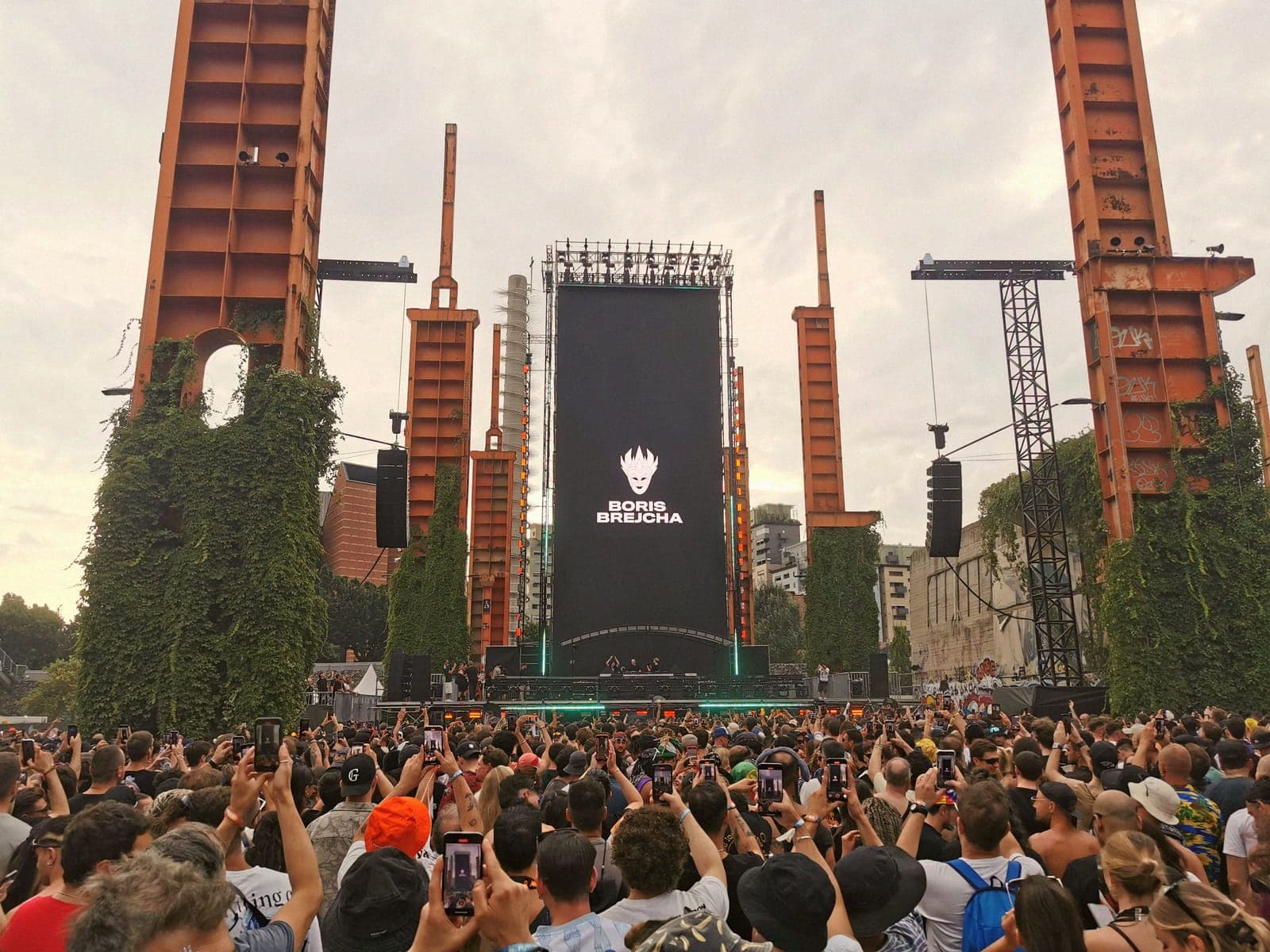
Eric Prydz and Boris Brejcha played a genuine back-to-back, not a swap-out double bill, at Royal Palace Open Air on Paleizenplein on August 15. The show was organized by Belgian promoter Hangar, ran from 3pm to midnight and pulled around 13,000 people into the square in front of the Royal Palace, a setting that already tells you this was built as a spectacle, not a club night.
What made it news back in May, when the pairing was first announced, is how rarely this exact meeting happens. Prydz has spent the last decade building HOLO and EPIC, holographic and laser-driven live shows that turn a DJ set into a stadium-scale production. Brejcha has spent the same decade doing close to the opposite: scripted, hour-plus solo journeys under a Venetian mask, released almost exclusively through his own Fckng Serious imprint, rarely handing the decks to anyone else mid-set. Two artists who built entire identities around control, one through maximal visuals, one through minimal restraint, agreeing to share a booth is the actual story here, not the marquee names.
Why does this pairing feel so unlikely?
House and techno culture treats the back-to-back as a trust exercise as much as a musical one. You hand someone else the wheel of your set, mid-crowd, with no do-overs. Brejcha's whole catalogue argues against doing that: his high-tech minimal sound depends on tension he builds and releases on his own clock, over a long arc, which is exactly what a B2B disrupts. Prydz, for his part, usually performs inside a fixed production built around his own tracks and cues, not something you improvise around another DJ's transitions.
A B2B between these two isn't a genre mashup, it's two control freaks agreeing to let go at the same time.
That's what turned this into a talking point among house and techno heads well before doors opened: not "will it sound good" but "will either of them actually let it happen."
Does the pairing actually work, or is it a booking gimmick?
This is where the scene is split. One camp reads it as a genuinely interesting risk: two artists at the top of their respective, very different lanes testing whether progressive house's emotional builds and high-tech minimal's clipped, hypnotic groove can share a room without either one flattening the other. The other camp reads it as exactly what a 13,000-capacity open-air booking incentivizes: two big names on one poster, engineered virality, low actual musical risk once the set is happening and both sides play it safe.
Both readings can be true at once. A first-ever B2B between artists this stylistically opposed is rare enough to be worth covering regardless of how the two hours actually played out, because the fact of it happening says something about where B2B culture is heading: promoters increasingly booking contrast over compatibility, betting that the friction itself sells tickets.
Why it matters
This is a live-culture test case, not just a lineup curiosity: if a pairing this far apart on the house-to-techno spectrum can draw 13,000 people and get read as a genuine risk rather than a stunt, expect more promoters to chase contrast booking over safe, genre-matched B2Bs.
What we think
We'd call this an exciting risk, not a gimmick, precisely because Brejcha almost never does this. A booking only counts as a genuine risk when one side has something real to lose, and Brejcha's whole brand is built on never sharing control of a set. Prydz showing up to test that is the story worth watching, regardless of how the two hours sounded on the night.