What actually landed in Noisy 2.6?
Noisy 2.6, released July 23, 2026, is the biggest overhaul of Expressive E's noise-through-resonance synth since Noisy 2 launched in 2024. The original pitch was simple: feed noise or acoustic excitation through resonating filters and shape it live with pressure, movement and touch. Version 2.6 keeps that core but bolts five new engines onto it: Unison, FM, FM Feedback, Harmonics and Wave Map, a morphing wavetable-style resonator that blends between waveforms in real time. Add those to the original Analog and Acoustic resonators and the plugin now runs eleven distinct sound-generation models under one roof. Expressive E also threw in nine new effects (a second amp simulation and a Galactic Vibe unit among them), five fresh noise sources, an extra LFO shape and 1,400 presets split 650/750 between MPE-tuned and standard-MIDI patches. All of it is free for anyone who already owns Noisy 2; new buyers get an introductory $89/EUR89 before the price reverts to $149/EUR149.
Why does FM and wavetable synthesis under MPE actually matter?
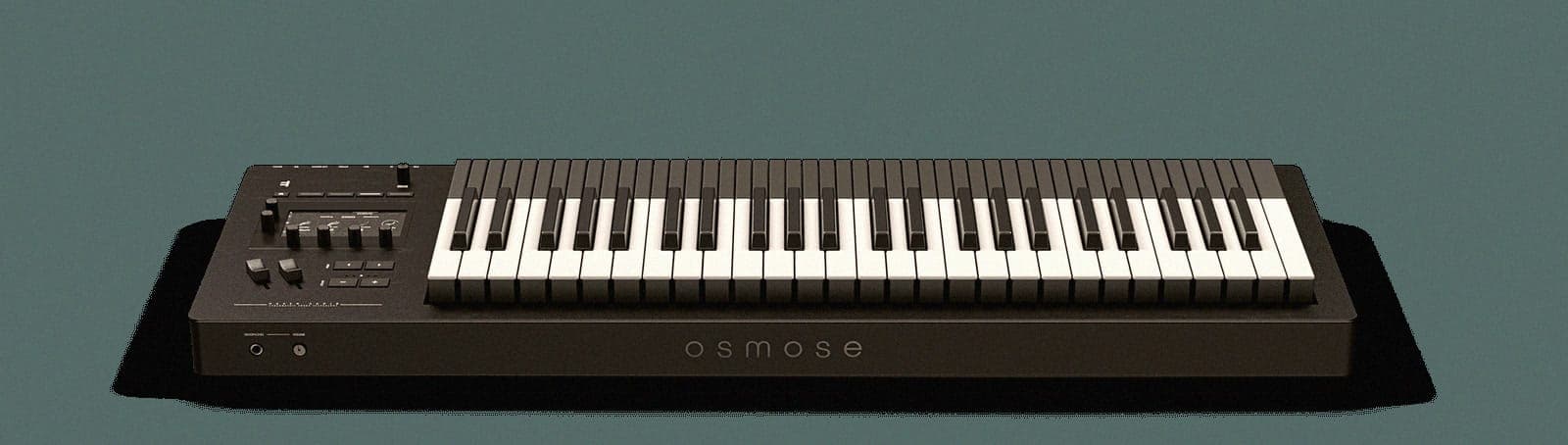
Here's the part worth paying attention to if you perform live rather than just program in a DAW. FM synthesis (think DX7-style operator stacks) and wavetable synthesis (think Serum-style position scanning) have always been programmed once, then triggered: you dial in an algorithm or draw a wavetable path, then press a key and it plays back. Neither was ever built around continuous per-note gesture. MPE (MIDI Polyphonic Expression) breaks that mold by letting a controller send independent pitch bend, pressure and Y-axis movement per individual note rather than per channel. Folding FM and Wave Map into that framework means a performer on Expressive E's Osmose keybed or a Touche slider can now bend FM feedback amount or scan a wavetable position mid-note, in real time, exactly the way they were already sliding through Noisy's acoustic resonators. That's genuinely new ground: FM and wavetable engines that answer to how hard and how far you push, not just which key you struck.
Who is this actually built for?
Expressive E designed 2.6 around its own hardware, Osmose and Touche/Touche SE, but it isn't locked to it. Any MPE controller, or a plain MIDI keyboard using velocity and aftertouch instead of full per-note gesture, can run it. For a deep-tech or organic-house performer building a live set around modulation and texture instead of fixed loops, that's the actual pitch here: one plugin now covers acoustic resonance, FM grit and wavetable movement, all steerable by touch, inside a rig that was already built for expressive control.
"Sounds that react to you" is the line Expressive E has used for Noisy since day one. 2.6 is the update that finally gives that reaction two new places to happen.