What exactly did rgrvmusic port?
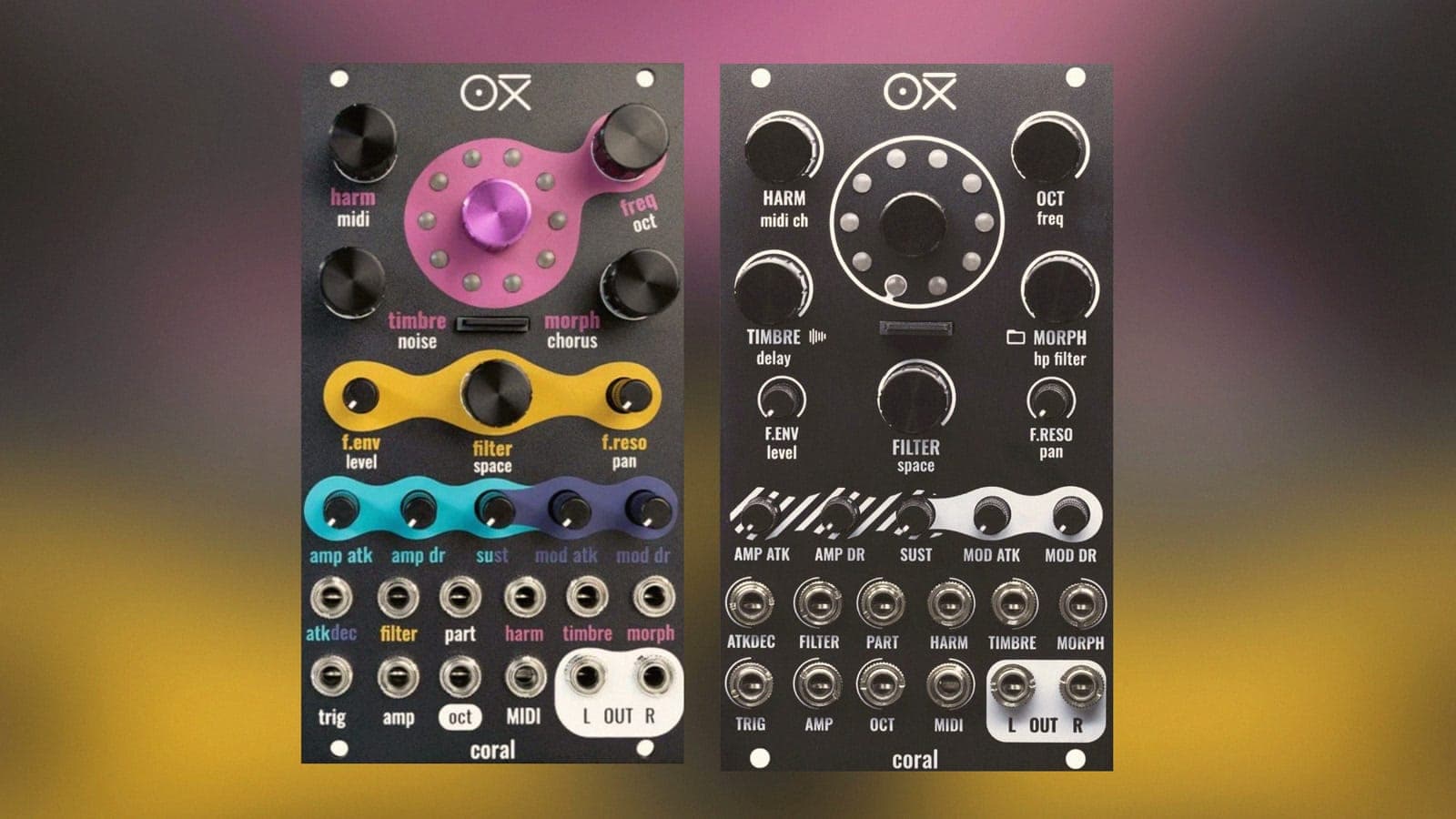
Felucca is the firmware behind the M-VAVE FM-1, a niche hardware synth built by the Dutch outfit Hugelton Instruments, the kind of box that circulates in boutique-synth forums rather than big-box stores. Because Hugelton released Felucca as free and open-source firmware, a developer working under the handle rgrvmusic was free to rebuild all nine of its synthesis engines inside Korg's own logue SDK, the toolkit Korg opened up for third-party oscillators and effects on its logue-series hardware.
The result is called Fluyt logue, and it installs on the Korg microKORG2 and drumlogue as nine separate units: analog (a two-oscillator virtual-analog engine with a resonator filter), trio (a three-oscillator paraphonic VA synth), phase (a phase-distortion oscillator), lofi (an aliased, low-bit pulse engine), wheel (a tonewheel organ with rotor simulation), noise (filtered noise with sample-rate crushing), formant (vocal formant synthesis), drum (a General MIDI numbered drum kit) and FM6, a six-operator FM engine ported from the open-source msfa project.
Why does a niche Dutch firmware matter on mass-market Korg gear?
Hugelton builds in tiny runs; most producers will never see an M-VAVE FM-1 in person, let alone own one. Its nine synthesis engines would normally stay locked to that single box. What changes the math is the GPL-3.0 license: once Felucca's code was public, nothing stopped rgrvmusic carrying its engines over to hardware that actually sits in bedrooms and live rigs everywhere, the microKORG2 and the drumlogue. Fluyt logue's units don't replace either instrument's synthesis engine outright, they drop in as oscillators inside the filter, envelope and amp architecture you already know, so your existing knobs still do the shaping.
What do you actually get, and does it cost anything?
Fluyt logue is free, hosted on GitHub under the same GPL-3.0 license as Felucca itself. rgrvmusic takes optional support through Patreon and Ko-fi, but none of the nine engines sit behind a paywall. Nine extra synthesis engines, on hardware a lot of producers already own, released with nothing to buy: that's the whole pitch.