What problem is CLARITY actually solving?
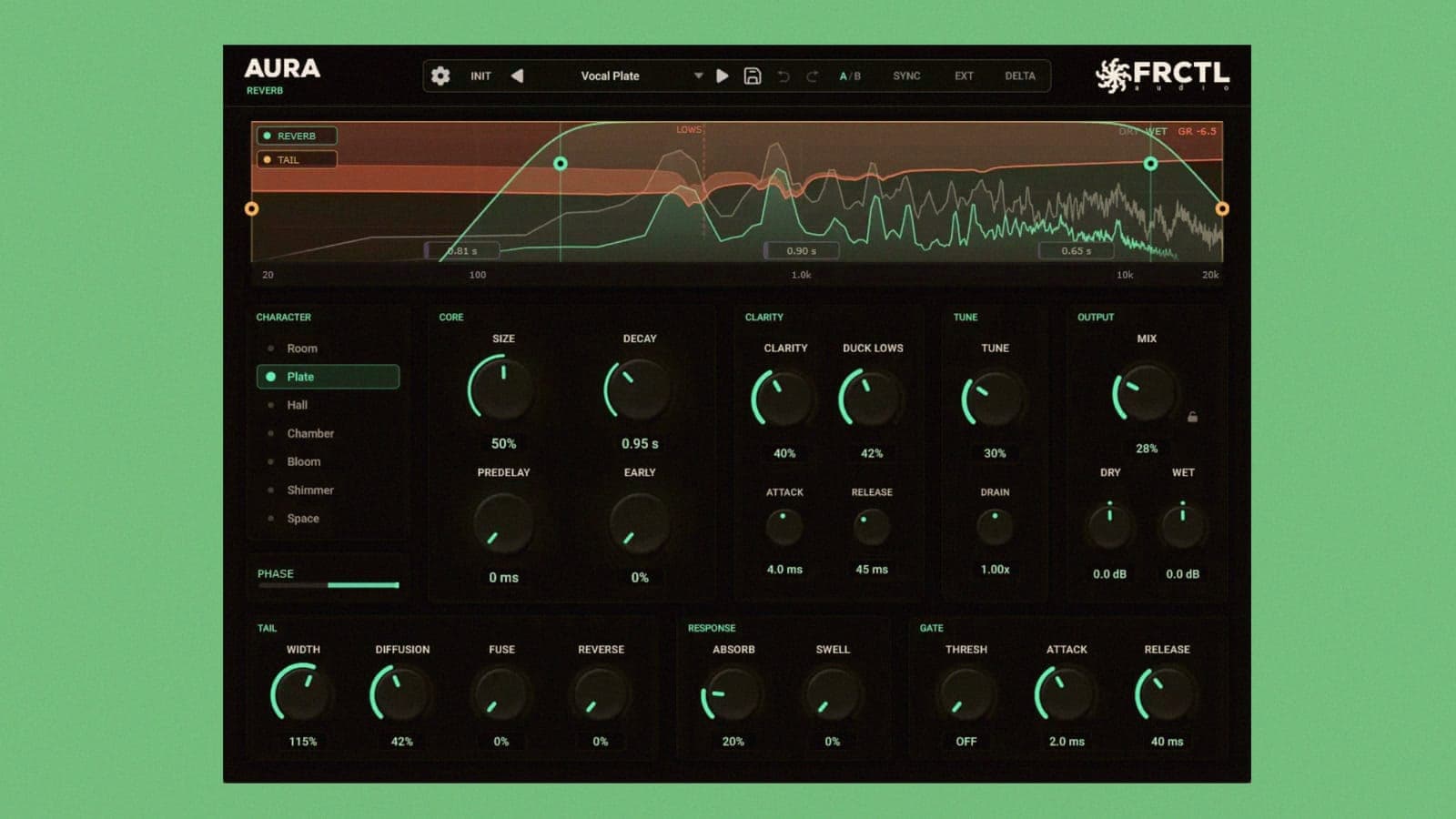
Reverb tails are supposed to add space, not eat the vocal. The usual fix is either a low reverb send or a sidechain compressor that crushes the wet signal every time the dry signal crosses a threshold, a blunt tool that ducks too early, too late, or across the whole spectrum at once. FRCTL Audio's new AURA plugin, released July 30, 2026 for VST3, AU and CLAP (plus a standalone build) on Windows, macOS and Linux, tries a different approach with its CLARITY control: instead of watching raw signal level, it tracks how loud the source actually sounds and pulls the tail down band by band, only in whichever part of the spectrum the vocal or lead element is occupying at that moment. No threshold to set, no sidechain routing to patch, and FRCTL says it runs at zero latency.
What do you get in the free AURA Lite versus the paid version?
FRCTL is shipping two tiers. AURA Lite is permanently free and reduced to four controls, SIZE, DECAY, CLARITY and MIX, with a single Hall voicing. The paid AURA builds on an eight-line feedback delay network with seven reverb characters (Room, Plate, Hall, Chamber, Bloom, Shimmer, Space), adds TUNE, ABSORB and SWELL shaping controls, a dedicated sidechain key input for manual ducking on top of CLARITY, dual tail EQs, a gate with reverse voicing, a spectrum analyzer, and 71 factory presets.
Is this priced to compete?
AURA is $24.99 through August 12, 2026, before returning to its $34.99 regular price, well under most mix-reverb competitors that sit north of $100. There's a 14-day free trial, a single-activation license, and no iLok or subscription requirement, which matters for a plugin pitched at producers who just want to try it inside a real session before committing.