Rockstar doesn't waste its closing shot. Fourteen licensed songs run through the 26 minutes of Elderbrook and Bob Moses' melodic house cut "Inner Light" carries the credits into darkness, right after Aluna and Jayda G's "Mine O' Mine" gets its own spin in the same stretch. Two house records, back to back, at the exact moment thirty million-plus viewers were still watching. That's not a licensing afterthought, it's a statement about what Rockstar thinks Vice City sounds like in 2026.
Why does a game studio have its own house label?
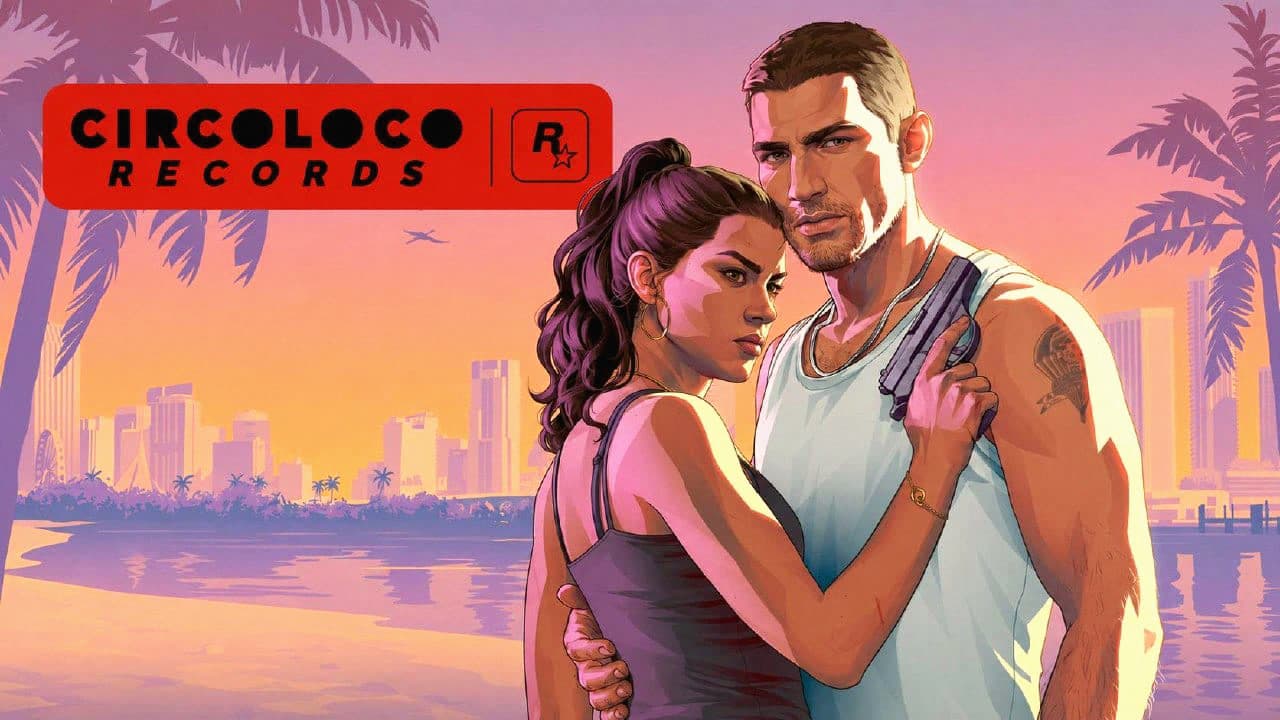
Because Rockstar built one, on purpose, five years ago. On May 24, 2021, Rockstar Games and CircoLoco Records announced Rockstar's first record label ever, a joint venture with DC10's Monday party, the one running in Ibiza since 1999 and arguably the most influential recurring club night in house and techno history. The debut release, "Monday Dreamin'," wasn't a playlist bolt-on: 20 tracks from Dixon, Moodymann, Rampa and Tale of Us, stem-by-stem reworked by Seth Troxler into a continuous mix, dropped inside GTA Online's Los Santos Tuners update that July. Players who collected all four Media Sticks unlocked a CircoLoco tee. That is a label deal with actual underground credibility behind it, not a sync placement dressed up as one.
Rockstar picked a party that has run every Monday at DC10 since 1999 to build its own record label around, then handed it a permanent seat inside the biggest entertainment franchise on earth.
Is CircoLoco getting its own radio station in GTA VI?
Looks that way, though Rockstar hasn't said so officially. Leaked gameplay footage reported on August 20, 2026, weeks ahead of the Extended Look, showed the in-car radio wheel from an unreleased build of GTA VI, and CircoLoco Records already has its own dedicated station listed alongside V-Rock, Emotion and the rest of Leonida's dial. Rockstar has confirmed nothing on the record, but the label's five-year run inside GTA Online, plus Beatportal naming CircoLoco Records its Label of the Month this year, makes a standalone GTA VI station the obvious next step rather than a leap.
What does this mean for house music beyond the game?
A single Rockstar trailer now reaches an audience most club promoters and streaming playlists can only dream of, and it just spent its final thirty seconds on a house record rather than a pop hook. For CircoLoco Records specifically, a dedicated in-game station would put Dixon, Moodymann, Rampa, Tale of Us and whoever the label signs next in front of GTA VI's install base from day one, not buried in a radio-station wiki page fans have to go dig up.
Is everyone getting paid fairly?
And the label hasn't quietly died after the launch press, which is what usually happens to projects like this. It's still shipping in 2026: Rockstar has spent this year promoting CircoLoco releases through its own channels, including Prospa's debut album Free Your Mind, Prospa and Murda Beatz's “Baby,” ANOTR and Emily Warren's “Silver Lines,” and Michael Bibi and KETTAMA's “Mystery of Raw.”
There's a much less romantic side to all of this, and it deserves the same attention as the streaming spikes. Landing a track in GTA doesn't automatically mean an artist gets paid fairly. In September 2024, Martyn Ware of Heaven 17 went public with an offer Rockstar had made to license the band's 1983 hit “Temptation” for GTA VI: a flat $7,500 buyout of all future royalties from the game, forever, despite Grand Theft Auto V's estimated $8.6 billion in lifetime revenue. Ware rejected it in blunt terms and posted the offer publicly rather than sign it. A CircoLoco byline doesn't guarantee different terms, but it's the reminder sitting underneath every one of these placements: getting into the biggest entertainment franchise on earth and getting paid fairly for it are two separate negotiations.
Why it matters
GTA VI ships to more households on day one than most festivals draw in a decade, and it just told tens of millions of first-time viewers that house music belongs in that world by default, not as a novelty genre slot.
What we think
A video game studio has now run a functioning underground house label longer than most actual labels survive, and it did it by handing creative control to Ibiza's most storied party rather than commissioning generic "electronic vibes" library music. That's the model other entertainment brands sniffing around dance music should be copying, not the reverse.