What is actually new in Mixbus 12?
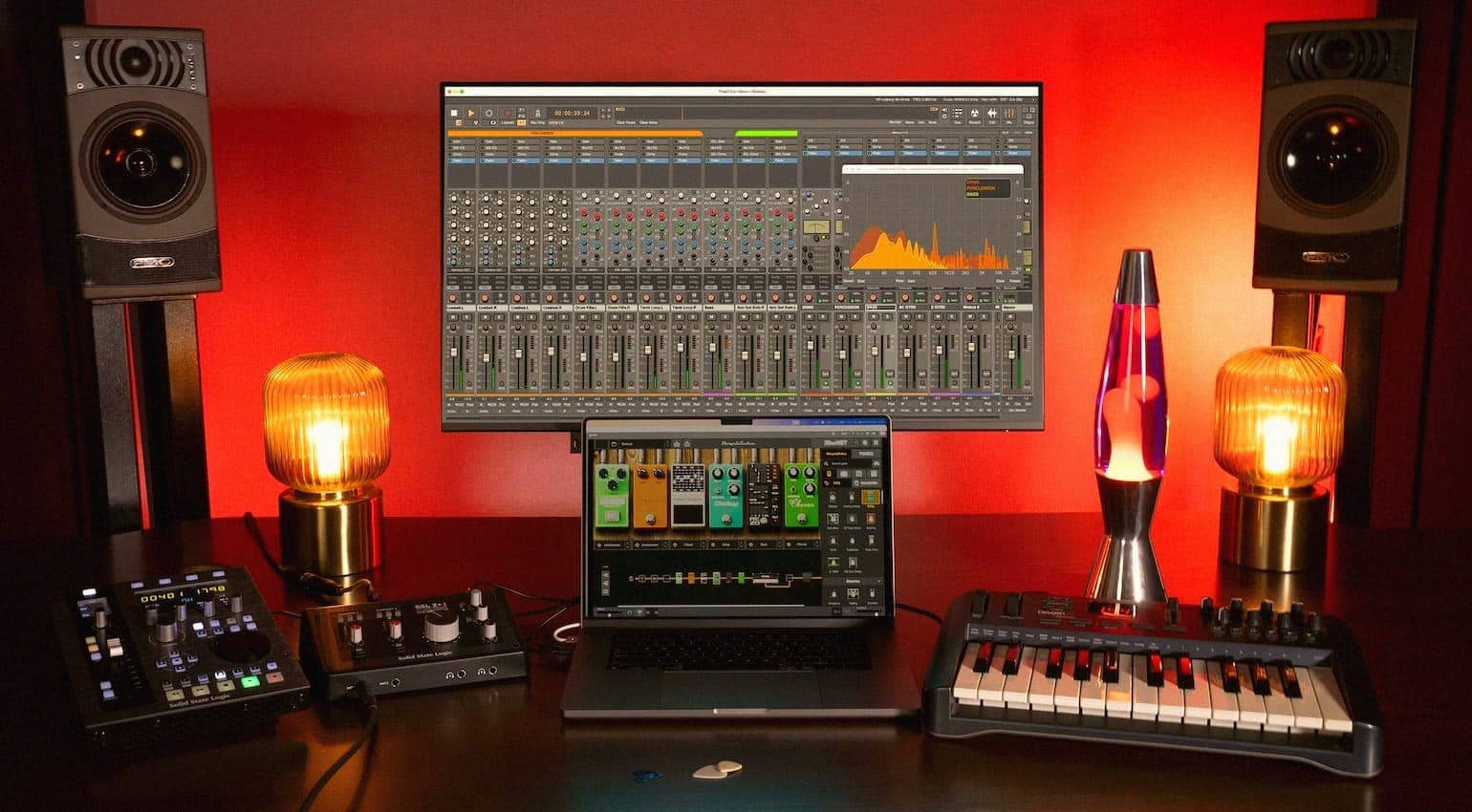
The headline change is small on paper and large in practice: a DeNoiser and a DeEsser now sit on every single channel of Harrison Audio's Mixbus 12, pulled from the digital consoles Harrison builds for film and broadcast. Around that, the update adds a cue page that records up to 16 audio or MIDI loop slots, new MIDI tools for building chords by picking a type and clicking a root, drag-and-drop Strip FX you can save and recall as chains, a darker high-contrast look matching the 32 Classic console, and multitouch on Windows and Linux.
Why does the cleanup matter for producers?
Because house and techno are built out of dirty material. Sampled loops, field recordings, one-take vocals: they come with hiss, hum and sibilance you normally bounce out to a separate plugin to fix. Having de-noise and de-ess on every strip means cleaning a source where it lives, inside the mix, while you work. Sitting under that is the reason people reach for Mixbus in the first place: the Harrison 32C EQ on every channel, the console colour that a stock DAW does not give you.
What does it cost, and who is it for?
The standard Mixbus 12 is 49.99 dollars. Mixbus 12 Pro is 149.99 dollars and adds switchable SSL 9000J dynamics and EQ on every channel plus Dolby Atmos immersive mixing. For the price of a couple of plugins, a small studio gets a DAW built to mix like a desk, from a company that has made consoles for 50 years and now sits under SSL.