Why would a beat built for 3 a.m. help someone who can barely walk?
Parkinson's disease damages the basal ganglia, the part of the brain that normally hands the body its own internal timing signal for walking, the tiny automatic cue that lets you take one step, then the next, without thinking about it. When that signal breaks down, the result is the shuffling, hesitant gait and sudden “freezing” episodes that define the disease's harder stages. The workaround neuroscientists identified decades ago is almost disarmingly simple: replace the broken internal beat with a real one, played out loud. The technique is called rhythmic auditory stimulation (RAS), and it works because the brain can entrain movement to an external pulse, syncing footsteps to a beat much like a dancer locking into a kick drum, according to a 2015 review in Frontiers in Neurology by Alireza Ashoori, David Eagleman and Joseph Jankovic. It builds on research into auditory-motor entrainment that effectively founded the field of neurologic music therapy.
Why does house music's tempo line up with this so exactly?
That same 2015 review found something specific: humans' preferred musical tempo sits at 120 to 130 beats per minute, almost exactly the midpoint of a natural human walking cadence of 100 to 150 strides per minute across age groups. The authors argue this is not a coincidence of taste, our rhythmic preferences may be shaped by our own spontaneous gait rhythm in the first place. That window happens to be the one house music has run in since Chicago invented the genre, with deep house typically sitting around 120 to 124 BPM. A four-on-the-floor kick drum is, structurally, a metronome that never drifts, the same unwavering pulse RAS protocols are designed to deliver.
Does the science hold up, and who is actually running programs like this?
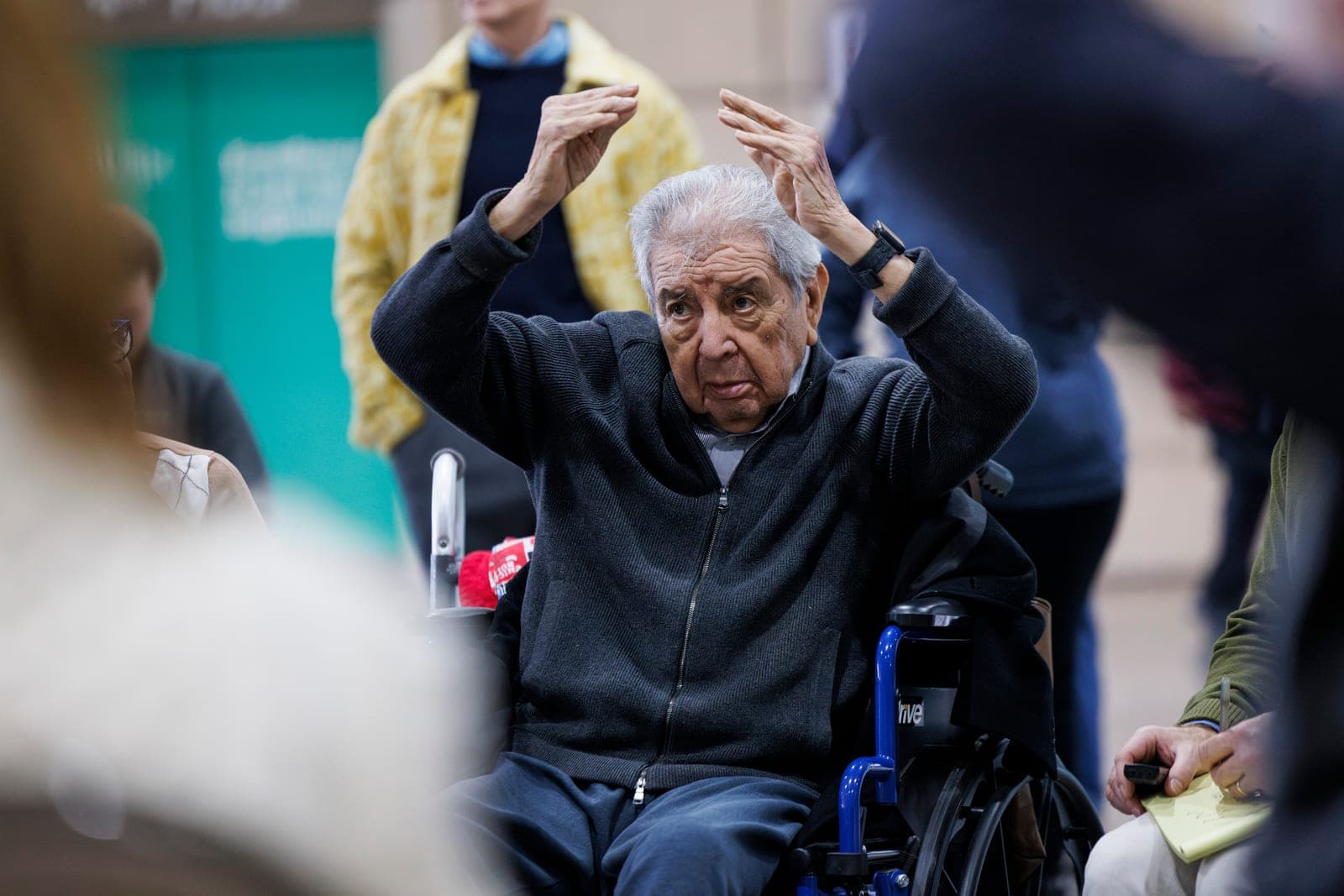
A 2022 systematic review and meta-analysis of 21 randomized controlled trials, published in Frontiers in Neurology, found RAS reliably improves walking speed, stride length and step cadence in people with Parkinson's. Real-world programs have been building on that groundwork for years. Mark Morris Dance Group's Dance for PD started in Brooklyn in 2001 with six Parkinson's patients taking a single class together; it now runs free weekly sessions with live music in more than 400 communities across 30 countries. In Chicago in November 2025, Rush University Medical Center held a movement workshop for around two dozen patients ranging from their 40s to their 90s, led by dance captain J'Kobe Wallace. “Specific forms of exercise that help people move bigger, move more fluidly, like dance, have been shown to be really beneficial,” Rush movement disorders neurologist Dr. Jori Fleisher told Chicago's WBEZ. That same month, researchers at Colorado State University's Music Therapy Research Center began tracking, with motion-capture sensors, how patients move differently to a metronome, to silence and to music they picked themselves. A 2021 PLOS ONE study by Anna Krotinger and Psyche Loui may explain why personal choice matters: patients with prior dance experience saw the largest symptom improvements, tied directly to how consistently they could tap along to a track's groove, the same quality a packed house floor runs on every weekend.
Party or no party, I dance.
That line came from Sonia Vargas, 65, dancing through significant tremors at the Rush workshop. It is, functionally, the same principle a neurologist and a DJ would each recognize on sight.