Immanent Audio's Immanent Audio just put out IA De-Esser, a free de-essing and resonance-suppression plugin for VST3 and AU, and the interesting part isn't the sibilance curve. It's how it got made.
What does the plugin actually do?
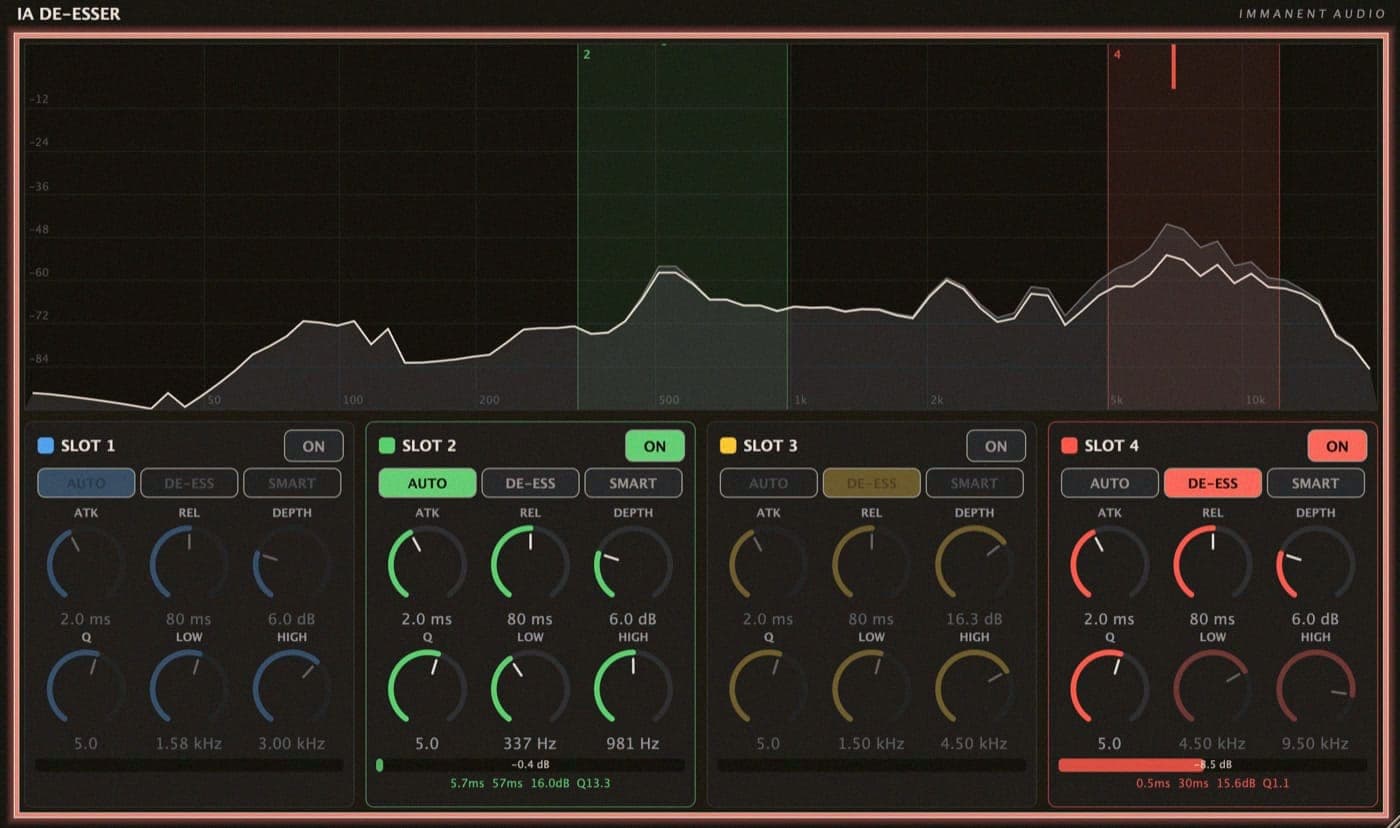
IA De-Esser runs four filter slots, and each one can be set to a different job: De-Ess Mode automatically finds and tames harsh sibilance, Auto Mode locks a Low-Cut/Hi-Cut range and picks depth and Q on its own, Smart Mode scans the spectrum live for problem frequencies, and Manual Mode hands every parameter back to the engineer. It adds zero latency in the DAW, which matters if you're de-essing while tracking rather than in the mix bus after the fact. It's free, no gated tier, downloadable straight from Gumroad or immanentaudio.com.
Why is a free de-esser a story about AI?
Because the person who built it said so, out loud. Asked by Bedroom Producers Blog whether AI had a hand in the plugin, Immanent Audio's developer Jay confirmed it did: AI tools helped speed up the build. But he drew a line most vibe-coding skeptics would recognize as the actual test that matters. Jay is a software engineer by trade, and he said flatly that he doesn't ship code he doesn't understand.
AI was used to speed up the process, but as a software engineer by trade, he is not shipping code he doesn't understand.
That's the real tension in bedroom-producer gear right now. Nobody minds a synth plugin being built faster. What they mind is a black box: a DSP chain nobody on the other end can actually explain, running on their sessions. Jay's answer draws a distinction between using AI as a tool and outsourcing judgment to one, and he's putting his name on that distinction in public, not burying it.
Does it work like a real de-esser should?
On paper, yes. Four independently switchable filter slots is more flexibility than most free de-essers offer, and Smart Mode's spectrum scanning targets the kind of narrow, moving resonances that a static de-esser band always misses. Auto Mode is the useful middle ground: you set the frequency window, it handles depth and Q. Zero added latency means it's usable while tracking vocals, not just after the fact in a mix session.
Why it matters
AI-assisted plugin development is already happening across the DIY and small-dev corners of the DAW world; what's rare is a developer naming it instead of letting reviewers guess. That kind of disclosure sets a bar other small studios will now be measured against.
What we think
A free, capable de-esser is a genuine gift to anyone mixing on a budget, and Jay's answer to the AI question is the right one: use the tool, keep the accountability. That's a healthier model for AI in audio software than either denial or blind automation, and it costs him nothing to say it plainly.