The music industry just put a number on something it has downplayed for years: roughly one in ten streams counted across the major platforms is not a real person listening. It's a bot, a click farm, or a manufactured play designed to pull a payout from the same royalty pool that funds every working artist, house and techno producers included.
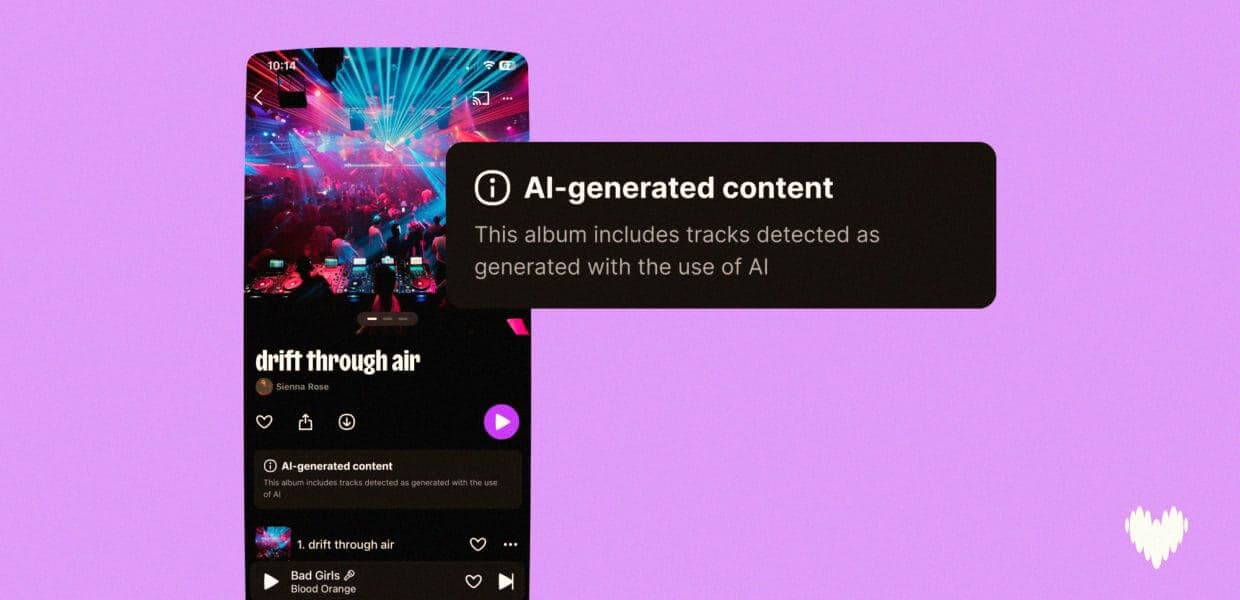
That admission comes wrapped in a new coalition called the Streaming Integrity Initiative, backed by UMG, Warner Music Group, Sony Music, Merlin, FUGA, AWAL, Ditto, HYBE and others. The plan: vet AI-generated tracks before they hit catalogue, verify who's actually uploading, and share fraud signals across platforms instead of every DSP fighting it alone.
What is the initiative actually built to catch?
Read the fine print and it's narrower than the AI headlines suggest. This is not a ban on AI-made music. It's a dragnet for manufactured streams: the bot farms, the fake-account loops, the paid click services that inflate a track's play count to grab a bigger slice of a platform's royalty pot at the expense of everyone else on it. Vetting AI uploads and verifying uploader identity are two of the three pillars; the third, sharing fraud data across labels and distributors, is the one that could actually move the needle, because right now a scheme kicked off one platform can simply resurface on the next.
How much of what's streamed is even real?
Deezer's own numbers, cited by Business Standard, show why the two problems (AI volume and fraud) get conflated but aren't the same thing. Around 90,000 fully AI-generated tracks land on Deezer every single day, over half its peak daily uploads as of June 2026. But those tracks pull only 1 to 3% of actual streams. The upload flood is mostly noise nobody hears. The fraud, by contrast, is executives' own 10% estimate of total stream volume, spread across genres, real tracks included, and it's the fraud that's actually draining the pool.
Why does this matter for house and techno?
Streaming royalties already pay out on a shared, pro-rata pool: your stream count is a slice of a fixed pie, not a fixed rate per play. A 10% fraud rate means a tenth of that pie is going to bot farms and click services instead of the DJs, producers and labels who actually made the music. For a major-label pop act, that's a rounding error. For an independent house or techno artist already splitting fractions of a cent per stream through a distributor like AWAL, FUGA or Ditto, all three of which signed this initiative, that same 10% is real money that never should have left the pool in the first place.
The flip side worth watching: identity verification and AI vetting, once built for fraud, don't stay narrow. The same infrastructure that flags a bot farm can just as easily be pointed at any small label's catalogue, AI-assisted or not, if a platform decides to widen the net.