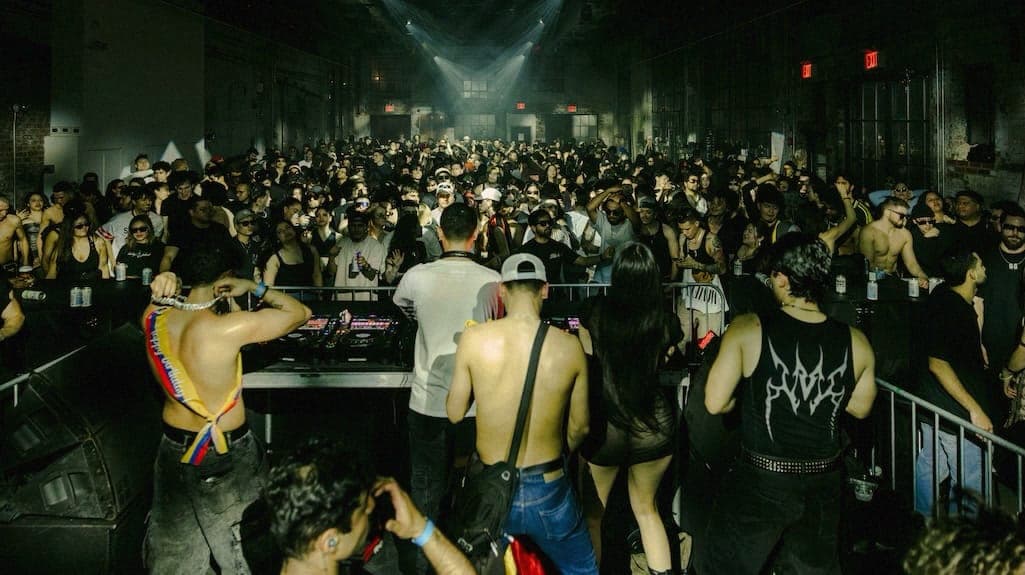
Southeast Asia's underground has never lacked for talent or demand. What it has lacked is the specific format that birthed Mall Grab's generation of European club culture: the illegal-rave-turned-institution warehouse party, run in a disused industrial shell rather than a licensed club room or a festival tent. Amsterdam's Intercell is about to test whether that format travels.
Founded in 2015 out of an unsanctioned rave on the edge of Amsterdam, Intercell has spent a decade building a reputation on industrial settings and artist-curated takeovers rather than conventional club bookings. On November 21 it lands in Singapore's Pasir Panjang Power Station, a disused power plant with the kind of cavernous halls and exposed framework that European warehouse culture was built around, before moving to Hong Kong's AquaBeat on the Kwun Tong waterfront the next night. Local promoters Collective Minds and, in Hong Kong, UMAMI, are the ones bringing the platform in, which matters: this isn't a one-off booking agency slotting Intercell's name onto a generic bill, it's a deliberate import of a specific party culture.
What is Intercell actually bringing, beyond a lineup?
The artists do the talking for the sound: Mall Grab and Effy headline both nights, joined by Skin On Skin and Osmosis Jones, with local selectors Hammy and HBN running a B2B in Singapore and Sleepy and Raynard doing the same in Hong Kong. Across both dates the music spans house, techno, UK garage, acid, breaks and bass, the kind of genre-promiscuous, tempo-shifting set that defines a warehouse night built for stamina rather than a festival set built for a highlight reel.
That's the real export. Intercell isn't selling Southeast Asia a headliner, it's selling a room: six to eight hours in an industrial space with no VIP sightlines to protect, built around the DJs rather than the production budget.
Southeast Asia's underground has run on club and festival infrastructure for years. A power station and a waterfront industrial site are a different kind of room entirely, and that's the point.
Does Southeast Asia have the infrastructure to sustain this?
Singapore and Hong Kong both have strong club scenes and a growing festival circuit, but neither city has much of a native warehouse-rave tradition in the Amsterdam or Berlin sense: disused industrial real estate pressed into one-off service for a night, then handed back. Pasir Panjang Power Station and AquaBeat are compromises in that direction, industrial-adjacent venues rented for the occasion rather than squats reclaimed by a scene. Whether that's close enough to the original format, or whether it's festival infrastructure wearing a warehouse label, is the open question this weekend answers in practice.
If it works, it's a template other European collectives running the same model, Possession, Concrete's old guard, the wider Amsterdam and Berlin DIY circuit, can point to when they're deciding whether Asia is worth the flight.