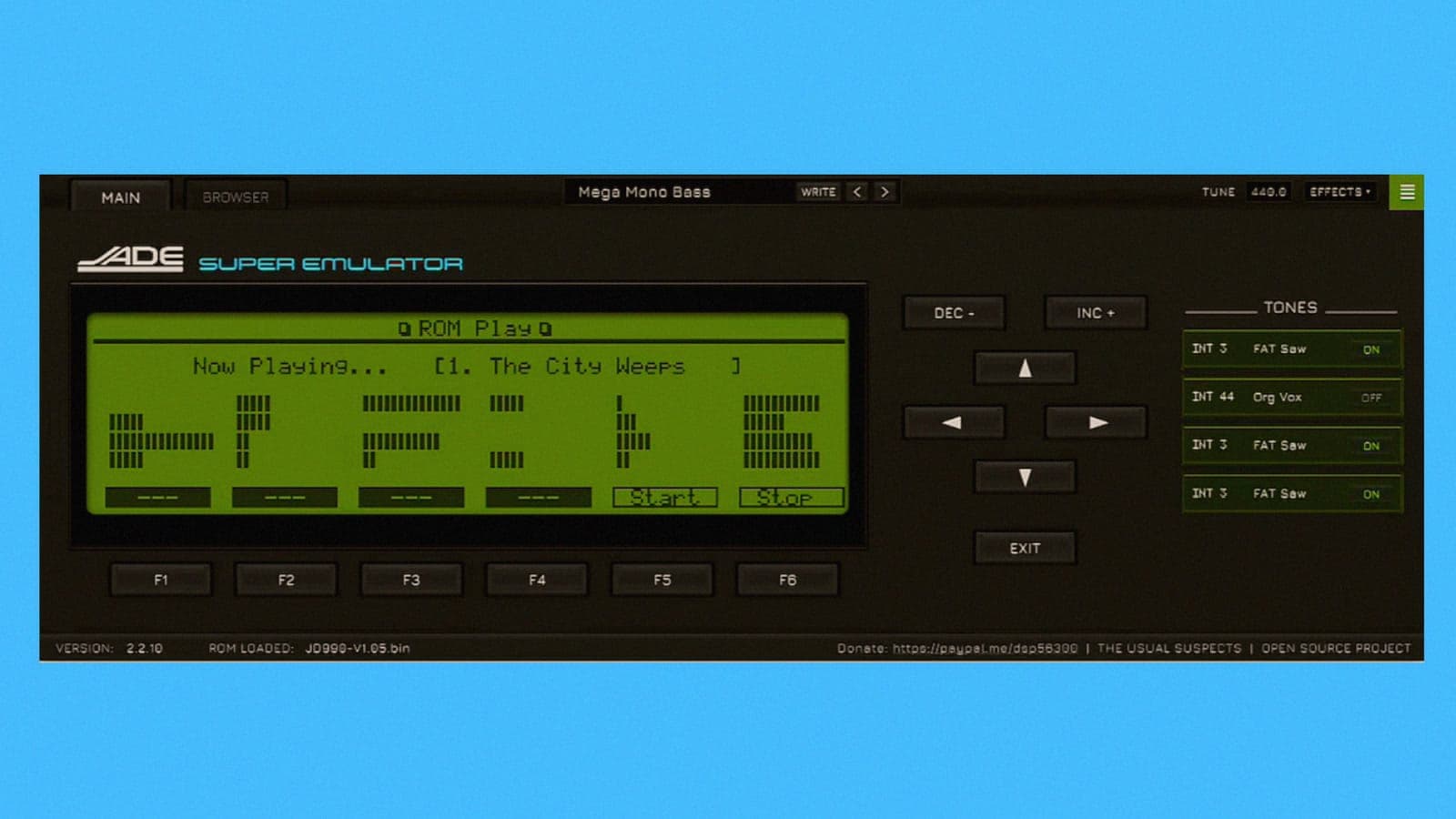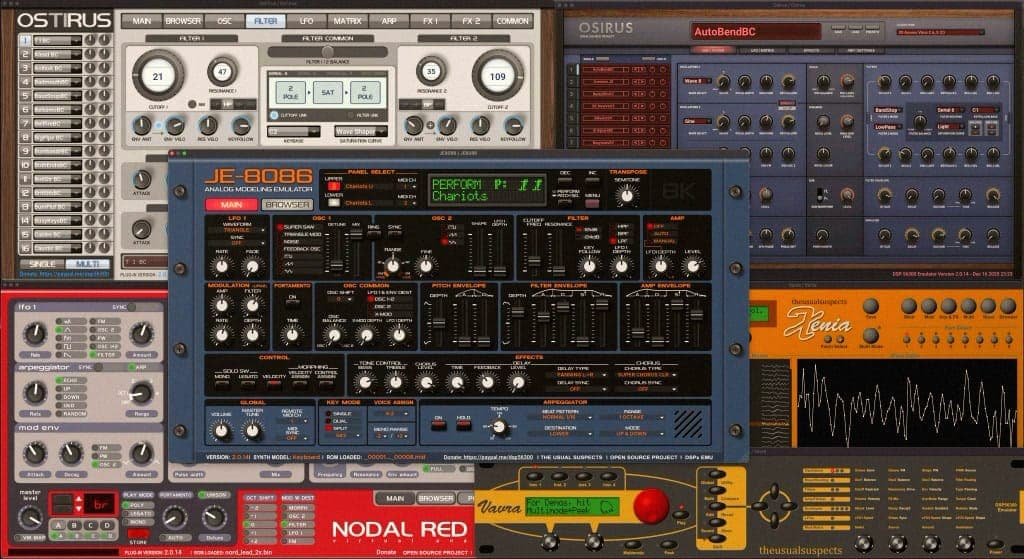
The JP-8000 and its desktop sibling the JP-8080 gave trance, tech house and progressive house one of the genre's defining textures: the supersaw. The Usual Suspects already had the JP-8000 side covered with their free plugin JE-8086. As of version 2.2.26+, it emulates the JP-8080 in full too, meaning the vocoder half of that hardware's legacy is now available to anyone who can find a ROM.
Why does emulating the chip matter more than emulating the sound?
Most software synths model a hardware unit's behaviour in code and approximate how it sounds. JE-8086 instead runs the Roland unit's own DSP chip, the Toshiba TC170C140 known as the ESP2, inside an emulator. That is a much harder engineering problem, but it is also why The Usual Suspects can call the result bit-perfect: it is not a guess at the JP-8080's math, it is the JP-8080's math. The plugin now supports up to 10 voices, matching the original hardware's polyphony ceiling.
The catch, consistent across every The Usual Suspects release, is that the plugin itself contains none of Roland's original code. Users have to source their own ROM file, legally, from a JP-8080 or JP-8000 unit they own or from Roland's own archives. No ROM, no sound.
What does the JP-8080 side actually add?
The new features are specific to the rack unit, not ports of the JP-8000's keyboard feature set: unison mode, a second noise oscillator, an audio input, and the voice modulator, which is the JP-8080's built-in vocoder. That last piece is the real unlock. The JP-8000 never had a vocoder section; producers chasing that classic Roland-vocoded lead or talk-box texture had to go find the rack unit specifically, and clean secondhand JP-8080s are not cheap or easy to find twenty-five years on.
The emulation runs the original hardware's DSP chip rather than modeling its sound.
The Usual Suspects are also shipping a standalone JE-8086 FX plugin, which strips the vocoder and effects section out into its own processor. That means producers who don't need the full synth engine, or who want to run the vocoder on vocals or other instruments entirely separate from the JP-8080 oscillators, can drop it on any track as an effect.
Who actually benefits from this?
Anyone making trance, tech house or hands-up progressive who has been faking the supersaw with a generic unison-saw patch now has a free route to the real thing, DSP and all. The vocoder addition widens that further: it is one of the few free, hardware-accurate vocoders built specifically around a classic dance-music synth engine rather than a vocal-effects plugin bolted on afterward. The ROM requirement keeps this from being a one-click install, but for anyone who already owns a JP-8000 or JP-8080, or can source a ROM legally, the ceiling on what was previously a four-figure piece of rack gear just dropped to free.
JE-8086 and the companion JE-8086 FX plugin are available now for VST, VST3, AU, CLAP and LV2 on macOS, Linux and Windows.