Who is saying techno should stop looking back?
Jeff Mills is not a bystander to techno, he is one of the people who decided what it would be. The Wizard on Detroit radio in the 1980s, co-founder of Underground Resistance with "Mad" Mike Banks and Robert Hood, then a solo career built on Axis and a stack of concept records. So when he sat down with Radio Nova's Nova Club in June 2026, he repeated the line he has held for thirty years, that techno is education and not entertainment, and made his real quarrel plain: a culture that would rather relive its past than build its future. Coming from one of the people who decided what techno would be, that lands harder than a take.
What does building the future look like for him?
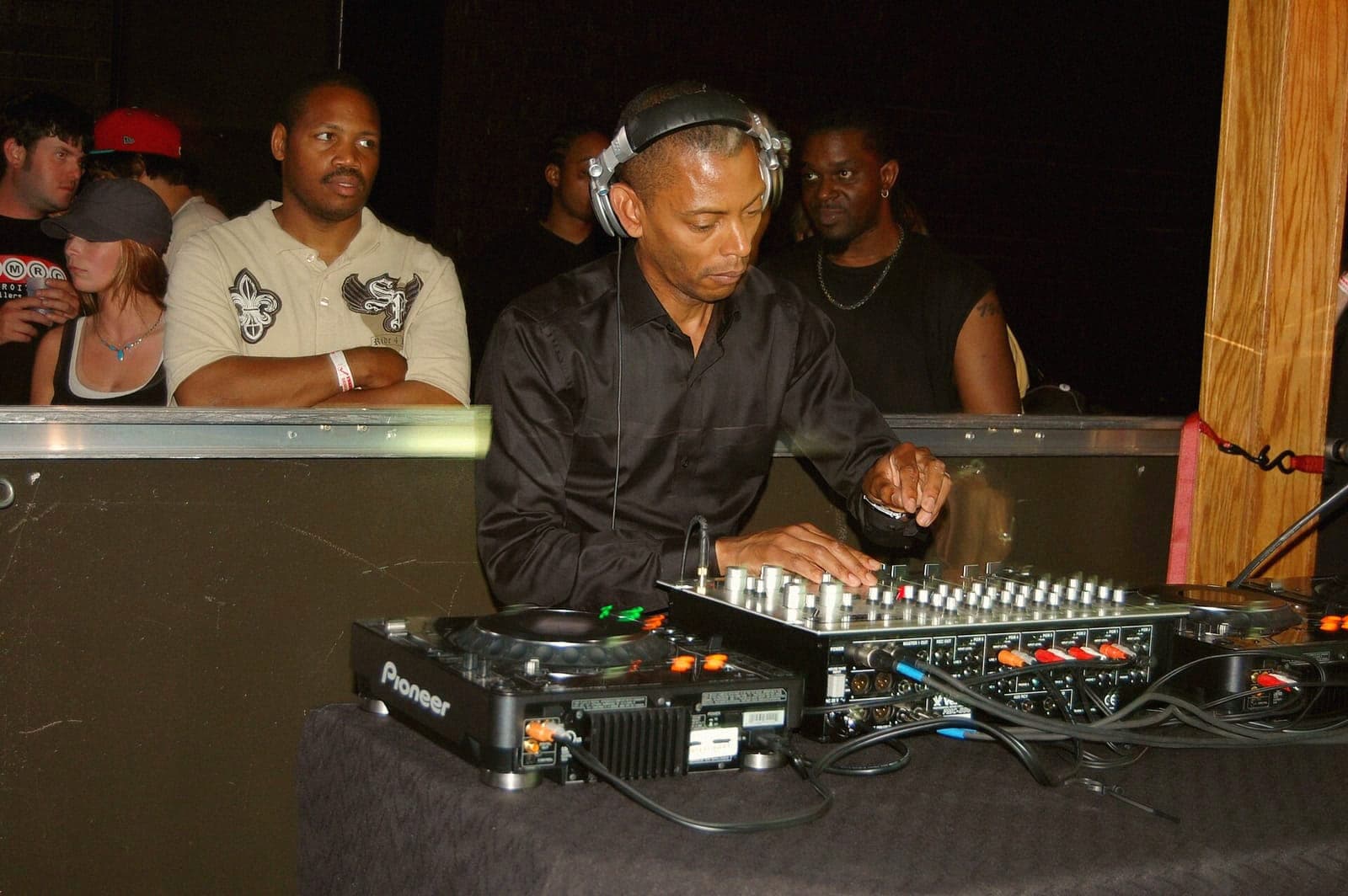
It looks like The Trip To Vega, released on Axis on 19 June 2026: an eleven-track concept album set in September 2097, when shifting tectonic plates leave Earth giving off a harmonic frequency that makes the planet unlivable, and humanity boards spacecraft for Vega, a real star about 25 light-years away. It is not escapism, it is a thought experiment run on the dancefloor, and his clearest answer to what techno is for: imagining what comes next. Even his craft points forward. He still mixes the hard way, on three decks plus a drum machine with no sync button, not as a museum act but as an argument that the human hand, error and all, is where the music stays alive.
To hear something that's real, even with mistakes and dust on records, is more interesting.
Does that mean he is trashing the past?
No, and that is the part the nostalgia debate keeps missing. He is marking 30 years of Live At The Liquid Room, Tokyo, but instead of a victory-lap nostalgia gig he rebuilds the original reel-to-reel rig and screens a documentary first, so the room learns how it was made. He honours the past without living in it. The scene that techno built has drifted into a reissue economy, anniversary box sets, 90s-rave revivals, the sync button smoothing every transition. Mills uses his own history as teaching material and aims it at the future.
So why does it read as an indictment?
Because the contrast is brutal. Plenty of veterans monetise the back catalogue and call it heritage; Mills refuses the sync button, plays three decks live and ships a new future the same month he celebrates an old set. The 1996-rave crowd hears a scold; the anti-nostalgia camp nods along. Both are reacting to the same thing, the man who helped invent techno saying, without raising his voice, that the music has only one real obligation: to keep building what comes next.