Every AI music tool launched in 2026 gets asked the same question first: whose sounds did you train it on? Just 4 Noise, a Berlin company founded in 2025, thinks it has an answer that actually holds up. Its new plugin, Just 4 Kicks, generates kick drum samples from a model trained on nothing but recordings its own team made on its own analog gear. No scraped catalogues, no uncredited producers, no mystery dataset.
What makes Just 4 Kicks different from other AI sample tools?
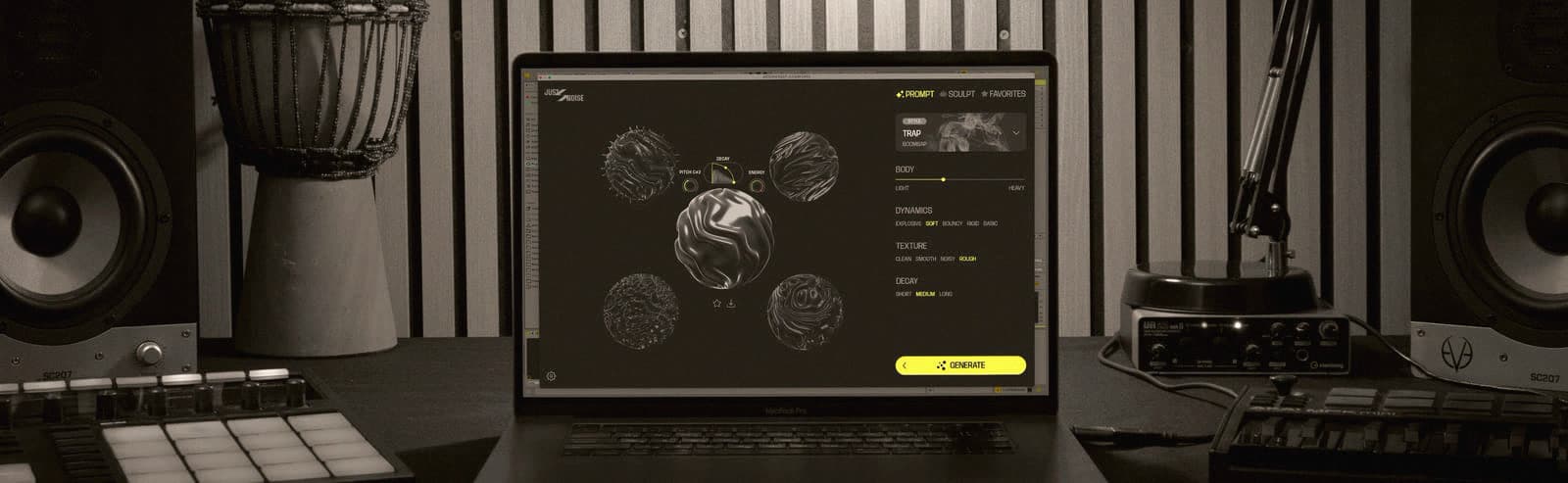
The plugin itself is simple on the surface: drop it into Ableton, Logic, FL Studio or any VST3/AU host, and dial in a kick using controls for genre, texture, style, length and pitch, plus presets and onboard effects. What CEO Max Shafer wants producers to notice is what's underneath it. "The plugin collects no personal user data, only information on what selections users give as input to the model," he told Resident Advisor. "This helps us reduce our footprint by only continuously training the model on the types of sounds the creators want. We collect no other information regarding users' creative decisions inside or outside of our plugin."
That's a direct answer to the complaint that's followed AI audio tools since the category started: that they were built on recordings someone else owns, without consent or payment. Just 4 Noise's dataset is self-recorded, which means there's no rightsholder anywhere in the chain to sue over it, and no producer whose unpaid work quietly became training data.
Does training on your own gear actually solve AI music's problem?
It solves the provenance problem, not the whole argument. Major rightsholders are currently suing AI platforms like Suno over scraped training data, a fight that's defined how the music industry talks about AI this year. Just 4 Kicks sidesteps that specific legal exposure entirely. It does not address the deeper unease plenty of producers have with AI generating sounds at all, regardless of where the training data came from.
Shafer is explicit that he's positioning the tool as a workflow aid, not a replacement for sample makers. "With full-song and stem-generation companies posing a huge risk to this space, we see our tools as a way for sample makers and designers to improve their workflow and output variety," he said, adding that he expects demand for handcrafted samples to keep going. It's a narrower claim than "ethical AI" headlines tend to suggest: Just 4 Kicks isn't arguing AI samples and human-made ones can coexist peacefully, it's arguing its own dataset didn't rip anyone off to get there.
"With full-song and stem-generation companies posing a huge risk to this space, we see our tools as a way for sample makers and designers to improve their workflow and output variety."
What's next for Just 4 Noise?
Just 4 Kicks follows a $1 million funding round the company announced in February 2026, backed by BADideas.fund, SoundInvest and Sound Hub Denmark, raised to build a foundation model for AI instrument generation. By that point it already had around 4,000 creators using its platform and ten integration partners, including Native Instruments and Orchestral Tools. Shafer says snares, hi-hats, full drum kits and synthesizers are next, each one presumably built the same way: recorded in-house, trained in-house, no one else's catalogue involved.
Whether that's enough to win over a scene that's largely instinctively wary of AI tools is a separate question from whether the dataset is clean. Just 4 Noise has answered the easier one.