Kraftwerk have been a functioning live act since the early 1970s, playing Coachella, Primavera Sound, every major European electronic festival and a seven-night retrospective at MoMA. They have never played Glastonbury. That changes in 2027, when the Dusseldorf group headline the West Holts stage, their first appearance in the festival's 57-year history.
It is a strange gap to close this late. Kraftwerk wrote the template that a huge share of modern festival lineups still run on: the four-on-the-floor pulse of "Trans-Europe Express" and "Numbers" fed directly into Detroit techno, and from there into the house and dance culture that now fills entire stages at Glastonbury every June. Basement Jaxx, Hot Chip and Underworld owe them a debt most festivalgoers never think about. Glastonbury itself has spent decades leaning on guitar and pop headliners; its relationship with electronic music has mostly lived on West Holts and in the dance fields, not on the Pyramid Stage. Booking Kraftwerk now is less a coup than an overdue correction.
What else is on the electronic side of the 2027 bill?
The poster announced on November 18 runs past 66 acts, and the pop names up top (Sam Fender, Harry Styles, Billie Eilish, Cher) are the ones carrying the headlines elsewhere. For TTH's audience, the more interesting detail sits further down: a b2b b2b set from Josh Baker, KETTAMA and Prospa, three names who actually work house and tech-house floors rather than festival-pop crossovers. KETTAMA has spent the past few years building a reputation as one of UK house's most reliable peak-time DJs, and Prospa's tech-house sets have become a fixture of the same circuit. A three-way b2b billed on a poster next to Cher is a small but real sign of how normalised that scene has become inside British festival culture.
The wider electronic-leaning bill, Massive Attack, Bonobo, FKA twigs, Thundercat, Chase & Status, Fat Freddy's Drop, reads like Glastonbury quietly building out a proper electronic wing rather than treating dance music as a token stage. Kraftwerk headlining West Holts is the clearest statement of that yet.
Kraftwerk invented the blueprint. Glastonbury just took half a century to put them on it.
Why does a Kraftwerk debut matter beyond nostalgia?
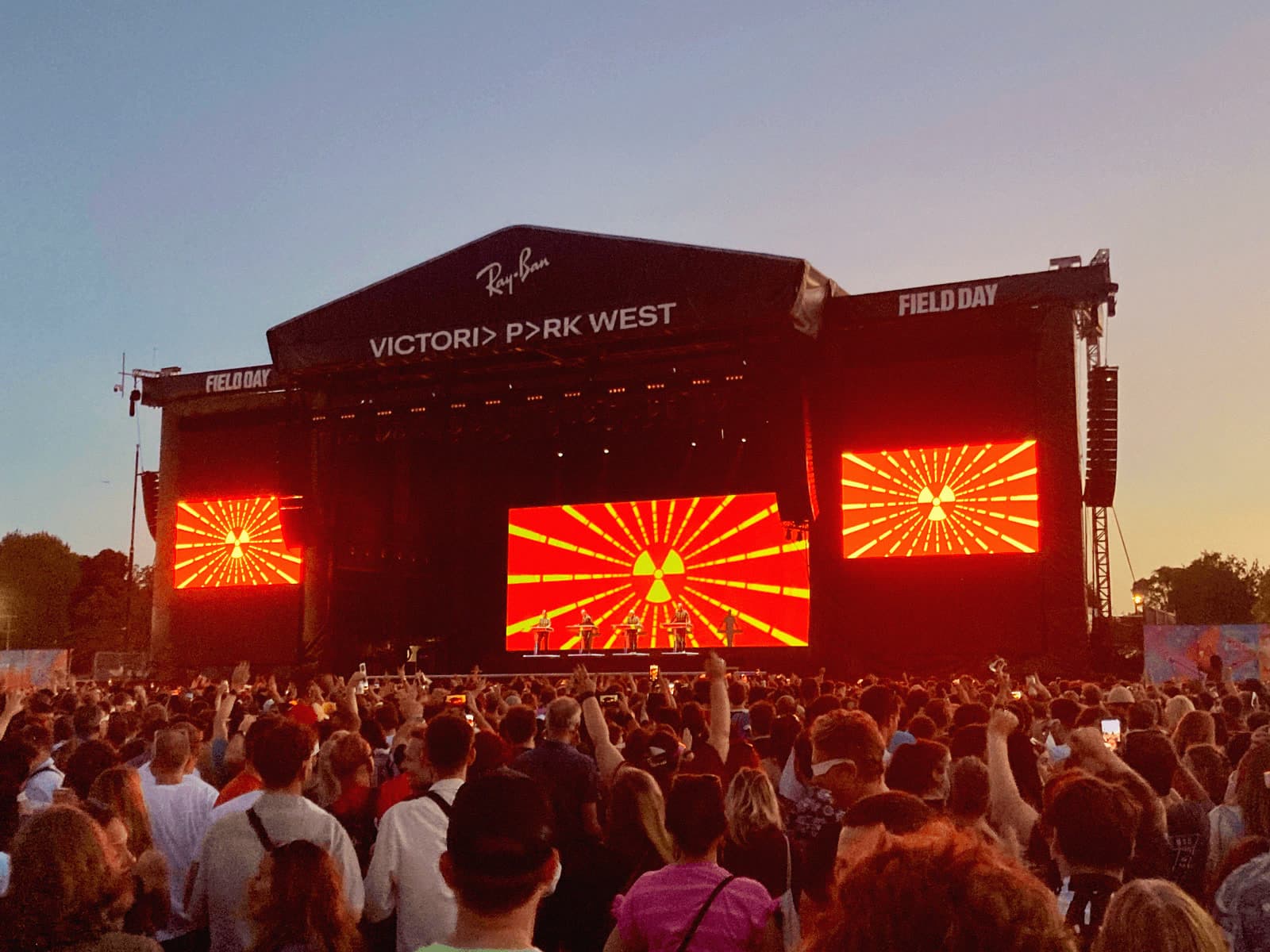
This isn't a legacy-act victory lap. Kraftwerk's live show, four men behind identical podiums, the grid visuals, the 3D Computerworld tour, still plays as a statement about where electronic music's visual and sonic language came from. Putting that in front of a Glastonbury crowd that skews pop and rock, on the same weekend as a credible house b2b set, puts the lineage and the current scene on the same stage for once instead of keeping them in separate silos.