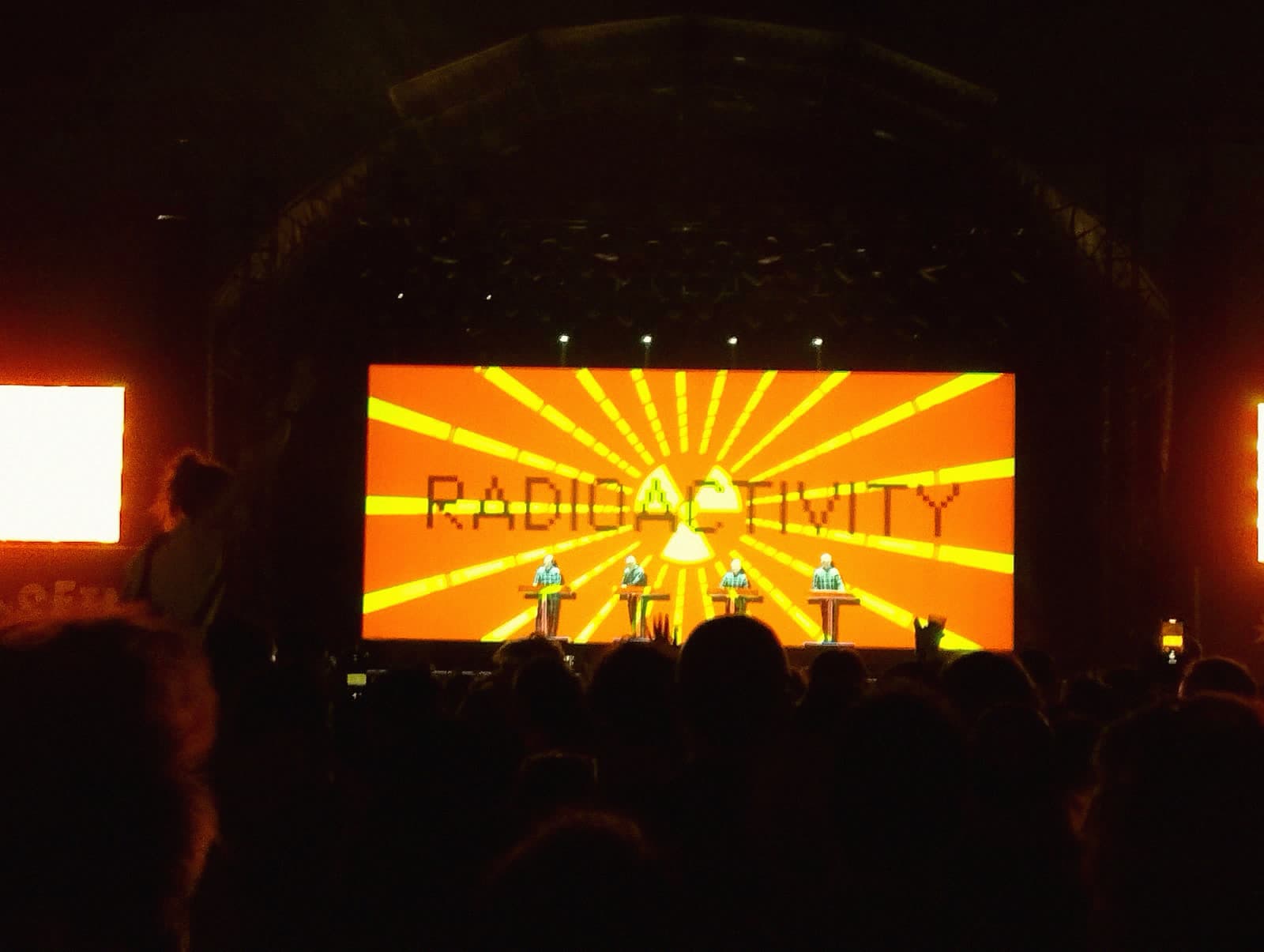
Kraftwerk sued over two seconds of drum loop. It took nearly three decades, two trips to Europe's top court and one change in German copyright law to get an answer that finally sticks.
Germany's Federal Court of Justice, the Bundesgerichtshof (BGH), has issued what it is calling the final ruling in the case, confirming that Moses Pelham's use of a slowed-down rhythm sequence lifted from Kraftwerk's "Metall auf Metall" inside Sabrina Setlur's 1997 hit "Nur mir" is a lawful pastiche under German law. No permission from Kraftwerk was ever required.
What did the court actually decide?
The case, tracked under reference 1 ZR 74/22, is the latest and apparently last chapter of a fight Kraftwerk founder Ralf Hutter's camp opened against Moses Pelham not long after "Nur mir" came out. Pelham had taken a short rhythm sequence from "Metall auf Metall," slowed it slightly and looped it as the backbone of the track he produced for Setlur. Kraftwerk argued that counted as unauthorized use of their master recording. Pelham argued it was creative reuse, the raw material of hip-hop and electronic production for as long as either genre has existed.
The BGH's own press office, in an English-language statement dated September 4, 2026, summed up the outcome bluntly: phonogram sampling can be permissible as a pastiche. The court leaned on Section 51a of German copyright law, the pastiche exception written into the statute during a 2021 amendment, largely to bring German law in line with EU digital copyright directives. Under that provision, a use qualifies if it still reminds the listener of the original work while being clearly distinguishable from it and engaging in something like creative dialogue with it. Meet that bar, and clearance is not required.
A pastiche must remind the listener of the original while being noticeably different from it and engaging in creative dialogue with it, the legal test the BGH applied to close the case.
Why does a two-second loop take thirty years to settle?
Because the law kept moving under the case. It was filed in German courts in the late 1990s or 2000s, worked its way to the BGH more than once, got referred up to the European Court of Justice, came back, and got referred again after Germany rewrote its copyright statute in 2021 to add the pastiche exception in the first place. Legal outlet LTO, tracking the ruling for German lawyers, describes it as the case's true final decision after close to three decades bouncing between domestic courts and Luxembourg.
The timing lines up with a separate European Court of Justice ruling from April 2026 that applied the same reasoning to sampling cases across the EU, meaning German producers are not getting a one-country exemption. The pastiche defense is now EU law, not a Bundesgerichtshof quirk.
What changes for producers who sample?
House and techno were built on sampling, and Kraftwerk's own catalog is arguably the single most sampled well in electronic music history. This ruling does not hand out a blanket license to lift anyone's record. The pastiche test still requires the borrowed material to be transformed enough that it reads as commentary or dialogue with the source, not a straight lift dressed up with a filter. A recognizable hook run untouched under a new beat is a different legal question than a two-second rhythm cell slowed down and buried in a mix.
But for the narrow, common case, a short, altered fragment used as raw material rather than as a quotation, producers in Germany and across the EU now have a court-tested answer: no clearance required, no negotiation with a rights-holder who might say no on principle. That is a real shift in leverage away from the artists whose catalogs get sampled and toward the ones doing the sampling, and it will not sit well with every rights-holder watching this outcome.
Why it matters
Sampling clearance has been a legal grey zone for producers for decades, expensive to navigate and often used by rights-holders to block reuse outright rather than to negotiate a fee. A final, EU-aligned pastiche precedent gives producers actual legal ground to stand on instead of a costly guessing game, while giving original artists less say over how fragments of their work travel.
What we think
Kraftwerk fought this for longer than most of the producers now benefiting from the ruling have been making records, and they lost on the exact kind of use, a short, transformed loop, that most sampling in house and techno actually looks like. That is not a coincidence. The court drew the line where the culture already lives: reuse as raw material is different from reuse as theft, and German and EU law finally caught up to a distinction producers have been making by ear since the Metall auf Metall loop first showed up under Sabrina Setlur's vocal in 1997.
FAQ
What is the case number and where can I read the ruling? BGH 1 ZR 74/22. The Bundesgerichtshof published its own English-language summary, titled "Phonogram sampling may be permissible as a pastiche," on September 4, 2026.
Does this only apply in Germany? No. It rests on Section 51a of German copyright law, but that provision implements EU copyright rules, and an April 2026 European Court of Justice ruling applied the same pastiche reasoning to sampling across the bloc, so the precedent travels beyond Germany.
Do I still need clearance if my sample is recognizable? Very likely yes. The pastiche exception protects short, transformed fragments used in creative dialogue with the original, not a straight, recognizable lift. The more identifiable and unaltered the sample, the weaker the pastiche defense.