What made the Paradise Garage different from every other club?
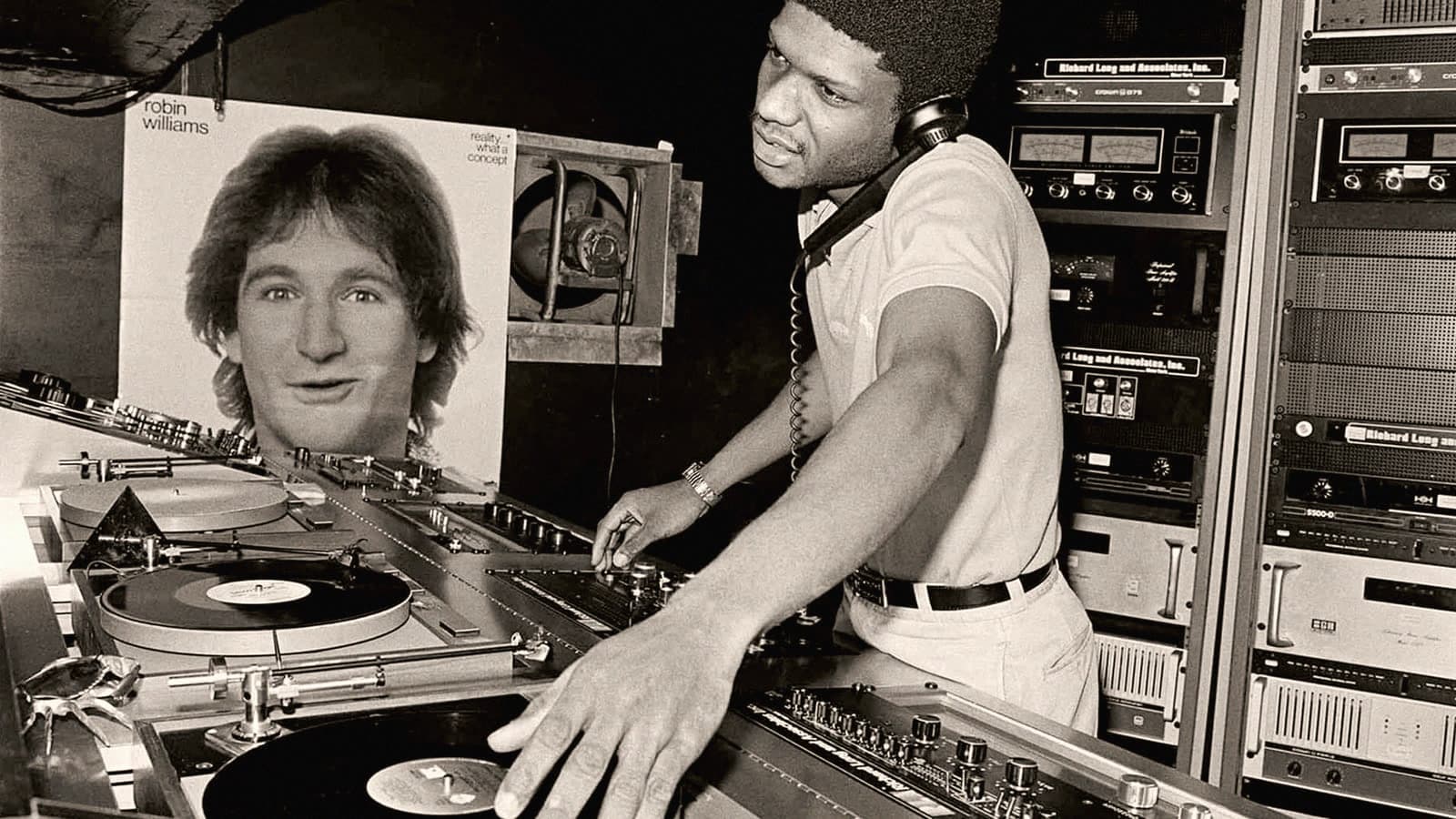
The Paradise Garage wasn't built as a nightclub first. It was a parking garage on King Street in SoHo that Larry Levan and sound designer Richard Long turned into one before it ever opened its doors, in 1977. Long and Levan chose the speakers and built the room to match them, not the other way around: walls ran on two-inch tracks so they could move with the bass, the floor sat on three-inch risers to cushion dancers through a set that could run twelve hours, and Long fabricated a custom bass enclosure, the "Levan Horn," specifically to satisfy Levan's ear. The club stayed members-only, mostly Black and gay, admission by card, no alcohol license needed because it never sold a drink. Long used the Garage as his test bench for every new unit he built afterward, and in 1980 Billboard gave him its award for best disco sound design, an industry acknowledging in public what dancers on King Street already knew.
How did Levan invent a sound just by playing records?
Levan never learned an instrument and rarely spoke about technique, but his sets ran disco into dub, gospel into post-punk, and early drum machines into whatever came next, cut on reel-to-reel edits he built himself between records. That refusal to stay inside one genre is what regulars and historians point to when they explain why "garage" became a genre name at all: a sound built on the dancefloor of one specific room, carried out by the DJs and producers who passed through it. Levan produced too, most famously the Peech Boys' 1982 "Don't Make Me Wait," made with engineer Michael de Benedictus, a track still sampled and remixed decades later. Frankie Knuckles, who worked alongside Levan in New York before relocating to Chicago's Warehouse, took pieces of that same sensibility west, which is one reason "garage" and "house" get discussed as siblings rather than strangers.
Paradise Garage regulars had a name for Levan's all-night sets: "Saturday Mass."
What happened to him, and why does the Garage still matter?
The club closed after a 48-hour farewell party in September 1987, done in by a lease the owners couldn't renew. Levan's health had already been declining for years under heavy heroin and PCP use, compounded by a congenital heart condition; he died on November 8, 1992, at Beth Israel Medical Center in Manhattan, of heart failure brought on by endocarditis. He was 38. The Dance Music Hall of Fame inducted him in 2004. In 2014, Red Bull Music Academy and a fan-led petition pushed to co-name the club's old block of King Street "Larry Levan Way," drawing thousands to a street party built around the campaign. The building itself didn't survive: demolition started in October 2017 and the site is now empty. What did survive is the template, choose the system before the room, program without regard for genre borders, run a floor for dancers rather than spectators, which is why club owners and sound designers still invoke Levan's name whenever they explain what they're building.