What actually happened at Leninka?
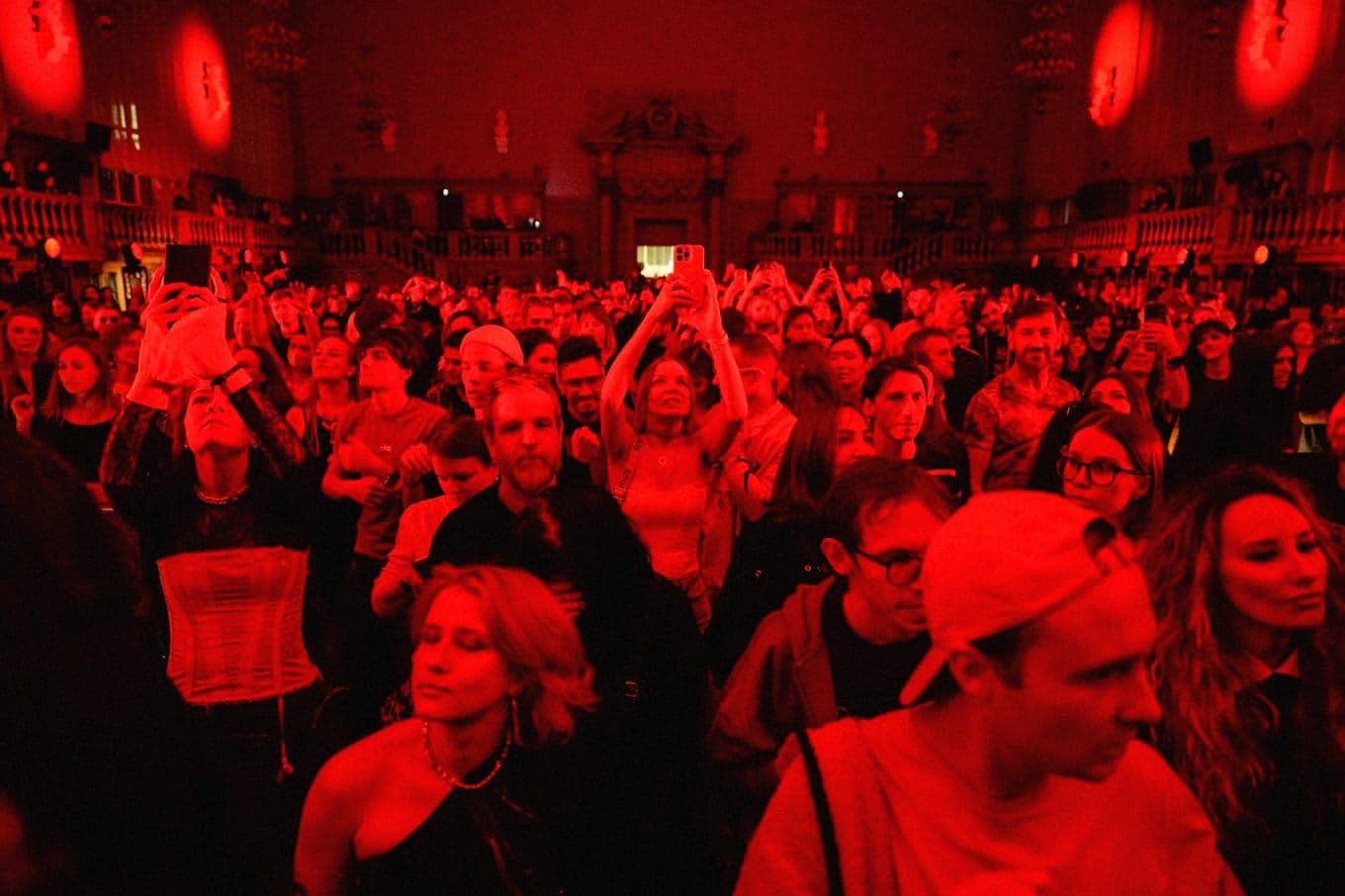
For one night, the Russian State Library, the country's largest and best known as the Lenin Library, or Leninka, stopped looking like a reading room and started looking like a club. Over the night of October 31 into November 1, 2026, publisher Eksmo-AST and library management turned the building into "LitRave": three separate dance floors running techno, electro-pop and ambient sets, threaded between poetry readings, light installations and an exhibition of literary memes. Roughly 3,000 people showed up, and every single one of them had to sign up for a library card first, a requirement organizers built into the door policy rather than a side effect of it. The night opened, pointedly, with an appearance by pro-war poet Anna Revyakina.
Library management says nothing in the building was damaged and the rare manuscripts stayed exactly where they belong.
Why did pro-war commentators call it Satanism?
The backlash arrived fast and from a predictable direction. The far-right group Russkaya Obshchina called the event "a center of demonic dancing," adding it was "quite symbolic that modern Satanists threw a Halloween party at the library named after Lenin, the greatest Satanist in Russian history." War correspondent Sergey Karnaukhov went further, demanding the library's entire management be dismissed without specifying exactly what they'd be fired for. VGTRK presenter Andrey Medvedev kept it simple: "a library is no place for a rave."
Yekaterina Mizulina, head of the Kremlin-aligned Safe Internet League, took the more bureaucratic route, publicly pressing the Culture Ministry over the event and asking on Telegram whether anything had been "slipped out under the radar" from the collection, and "what the Culture Ministry's take" on the whole thing was.
"This isn't a disco in the book stacks. It's an attempt to speak to a new generation in its own language so we can introduce it to ours, the language of Tolstoy, Dostoevsky and Pushkin."
That is how library management answered back, framing LitRave as outreach, not sacrilege, a pitch aimed at readers who live on their phones.
Is this bigger than one night?
Leninka isn't a nightclub or a festival site, it's a state institution, which is exactly why this dance floor became a flashpoint. Rave culture showing up inside the walls of a national library, backed by a major publisher, reads to conservative commentators as proof the culture war has reached the last rooms they thought were safe. For the dance and techno scene watching from outside Russia, LitRave is a small, strange data point in a much larger pattern Techno Resistance tracks constantly: wherever electronic music tries to claim legitimate, sanctioned space, somebody with political standing shows up to argue it shouldn't be there at all.