What actually changed in Alchemy?
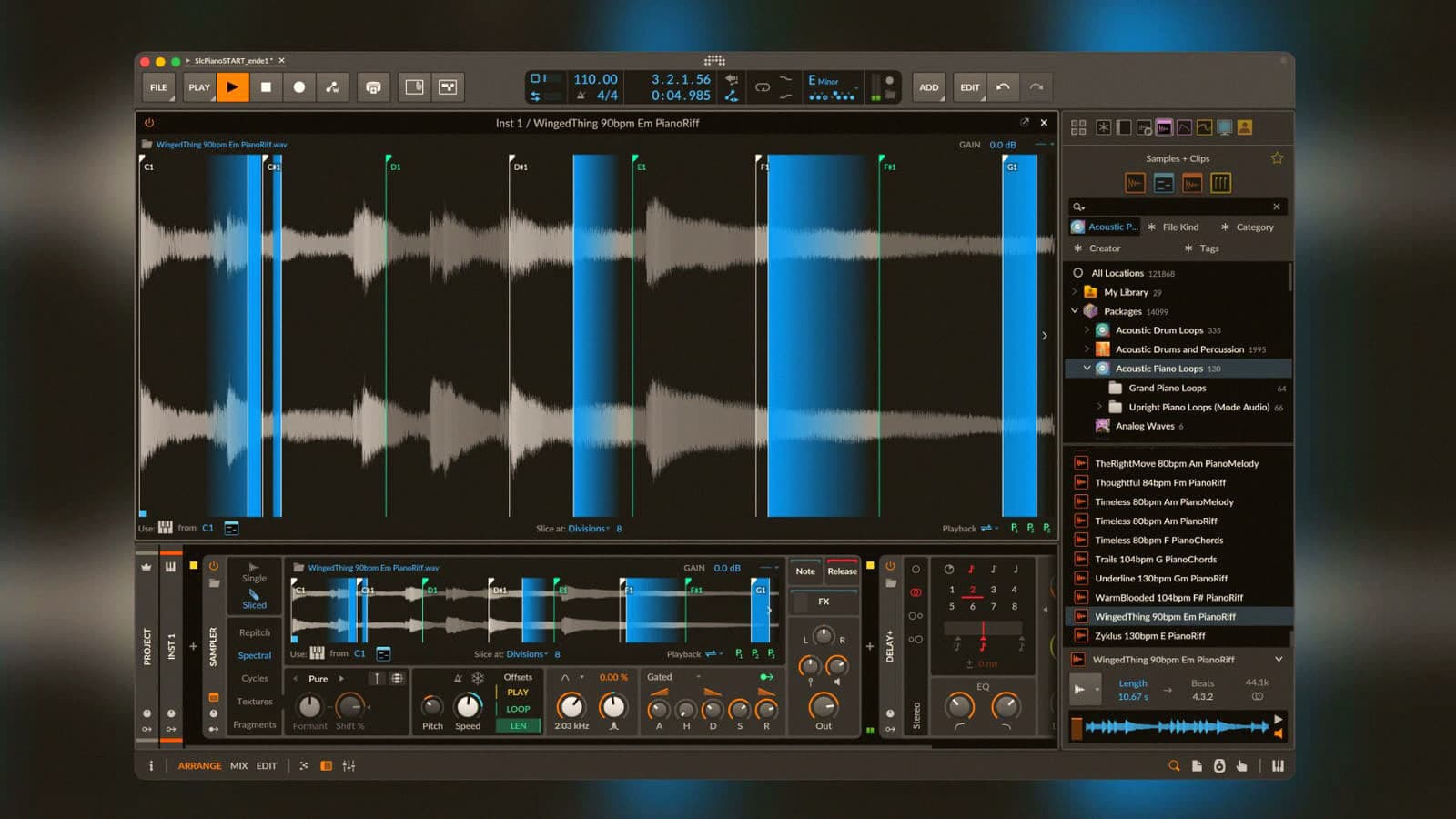
The headline for anyone chasing texture is the new granular Sync mode, which Apple also calls pitched grains, in both Alchemy and Sample Alchemy. The granular modules can now sync the grains and let you shape the formants of what they generate, so a stretched pad or a chopped field recording keeps its character instead of smearing into mush as you slow it down.
The part that will get the most use is parallel grain streams. Layering more than one stream from the same source is how you go from a thin, obviously granular sound to something with body: detune one stream, shift the formants on another, and you have movement without reaching for extra reverb. There is a new Granular Alchemy sound pack built to show the mode off, plus a demo project called Shoulda Never if you want to see how someone put it to work.
Formant control on the grains is the small detail that separates a usable granular patch from a novelty.
Is Beat Breaker worth revisiting?
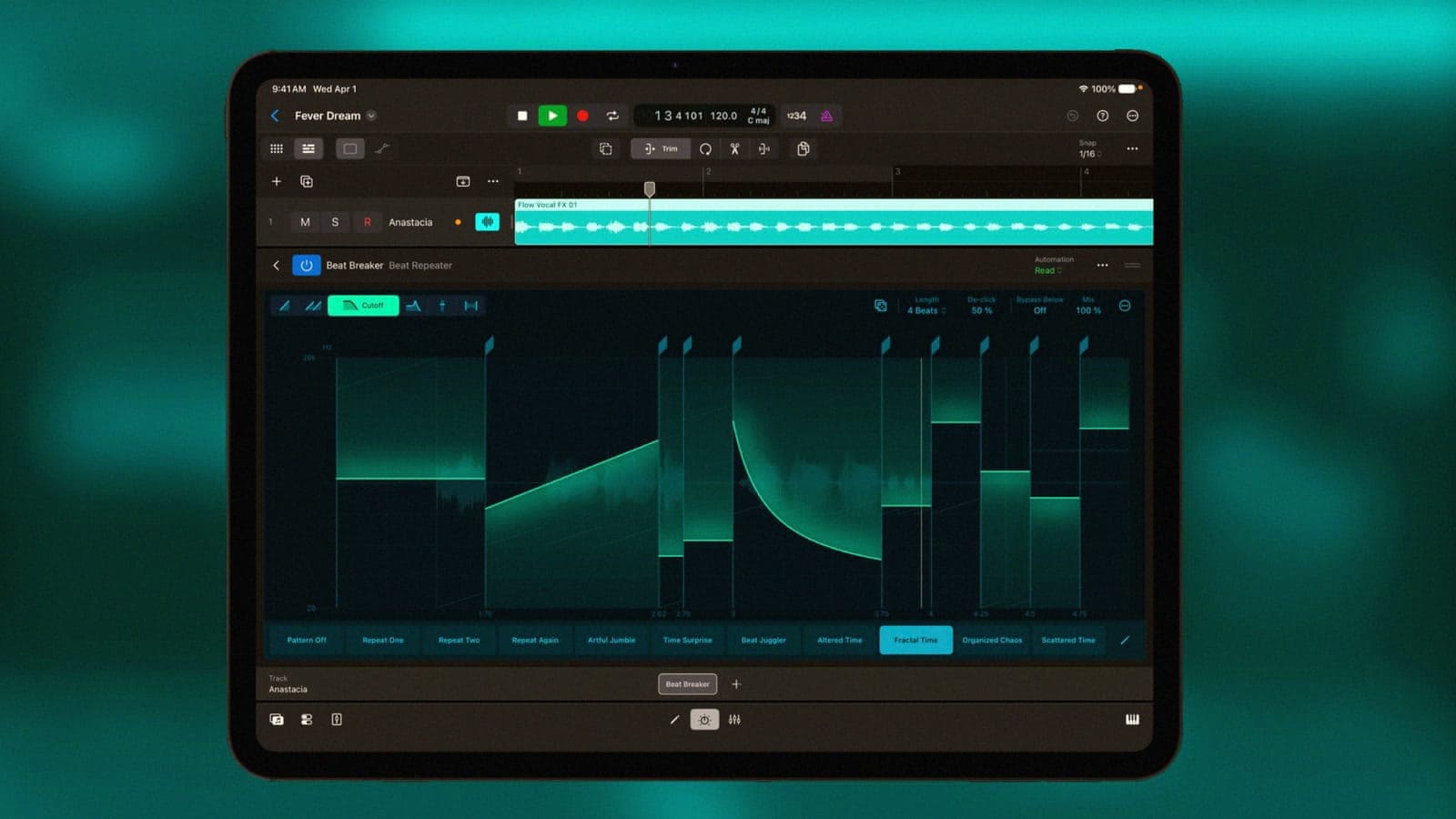
Yes, and it is the change most likely to end up in a club track. Beat Breaker now filters per slice with high or low pass and resonance, so you can duck the low end out of a stutter or open a slice up without automating a separate channel EQ. There is a new panning mode that throws each slice left and right, which is an easy way to make a flat loop feel wide.
The randomization is the fun part: it now runs across all modes, with probability and intensity controls, so you dial in how often and how hard it reshuffles. That is generative fills and evolving breaks without hand-drawing every variation.
Is anything else in the box?
Chord ID got reworked into an AI-based detector that reads chords more reliably across styles, holds up on solo guitar and piano even with distortion or slight tuning drift, and catches inversions and richer voicings like 7ths, maj7s and 6ths. Useful if you sample or reharmonize, though it is the supporting act here, not the reason to update.