What did the Assembly actually reject?
On 22 June, the National Assembly's law committee opened its reading of RIPOST, the interior ministry's catch-all public-order bill, and threw out its lead articles by a narrow margin, among them the clause creating a brand-new offence of organising an unauthorised musical gathering. More than 700 amendments are still stacked up. This is not the end of the road: a committee rejection does not bind the full chamber, and once the text reaches the floor the arithmetic can flip. The government wants the whole thing wrapped before parliament breaks for summer in mid-July.
How harsh are the two bills, really?
There is not one text aimed at free parties right now, there are two. RIPOST, pushed by Bruno Retailleau's interior ministry and defended by minister Laurent Nuñez, cleared the Sénat on 26 May by 243 votes to 33. In its Senate form, an organiser of an illegal free party faces up to two years in prison and a 30,000 euro fine; a participant who refuses an on-the-spot penalty can be hit with six months and 7,500 euros; even renting out a high-wattage rig without a prefectural declaration carries two months and 3,750 euros. On top of that: seizure of gear and vehicles, licence suspensions, and orders to pay for any environmental damage.
Running in parallel is deputy Laetitia Saint-Paul's rave-party bill, which the Assembly already passed on 9 April. It pushes the organiser fine to 30,000 euros and, crucially, drops the threshold at which a gathering must be declared to the prefecture from 500 people to 250. That single number does more quiet damage than any prison clause.
Why is the scene treating this as existential?
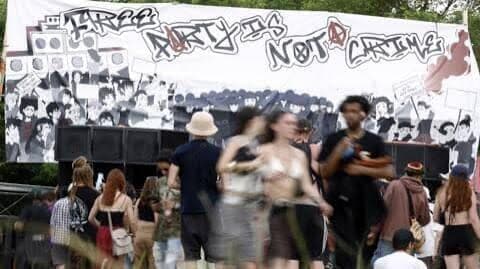
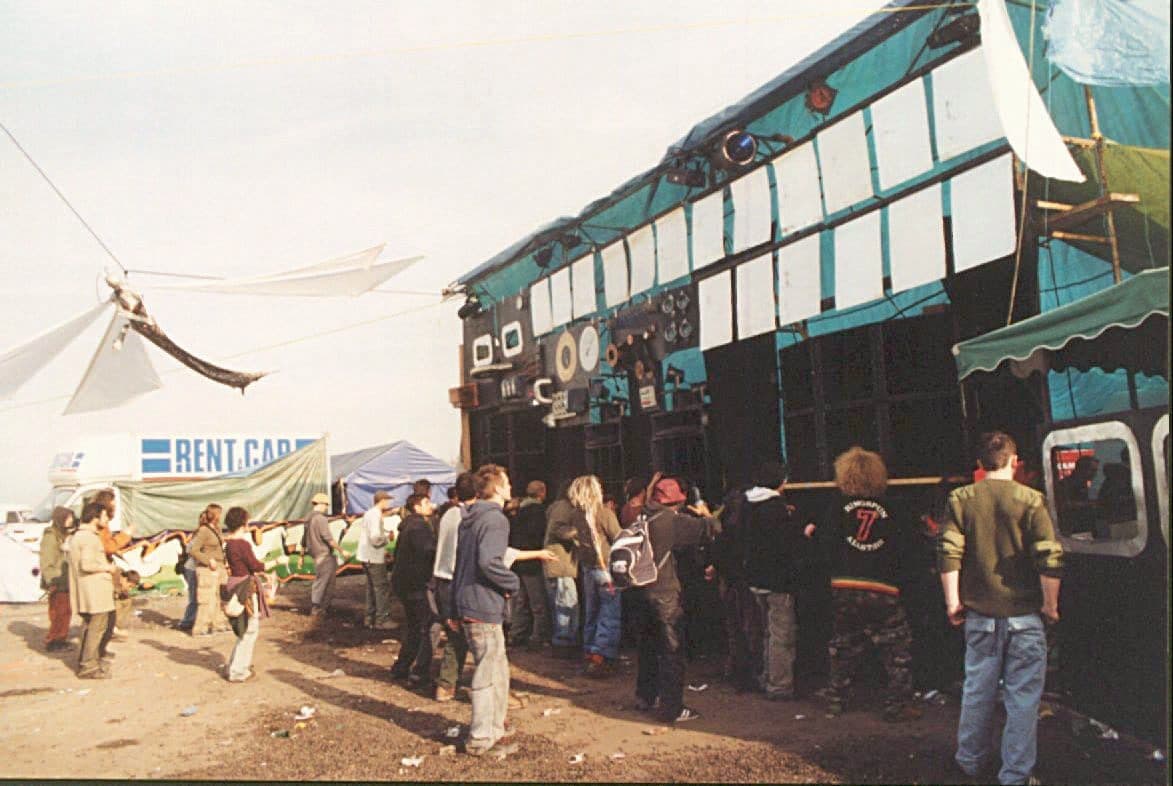
France is one of the homelands of teknival and freetekno culture, the sound-system convoys and open-air rigs that have rolled across the country since the 1990s. Turning the act of putting one on into a prison offence reads, inside the scene, as criminalising a way of life rather than policing a nuisance. The collective Tekno Antirep, formed in 2022, ran a wave of protest parties, its 'manifestives', across about thirty French cities between 30 May and 13 June, and is demanding both texts be dropped outright.
"Laws this repressive are completely out of proportion to people who just want to throw a party," said Kamille of Tekno Antirep.
Inside parliament the pushback came from the left: the ecologist senator Guy Benarroche and the communist Ian Brossat both warned the bills hand the state sweeping surveillance and seizure powers aimed at a cultural movement, not a crime wave.