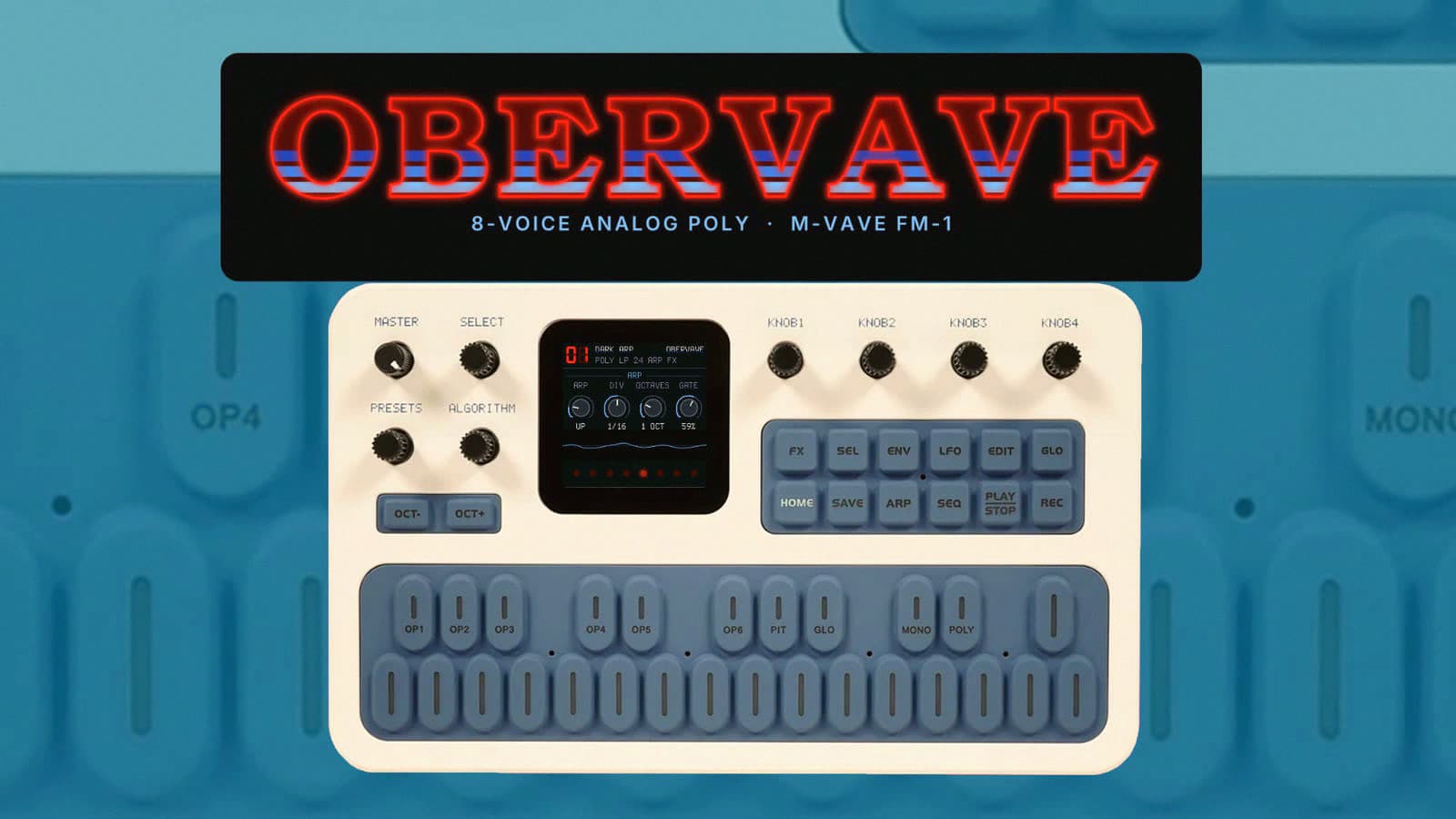
Two weeks ago, four separate teams dropped unauthorized custom firmwares for the M-VAVE FM-1 within 48 hours of each other: Groove OS, SLOOP, Felucca, X0X. None of it was sanctioned. M-VAVE hadn't blessed a single line of that code, and the usual playbook for a hardware brand staring down a pedal full of reverse-engineered firmware is a cease-and-desist, a bricked update, or silence. M-VAVE did none of that. On October 17, it launched "M-VAVE FM-1 Open," the brand's own sanctioned firmware and development project, and effectively told its hacker community: keep going, we're funding the workbench now.
What did M-VAVE actually open up?
The application source code ships under GPLv3 with an SDK linking exception. That split matters: the proprietary synth engine, the actual DSP doing the FM synthesis and sequencing math, stays closed, supplied to developers as a binary SDK. What opens is the application layer around it, the UI, the sequencer logic, the project and sample management. It's the same shape as a game studio open-sourcing its engine tooling while keeping the renderer proprietary: enough to let a community build real alternative firmwares without M-VAVE giving away the thing that actually makes the FM-1 sound the way it does.
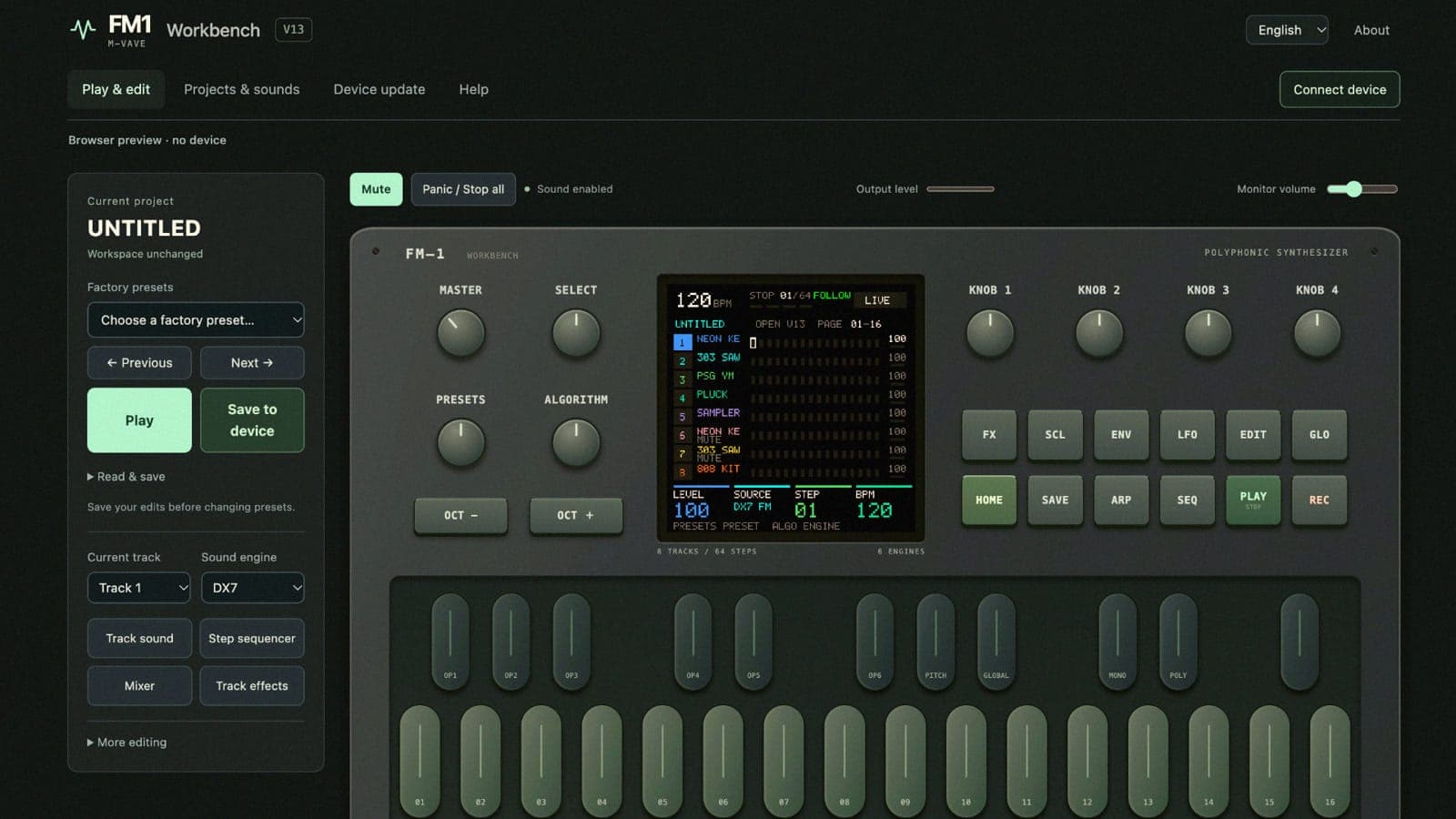
Alongside the code drop, M-VAVE shipped a browser-based workbench where anyone, device in hand or not, can poke through the stock instruments, edit a project, manage samples, or flash a build straight from the browser. The FM-1 itself still comes stock with a 6-operator FM synth, a 303-style bassline engine, an 808 drum machine, a chiptune synth, a pluck synth, and a sampler sharing eight sample slots across its tracks. None of that changes. What changes is who's allowed to rebuild it.
Why would a budget hardware brand do this?
Because the alternative wasn't working. SLOOP, Felucca, Lunar Modulator, JIANT FM, Ghoulbox, XoX: those names didn't appear because M-VAVE asked for them, they appeared because a sub-100-euro FM groovebox is cheap enough and hackable enough that a community formed around it anyway, authorized or not. That community is part of a much bigger one: a GitHub directory had already logged around 260 hardware-hacking projects spread across 19 brands by mid-October, a tally that includes everything from drum machine firmware forks to full sequencer rewrites on gear whose makers mostly have no idea the scene exists, or have actively tried to kill it.
Legalizing the hack doesn't just avoid a fight. It turns every unsanctioned firmware project already out there into free R&D for the next official feature.
M-VAVE choosing the open-invitation route instead of the takedown route is the actual story here, more than the firmware itself. The DIY synth and groovebox world runs on exactly this tension, companies tolerating, ignoring, or suing the people extending their hardware's life for free. Picking the side that says "build on this, officially" is rare enough that it's worth naming.
Is M-VAVE a longtime friend of the modding scene?
No, and that's exactly why this reads as a reversal rather than business as usual. M-VAVE isn't a historically open-source-friendly brand, which makes FM-1 Open a deliberate course change, not the natural next step for a company that was already cosy with modders.