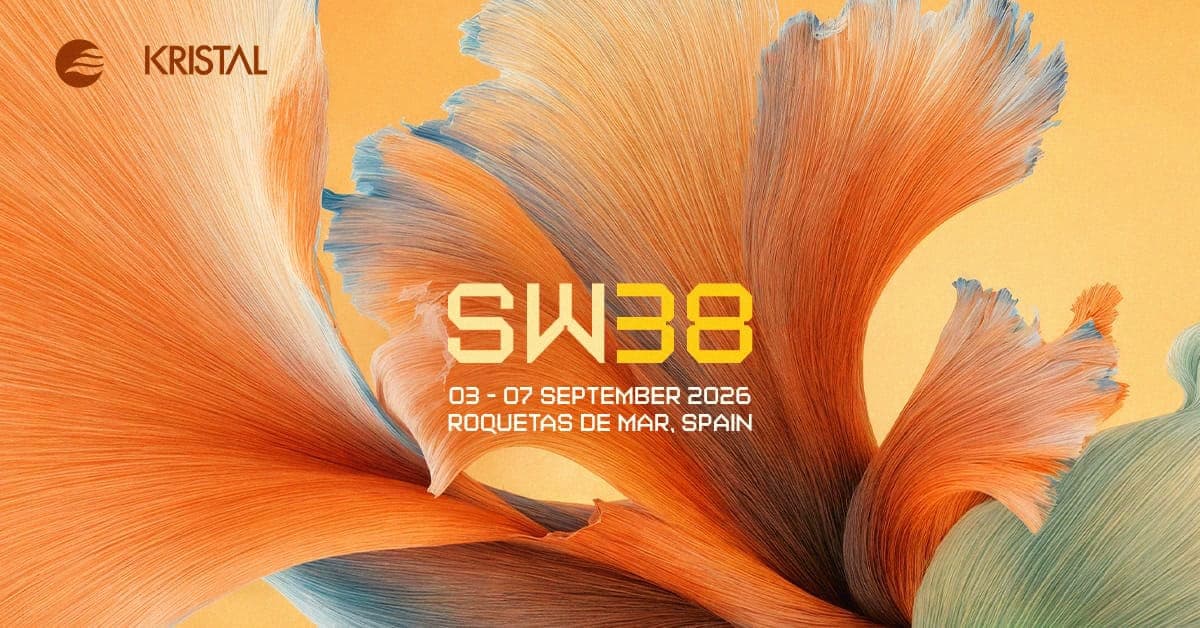
Manda Moor didn’t just play Sunwaves. For almost seven hours, she built a world around the dancefloor.
During her extended set at Sunwaves Festival in Spain, the French-Danish DJ took the crowd on the kind of slow-burning journey that longtime ravers increasingly say is disappearing from modern club culture. Few festivals still give DJs the time and freedom to build a set this way, and that is part of what makes Sunwaves so special.
For some Sunwaves veterans, it brought back memories of the festival’s earliest years: long sets, patient storytelling, fewer distractions, and the feeling that the DJ and dancefloor were going somewhere together rather than chasing one peak after another.
The reactions around the booth said almost as much as the music.
Some fans were crying. Others were laughing in disbelief, asking, “What are we supposed to do with our lives after this?” At one point, someone simply wondered out loud, “Is this woman insane?” while making mind-blown gestures.
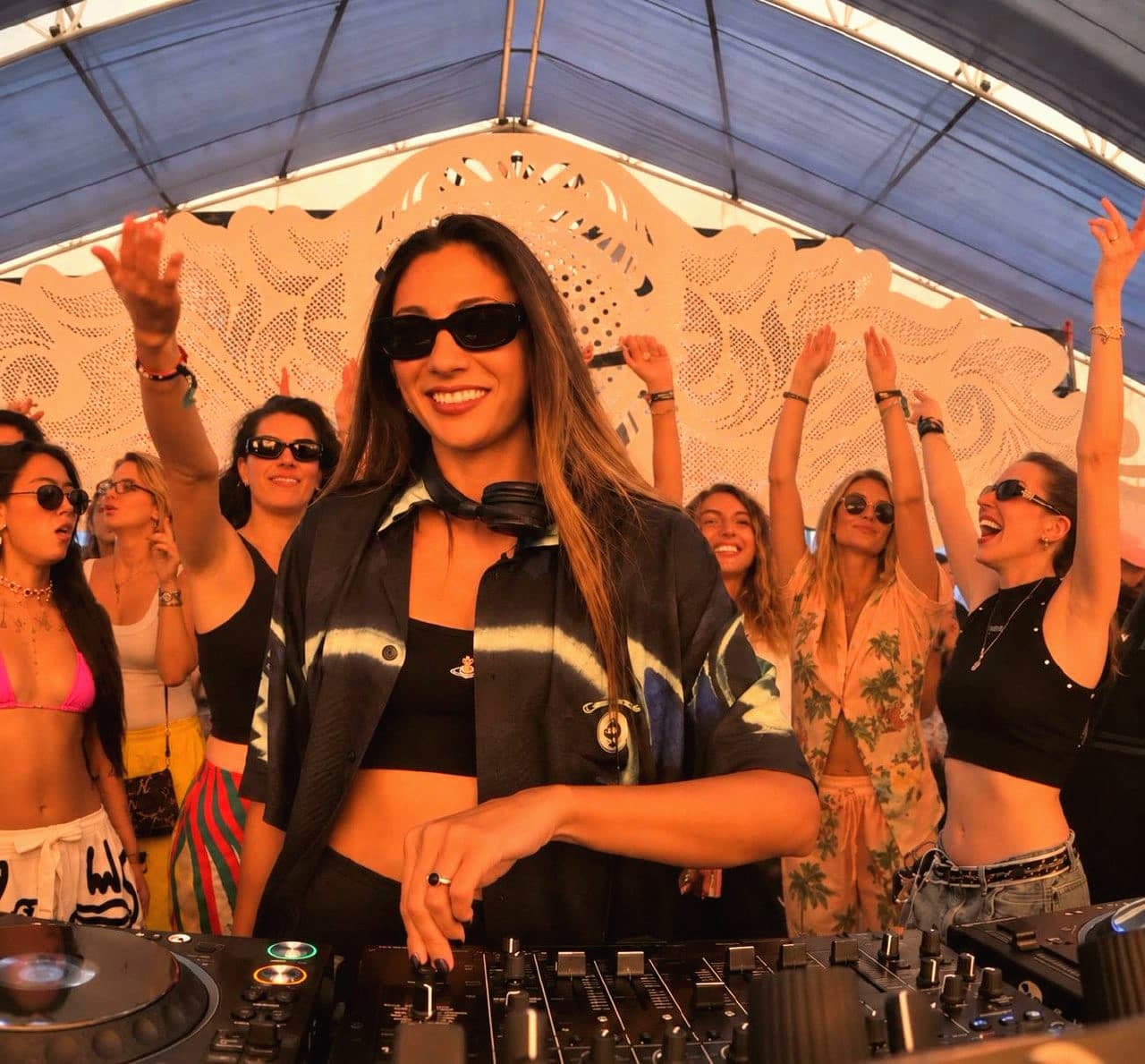
Around Manda Moor, the booth gradually filled with women dancing their hearts out for the entire set.
And that may have been one of the most interesting things about it.
There is sometimes a strange assumption that DJs need to “make the women dance” in order to attract a female crowd.
Manda Moor doesn’t need to guess what women want to hear.
That gives her particular brand of sexy, groovy house music an authenticity that is difficult to manufacture. The groove feels seductive without becoming soft, and sensual without losing power.
Some jokingly described it as “big D energy.” The phrase was funny, but it also captured something about the contradiction at the center of her sound: deeply sexy grooves delivered with enormous confidence, intensity, and class.
And the women on the dancefloor responded instinctively, organically turning her booth into the girls’ playground.
There was another layer to that, too: Sunwaves’ booker, Alexa, is also a woman. So this wasn’t only a story about a female DJ pulling women toward the booth. There was female instinct and taste shaping the night from behind the scenes as well as from behind the decks.
They weren’t being invited into someone else’s idea of what should make them dance. They were hearing a woman play music from inside that experience herself.
House music, after all, is very much a woman’s game too.
What made the almost seven-hour set even more striking was what wasn’t happening.
This wasn’t a performance engineered to make people jump every 15 minutes. There weren’t endless artificial drops or constant attempts to manufacture viral moments.
Phones were surprisingly rare in the air.
Several ravers who normally film a lot said they became so absorbed in the music that they simply forgot to touch their phones.
In 2026, that might be one of the greatest compliments a DJ can receive.
Dance music exists in the TikTok era now, where artists increasingly feel pressure to deliver instantly recognizable moments and audiences are assumed to have shrinking attention spans.
Manda Moor did almost the opposite.
She took her time.
She allowed tracks to breathe.
She trusted the groove.
And most importantly, she trusted that if she stayed committed to the journey, the crowd would follow her.
And for almost seven hours, they did.
There is something deeply reassuring about that.
It suggests that despite everything happening around club culture, algorithms, clips, drops, content, and constant stimulation, people are still capable of surrendering to a long DJ set and disappearing inside the music.
You just have to give them something worth following.
And perhaps one fan summed up what happened better than any review could.
After the set, he came over asking Manda for a photo. On his T-shirt were Jamie Jones, Marco Carola, Seth Troxler, and Joseph Capriati, each pictured with an angel halo, a personal pantheon of his house music heroes.
By the end of those almost seven hours, he said Manda Moor had been added to that list.
That is not a small place to be.
So keep an eye on Manda Moor. She might very well be part of the future of house music.