Who was Mickey Mann?
The names on a record sleeve are never the whole story. Behind the artists who defined British dance music in the 1990s stood a small circle of engineers who made the shows actually work, and Orbital had one of the best. Mickey Mann, an Aberdonian who died in a London hospital on 9 June, aged 65, spent thirty years at the mixing desk for some of the most important electronic acts this country produced. He was the man you did not see, standing at front of house, turning a bank of machines into a sound that could fill a field.
His route in was pure accident. At 16 he took a job at Aberdeen's Royal Cornhill Hospital and fell in with two psychiatric nurses, Colin Angus and Will Sinnott. When the pair formed The Shamen in 1985, they brought Mann along, first as a roadie and manager, soon as what everyone around the band called its third member. He was there for the rise that turned a Scottish psych outfit into a chart-topping rave act.
What did he do for Orbital?
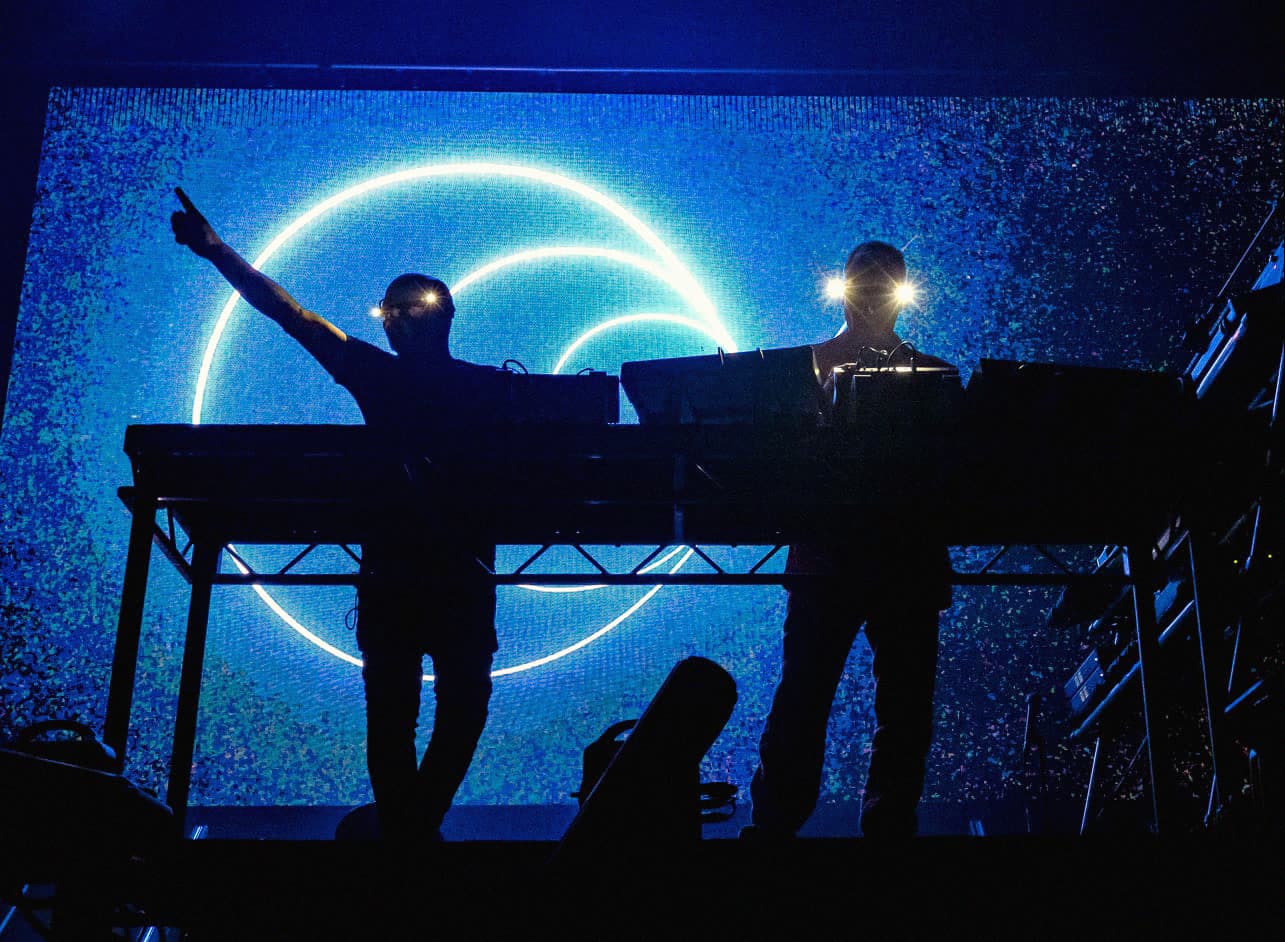
It was Mann who booked a then-unknown Orbital as support for The Shamen, and the connection stuck. For the next twenty years he ran Orbital's live sound, the unofficial third Hartnoll, trusted by Phil and Paul to translate their on-the-fly improvisation into something a crowd could feel. He went further than the desk: he is credited with extra production on 'Halcyon + On + On', the 1993 track that remains the band's most beloved moment.
Some reckoned him the third best sound engineer in the world. The people who worked with him did not argue.
That reputation travelled. His touring CV runs through Aphex Twin, Basement Jaxx, Moby, Meat Beat Manifesto, System 7, Curve and Ultramarine, with side trips touring alongside Nirvana for six months and Kylie, and an appearance on Top of the Pops. He also fronted his own project, Pressure of Speech, a darker strain of electronic music that John Peel championed on his show.
Why does a sound engineer's death matter to the scene?
Because the scene does not exist without people like him. House and techno are live music as much as they are records, and the difference between a transcendent night and a muddy one is usually a person at a console nobody in the crowd could name. Mann was that person for a generation of British electronic music, and the tributes that poured in after his death, led by his sister Jane, came from the artists who knew exactly how much of their magic ran through his hands. A fundraiser started by Sophie Slade is collecting 10,000 pounds so his family can bring him home to Aberdeen and mark his life properly.