What actually changed in firmware 3.0?
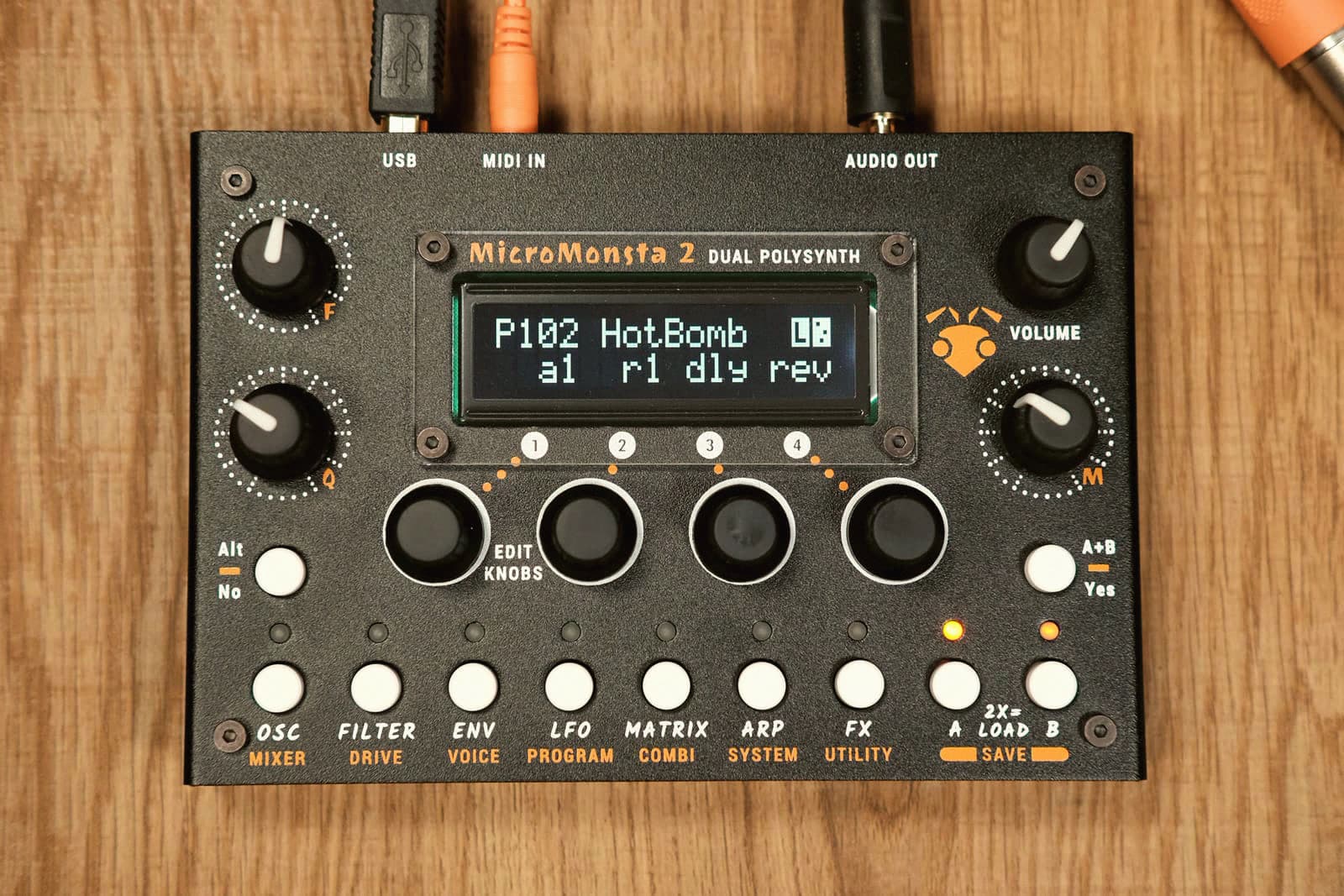
AudioThingies pushed firmware 3.0 for the MicroMonsta 2 on November 5, 2026, and it reads less like a patch note than a feature list for a far pricier synth. The headline add is polyphonic aftertouch: played from a compatible MPE-style controller, every held note now bends its own filter, pitch or modulation depth independently, a texture usually reserved for hardware costing several times the MicroMonsta 2's 315 euro price. Underneath that, the arpeggiator gained its own 16-step modulation sequencer, a dedicated lane that can push movement into any parameter in time with the arp rather than looping an LFO over it. The modulation matrix grew from 10 to 12 slots and picked up new destinations, among them delay, reverb and envelope sustain, places a lot of budget digital synths never let you patch into at all. AudioThingies also rebuilt the scaler and chord section, which now covers 21 scales and 63 chord types including different three and four note voicings, useful if you play chords by ear rather than program every note.
Why does a free update matter here?
The synth industry's usual move when a product needs more headroom is a new SKU: a Mk2, an XT, a "Pro" tier that pushes buyers to rebuy hardware they already own. AudioThingies instead kept developing the same 315 euro desktop unit it has sold since 2020, six years deep into its life cycle, and used firmware to catch it up to synths that launched this year. That's a real signal about how AudioThingies treats the MicroMonsta 2: as a platform to keep developing, not a product to sunset once the next model needs a reason to exist. For a bi-timbral synth built around a tiny footprint, 12 voices split two ways and three oscillators per voice, it also closes one of the few gaps that remained against bigger modulation-first instruments: aftertouch response that actually tracks per note, not just per channel.
Is the MicroMonsta 2 still worth a look in 2026?
At 315 euros including VAT, the MicroMonsta 2 was already a strong case for a desk or a bag: USB powered, MIDI in and out, headphone output, no screen real estate wasted on menus you won't use live. Firmware 3.0 doesn't change the hardware, but it changes what that hardware can be asked to do onstage, particularly for anyone running it from an MPE controller or leaning on scale and chord tools to improvise fast. Owners update for free through AudioThingies' own updater; nobody buying a new unit today will know the difference between launch spec and what ships now, which is exactly the point.