What exactly is the Miltone 4EXP?
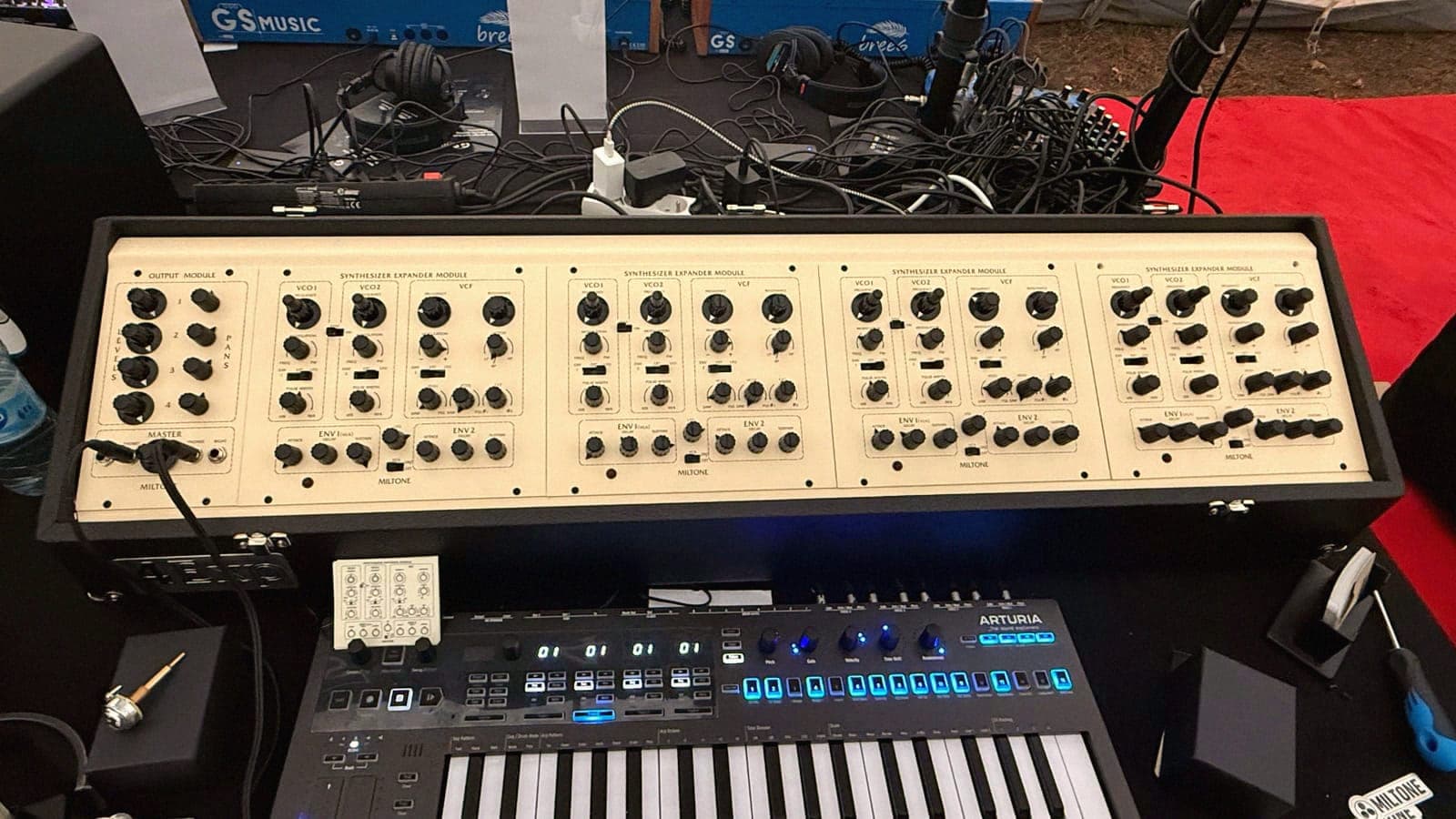
Miltone, a French outfit better known for restoring vintage synths, has built a full hardware recreation of the Oberheim Four Voice. The 4EXP is not a digital model and not a budget clone. It uses the original circuit topology and parts, and like the 1970s machine it is four independent Oberheim SEM modules sitting under one control section. Each unit is built to order and individually numbered, shipped with a printed user and service manual. For now it speaks CV/Gate only, with MIDI promised down the line.
Why does a clone cost as much as a used car?
Because it is closer to a hand-built reissue than a clone. The original Four Voice, which Tom Oberheim assembled in the mid-1970s, is one of the rarest and most expensive American polysynths on the vintage market, the kind of instrument that trades like a collector's item. Miltone's answer is to rebuild it properly: original-spec circuits, real components, a first run capped at 50 pieces. The aluminium version lands at 9,990 euros before VAT, the Tolex edition at 11,990. That is not a typo, and shipping is extra.
Where does that leave the rest of us?
This is the split in the vintage-poly world laid bare. On one side, faithful boutique rebuilds like the 4EXP that keep the exact sound and feel alive for those who can pay. On the other, mass-market budget clones and software emulations that put a version of the SEM voice in any bedroom for a fraction of the money. The Oberheim sound shaped a huge slice of electronic music, and right now it lives at both extremes, rarely in the affordable middle.
Original-spec circuits, real parts, 50 units. This is preservation priced as luxury.