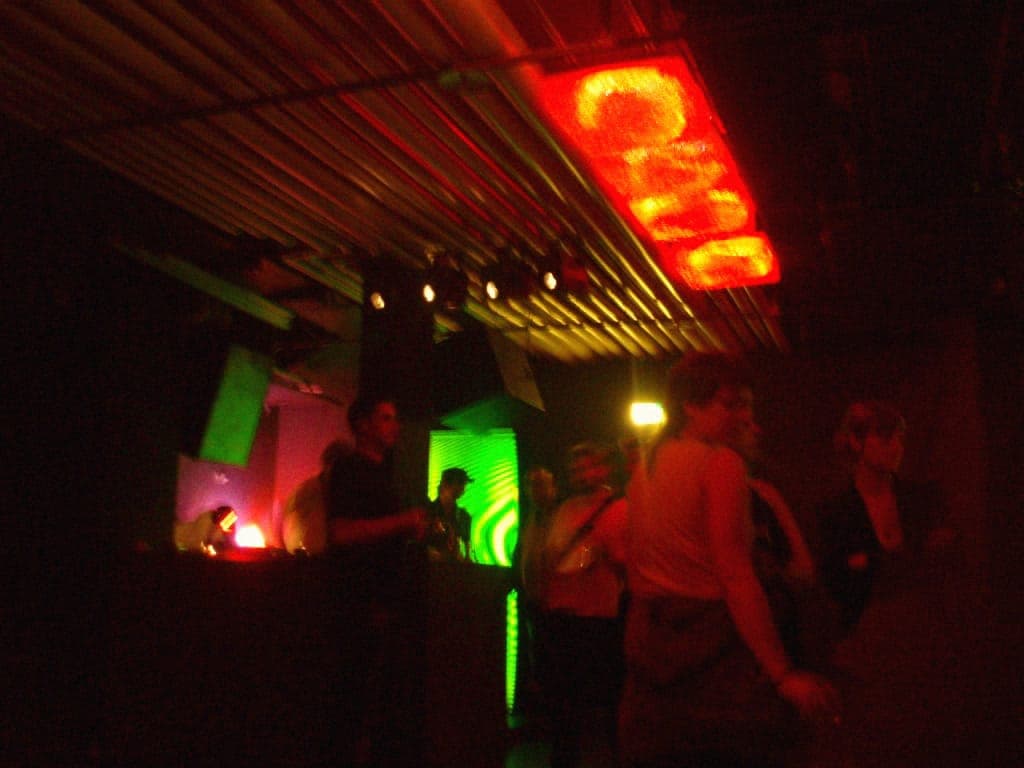
Peter Wacha never touched the drugs a Munich court just fined him 15,000 euros over. That's the point.
The license holder of Rote Sonne, one of the city's longest-running techno and house rooms, was convicted this month of negligently tolerating drug consumption and dealing at his own club. No forensic evidence put the contraband in his hands. He wasn't even on-site when police raided the venue in summer 2025. He was convicted anyway, for what happened around him.
What did the court actually convict him of?
Around 100 officers from Munich's riot and narcotics units searched Rote Sonne in the summer 2025 raid at the center of the case. They found drugs on 22 of the 101 guests present that night, a precision scale carrying drug residue tucked behind the bar, and safes stocked with prepared paraphernalia in the technical room behind the DJ booth. That's the physical evidence.
What there wasn't was DNA tying Wacha to any of it. His defense argued the club had already cleaned house: staff turnover, new security measures, a genuine attempt to fix what the raid exposed. The court fined him regardless, ruling that as license holder, he bore responsibility for failing to stop what was happening on his floor and in his back rooms, whether or not he personally knew.
Why is the prosecutor calling this a model case?
This is where the story stops being about one club. Munich prosecutor Jakob Schmidkonz has said, in comments to Suddeutsche Zeitung reported by Groove and Faze, that the verdict should carry model character for how the city enforces drug policy against clubs going forward. Translated out of the courtroom: this case is meant to be the template. The next time police want to build a case against a different Munich venue, they now have a conviction on the books that says an operator can be held criminally liable for guest behavior on the premises, without needing to prove the operator personally dealt or used.
The verdict, per the prosecutor's own framing, is designed to have model character for Munich's club scene, not just to close one case.
That shifts the legal ground under every operator in the city. A club can run security checks, brief staff, cooperate with police at a 2023 operator meeting, as Rote Sonne reportedly did, and still end up criminally exposed if guests keep getting caught. Doing things right on paper is no longer a guaranteed shield.
What does this mean for club operators beyond Rote Sonne?
Rote Sonne isn't some anonymous venue. Wacha, who also DJs as DJ Upstart, has been part of Munich's electronic scene since the early 1980s: he founded the record store Optimal, ran several labels, co-founded the club Ultraschall, and opened Rote Sonne in 2005. The venue itself is tightly woven into the city's underground circuit, long associated with the Public Possession crew and the Prince of Denmark label scene. If a 20-year fixture with that pedigree can be convicted on a negligence theory with no direct evidence against him, smaller or newer operators with less institutional standing have even less cover.
The fine itself, 15,000 euros, is not what makes this significant. It's the precedent a prosecutor is openly saying he wants other prosecutors and police units to reach for. Every club that has ever had a guest caught with drugs in a bathroom now has to reckon with the fact that a Munich court has already said that alone can be enough.