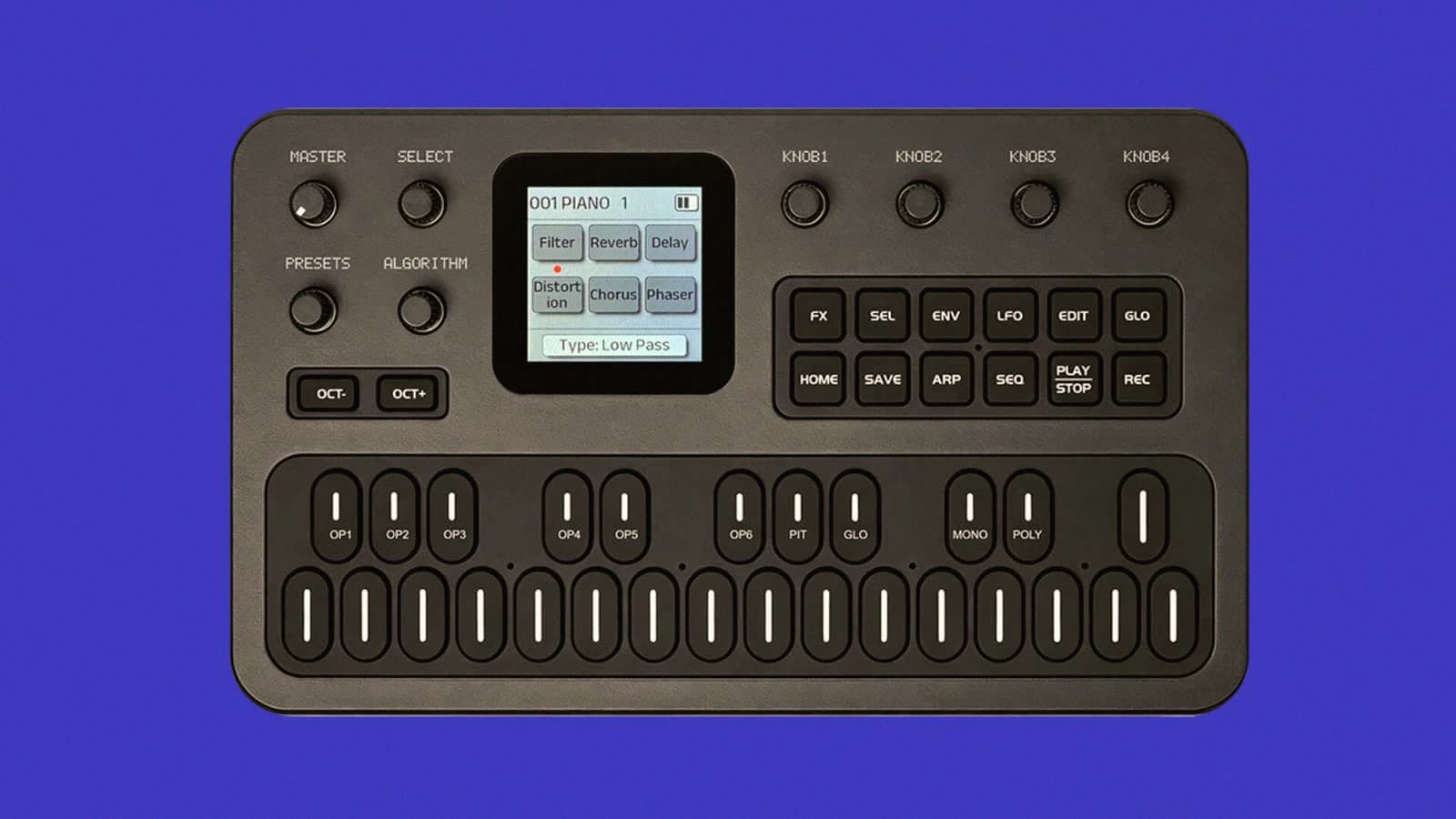
The M-VAVE FM-1 shipped in July as a cheap, slightly toylike 6-operator FM synth: 27 silicone keys, a built-in speaker, a $70 price tag. It was never meant to be four synthesizers. It is now.
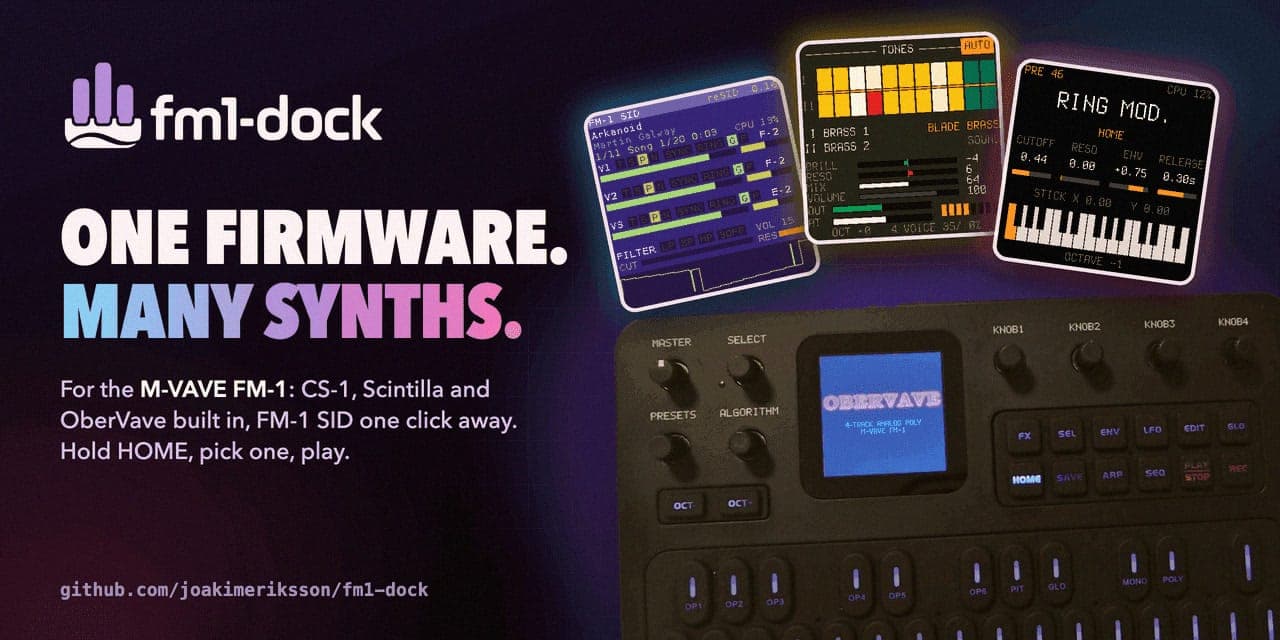
Developer Joakim Eriksson's new firmware, fm1-dock, turns the FM-1 into a dock that loads distinct synthesis engines instead of running one fixed sound engine. Hold HOME on the hardware, pick an engine, and play. No reflash, no reboot, per Synthtopia and corroborated by MATRIXSYNTH's coverage of the same release.
What are the four engines actually modeling?
This is not four presets. Each engine is a different synthesis architecture, built by different contributors and bolted onto the same cheap board. FM-1 SID runs a cycle-exact 6510 CPU and reSID model, meaning it plays actual Commodore 64 chiptune material, including GoatTracker 2 songs, on a pocket FM synth. OberVave, built by developer zvenson, is an 8-voice analog-style polysynth with two oscillators per voice, a morphing filter and its own sequencer and arpeggiator. CS-1, from contributor twochannels, models a CS-80-style architecture with two layers and velocity and aftertouch response. Scintilla is an integer C port of the 1981 Elka Synthex, the same analog polysynth Vangelis used on Blade Runner, now running on a plastic toy-synth chassis.
Hold HOME, pick one and play, with no reflashing.
Why does an open, hackable firmware matter here?
Because the hardware was never the interesting part. M-VAVE sells the FM-1 as a budget 6-op FM box, but the company itself leaned into the hack culture around it, officially opening the firmware to developers on October 20 with a browser workbench and SDK rather than fighting the modding scene. fm1-dock is GPL-3.0 licensed on GitHub, and the barrier to adding a fifth, sixth or tenth engine is now USB and C code, not a manufacturer's roadmap. For a working producer, that is the real shift: a $70 piece of hardware that gets more capable the longer a community keeps building for it, instead of becoming obsolete the day a newer model ships.
Who is actually behind these engines?
Joakim Eriksson wrote the fm1-dock architecture itself and the Scintilla port. OberVave and CS-1 came from separate contributors, zvenson and twochannels, publishing their own engines into the same dock rather than building standalone firmware forks. That is the detail that separates this from a one-off hack: the FM-1 now has a plug-in ecosystem, not just a mod.