Dancing Is Exercise People Want to Repeat
Most longevity advice eventually reaches the same conclusion.
You need to move.
Regular physical activity supports cardiovascular health, metabolic function, mobility, cognition and mood. The challenge is finding an activity people enjoy enough to continue.
Dancing solves that problem by making movement rewarding in the moment.
Research on structured dance interventions has found improvements across emotional wellbeing, depression, motivation, social cognition and some aspects of memory. A 2024 systematic review found dance to be broadly comparable with other forms of physical activity for many psychological and cognitive outcomes, with preliminary evidence of greater benefits in certain areas.
The strongest evidence comes from repeated dance programmes rather than occasional nights out. But it establishes an important foundation.
Dancing is not exercise-adjacent.
It is exercise.
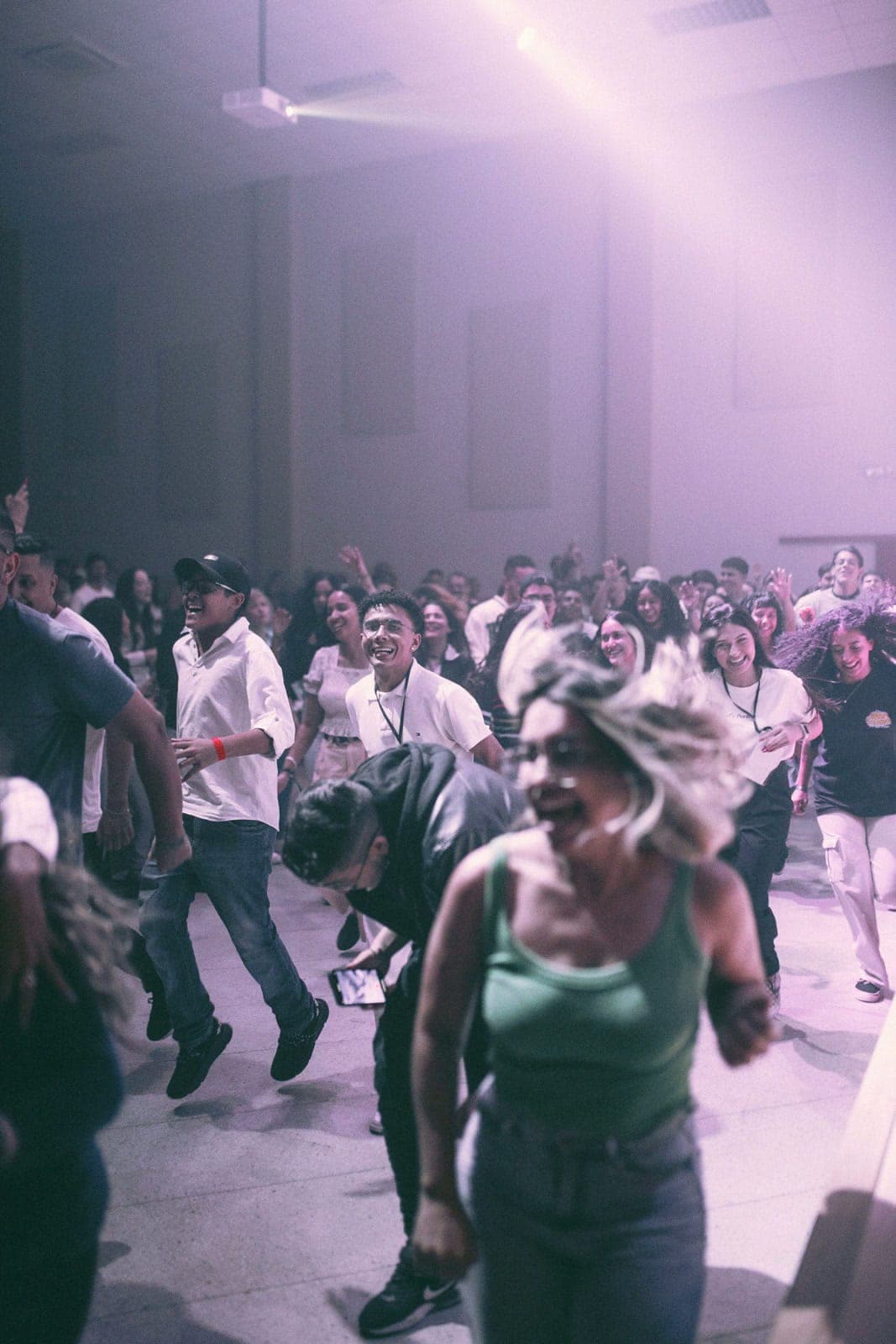
A rave can keep people moving for hours without making them feel as though they are completing a workout. Someone who would resist a treadmill may dance continuously because the music changes, the crowd responds and the experience remains emotionally engaging.
Attention moves away from effort and into rhythm.
That may be one of raving's greatest health advantages.
The best exercise is not necessarily the activity with the most sophisticated physiological theory. It is the activity people enjoy enough to repeat consistently.
Raving may possess something many conventional health programmes struggle to create: adherence through pleasure.
Fast Beats Change How Effort Feels
The beat is not background decoration.
Music changes the experience of physical exertion.
A major meta-analysis covering 139 studies and 3,599 participants found that music during exercise was associated with more positive feelings, improved physical performance, lower perceived exertion and slightly improved oxygen efficiency.
Faster music may also encourage higher movement intensity and more positive emotional responses in some forms of exercise, although the effect varies according to the activity, individual preference and research design.
This does not mean that a particular BPM has been proven to slow ageing.
It means that fast, motivating music can help people move harder or longer while making the effort feel more pleasurable and manageable.
Music gives the body timing. It creates anticipation. It supports repetitive movement and redirects attention away from fatigue.
On the dancefloor, exercise is not simply accompanied by music.
The movement emerges from it.
That creates a form of physical activity in which exertion, emotion and pleasure reinforce one another.
Most wellness culture treats health as something achieved by resisting desire.
Raving does the opposite.
It makes the healthy behaviour desirable.
Music Affects More Than Mood
Music is increasingly being studied as a health intervention in its own right.
Research has associated music-based interventions with changes in stress, anxiety, pain, emotional state and quality of life. The effects vary according to the population, music, setting and type of intervention.
Listening to a DJ set in a club is not identical to receiving structured music therapy in a hospital.
But the broader principle matters.
Music can regulate attention, shape emotion, support physical movement and give people a nonverbal way to experience or process feelings.
A rave intensifies those mechanisms because music is experienced physically and collectively.
Bass is felt through the body.
Rhythm organises movement.
Anticipation travels through the room.
Emotional peaks are shared in real time.
Music stops being a product consumed privately through headphones.
It becomes an environment.
That environment can help people enter a state of absorption where attention moves away from repetitive thinking and toward the body, rhythm and present moment.
This does not make music a substitute for therapy or medicine.
It does make it a serious psychological and physiological force.
Synchrony Turns a Crowd Into a Group
Exercise alone does not explain what happens on a dancefloor.
Ravers are not simply moving independently inside the same room. They are responding to the same rhythm, anticipating the same transitions and organising their bodies around a shared pulse.
Research suggests that synchronisation can change how people relate to one another.
In one controlled study, both physical exertion and synchronised dancing independently increased feelings of closeness between participants. They also increased pain tolerance, which researchers used as an indirect indicator associated with endorphin activity.
A later silent-disco experiment found that people who danced in full synchrony reported stronger social bonding and showed elevated pain thresholds compared with participants moving asynchronously.
The researchers did not find that bonding automatically made participants more cooperative in every later task.
But the study supported something rave culture has understood intuitively for decades.
Moving together can make strangers feel closer.
Electronic music may be technologically modern, but collective rhythmic movement is ancient.
Human beings have used drumming, dancing, chanting and repeated movement in rituals, celebrations, ceremonies and communal gatherings across cultures.
The DJ supplies the shared rhythm.
The crowd creates the bond.
The Longevity Crisis Is Also a Loneliness Crisis
Modern health culture treats wellbeing as an individual project.
Your sleep score.
Your diet.
Your supplements.
Your biological age.
Your nervous system.
But human health is deeply social.
In 2025, the World Health Organization reported that almost one in six people worldwide experiences loneliness. It estimated that loneliness is associated with approximately 871,000 deaths annually, equivalent to around 100 deaths every hour. The WHO also linked social disconnection with poorer physical and mental health, including cardiovascular disease, type 2 diabetes, depression and anxiety.
Loneliness and social isolation are related but different.
Loneliness is the subjective feeling that your relationships are insufficient.
Social isolation is the objective lack of regular contact, support or community participation.
A person can be surrounded by thousands of people and still feel lonely. A packed club does not automatically create connection.
But a genuine rave community can offer something increasingly rare: repeated, embodied participation with other human beings.
People see familiar faces.
They share music, rituals and memories.
They experience collective emotion.
They become part of a scene larger than themselves.
That can provide identity, belonging and social support.
The opposite of loneliness is not simply being near other bodies.
It is feeling involved.
At its best, the dancefloor creates exactly that.
Joy Is Part of Health
The longevity industry is often strangely joyless.
Health is framed as discipline, restriction, measurement and control.
But a longer life without pleasure, friendship, play or emotional vitality is not necessarily a healthier life.
Dancing can create positive emotion, self-expression and temporary relief from repetitive thought. It brings attention into the body and present moment.
It also gives adults permission to play.
These experiences are harder to measure than cholesterol, blood pressure or glucose.
That does not make them irrelevant.
Joy supports motivation.
Meaning keeps people engaged with life.
Pleasure makes beneficial behaviour easier to repeat.
People do not return to the dancefloor because they have calculated their cardiovascular output.
They return because it makes them feel alive.
That may be exactly why it works.
Sober Raving Makes the Health Case Stronger
The weakest part of nightlife's health equation is not the dancing.
It is the alcohol.
Alcohol is associated with dependence, cancer, liver disease, cardiovascular harm, injury, violence and impaired judgment.
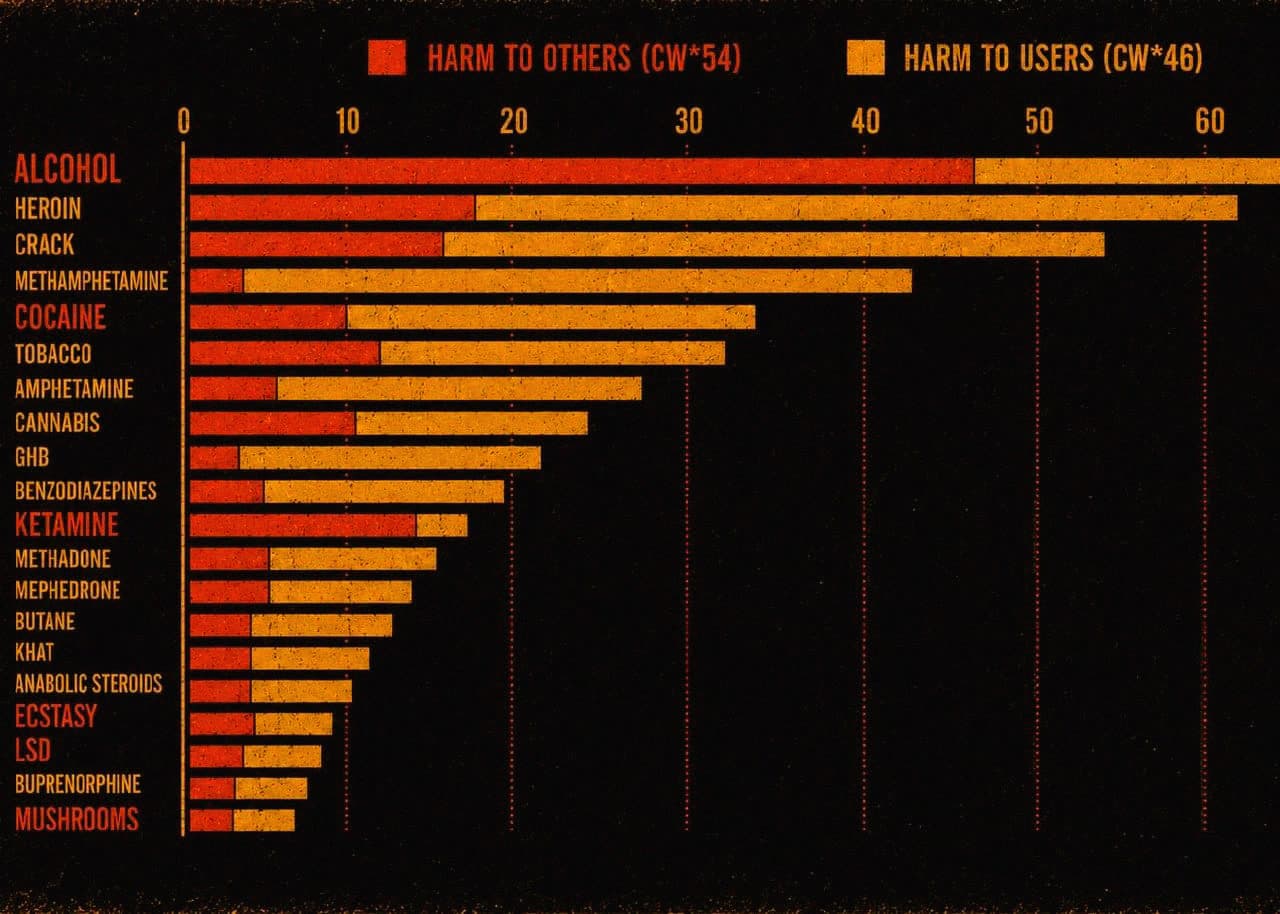
In David Nutt and colleagues' influential 2010 analysis published in The Lancet, experts ranked 20 substances across 16 criteria covering harms to users and harms to wider society.
Alcohol received the highest overall harm score at 72. Heroin scored 55 and crack cocaine scored 54. Psychedelic mushrooms were placed near the bottom of the ranking.
That does not mean one drink is more dangerous than every possible use of heroin or crack cocaine.
Alcohol ranked so highly partly because it is widely consumed and causes extensive harm across individuals, families and society.
But the findings expose a contradiction at the centre of nightlife culture.
Alcohol is treated as the normal social drug, even though it can undermine many of the health benefits the dancefloor offers.
A sober rave keeps the valuable parts intact.
The movement remains.
The music remains.
The bonding remains.
The emotional release remains.
The joy remains.
What disappears is the burden of intoxication, reduced coordination, impaired judgment and the long-term health risks associated with regular drinking.
Bryan Johnson's Don't Die movement has already brought this idea into mainstream longevity culture.
At the Los Angeles Don't Die Summit in January 2025, the programme opened with an hour-long morning rave at 10:30 a.m. The summit was built around health optimisation, longevity and community, and the rave served as its opening experience.
It was not a clinical experiment.
No biological-age markers were measured before and after the dancing, and no evidence was offered that one morning rave would extend lifespan.
Its importance was cultural.
Johnson is known for extreme biometric tracking, strict sleep routines, diet protocols and constant measurement. Placing a rave inside that world suggested that longevity cannot be reduced to private optimisation alone.
Movement matters.
Community matters.
Joy matters.
A person can follow the perfect biological protocol and still be lonely, disconnected or emotionally flat.
The morning-rave format also removes many of the features that make conventional nightlife difficult to reconcile with healthy living.
It does not require heavy drinking.
It does not require staying awake until sunrise.
It does not have to destroy the following day.
Sober raving preserves the exercise, music and community while removing one of nightlife's most harmful conventions.
The essence of raving was never alcohol.
It was movement, music and people.
Could Psilocybin Offer More Than Alcohol?
Psilocybin introduces a more complicated but scientifically interesting possibility.
Compared with alcohol, psychedelic mushrooms carry a much lower overall harm burden in Nutt's analysis. Psilocybin also has low dependence potential and comparatively low direct physical toxicity.
More importantly, it is being studied for effects that alcohol does not offer.
Clinical research suggests that psilocybin-assisted treatment may reduce symptoms of depression in some people, particularly when used with preparation, screening and psychological support.
A 2023 randomised clinical trial found that a single 25-milligram dose of psilocybin was associated with a clinically meaningful and sustained reduction in depressive symptoms and functional disability over six weeks.
More recent research has also reinforced an important caution: results are not uniformly positive across every trial or every outcome, and adverse psychological or physiological reactions can occur.
Psilocybin is also being investigated for its effects on brain plasticity and network flexibility.
The working theory is that psychedelics may temporarily loosen rigid patterns of brain activity and increase sensitivity to environmental and psychological input.
That could matter for healthspan.
Healthy ageing is not only about preserving the heart, muscles and metabolism.
It may also involve maintaining curiosity, emotional adaptability, psychological flexibility and the ability to form new patterns.
For some adults, a carefully approached psilocybin experience may enhance music, emotional openness, awe and feelings of connection.
But no study has shown that taking psilocybin on a dancefloor improves mental health, brain health or longevity.
The clinical evidence comes from screened and supported settings. A rave is a far less controlled environment.
Psilocybin can intensify pleasure and connection, but it can also intensify anxiety, confusion or sensory overload.
Dose, mindset, setting, medications and mental-health history all matter.
The responsible claim is therefore not that psychedelic raving is universally healthy.
It is that carefully approached psilocybin use may carry a lower overall harm profile than alcohol for some adults, while engaging mechanisms that are being studied for potential mental-health and brain-health benefits.
Microdosing Remains Unresolved
Microdosing appears especially compatible with the idea of functional, health-oriented raving.
Users frequently report greater energy, creativity, emotional openness, music appreciation and social connection without a full psychedelic experience.
But controlled research has not consistently confirmed those benefits.
Observational studies often produce positive findings, while placebo-controlled experiments tend to show smaller, inconsistent or absent effects.
Expectation appears to explain at least part of the experience.
That does not prove microdosing has no effect.
It means the evidence remains inconclusive.
Microdosing should not currently be presented as a proven health intervention, cognitive enhancer or longevity treatment.
The stronger comparison remains with alcohol.
A small psilocybin dose may avoid the dependence and organ-toxicity risks associated with repeated heavy drinking.
But lower harm does not automatically equal proven health benefit, and long-term microdosing safety has not been established.
The First Psilocybin Longevity Signal
The most provocative evidence arrived in 2025.
A study published in npj Aging found that psilocin, the active metabolite of psilocybin, extended the lifespan of cultured human lung and skin cells.
In a separate experiment, aged female mice treated with psilocybin showed improved survival compared with untreated mice. The researchers described the study as the first experimental evidence suggesting that psilocybin may have geroprotective properties.
The cellular experiments also suggested possible effects on oxidative stress, cellular senescence, telomere preservation and biological pathways associated with repair and ageing.
The findings are striking.
They are also early.
Cells in a laboratory are not people.
Mice are not people.
Improved mouse survival does not prove that psilocybin slows human ageing or extends human lifespan.
A 2026 paper published in the same journal examined the speculation around psilocybin and human longevity and made clear that direct evidence in people remains absent.
There are currently no clinical trials showing that psilocybin reverses biological age, delays human ageing or helps people live longer.
The accurate conclusion is that psilocybin has an early preclinical longevity signal.
That is more interesting than having no signal at all.
But it is not yet a human longevity benefit.
Raving as a Compound Health Experience
The health appeal of raving comes from the combination.
Movement raises the heart rate and trains the body.
Fast music increases motivation and enjoyment.
Synchrony strengthens bonding.
Community counters isolation.
Joy makes the experience rewarding.
Sober participation removes alcohol-related harm.
Carefully approached psilocybin may, for some adults, offer a lower-harm alternative to alcohol and potentially engage processes related to mood, openness and brain flexibility.
Most wellness interventions separate these ingredients.
Exercise happens in a gym.
Music happens through headphones.
Socialising happens over drinks.
Mental-health treatment happens in a clinic.
Longevity happens through private routines and constant tracking.
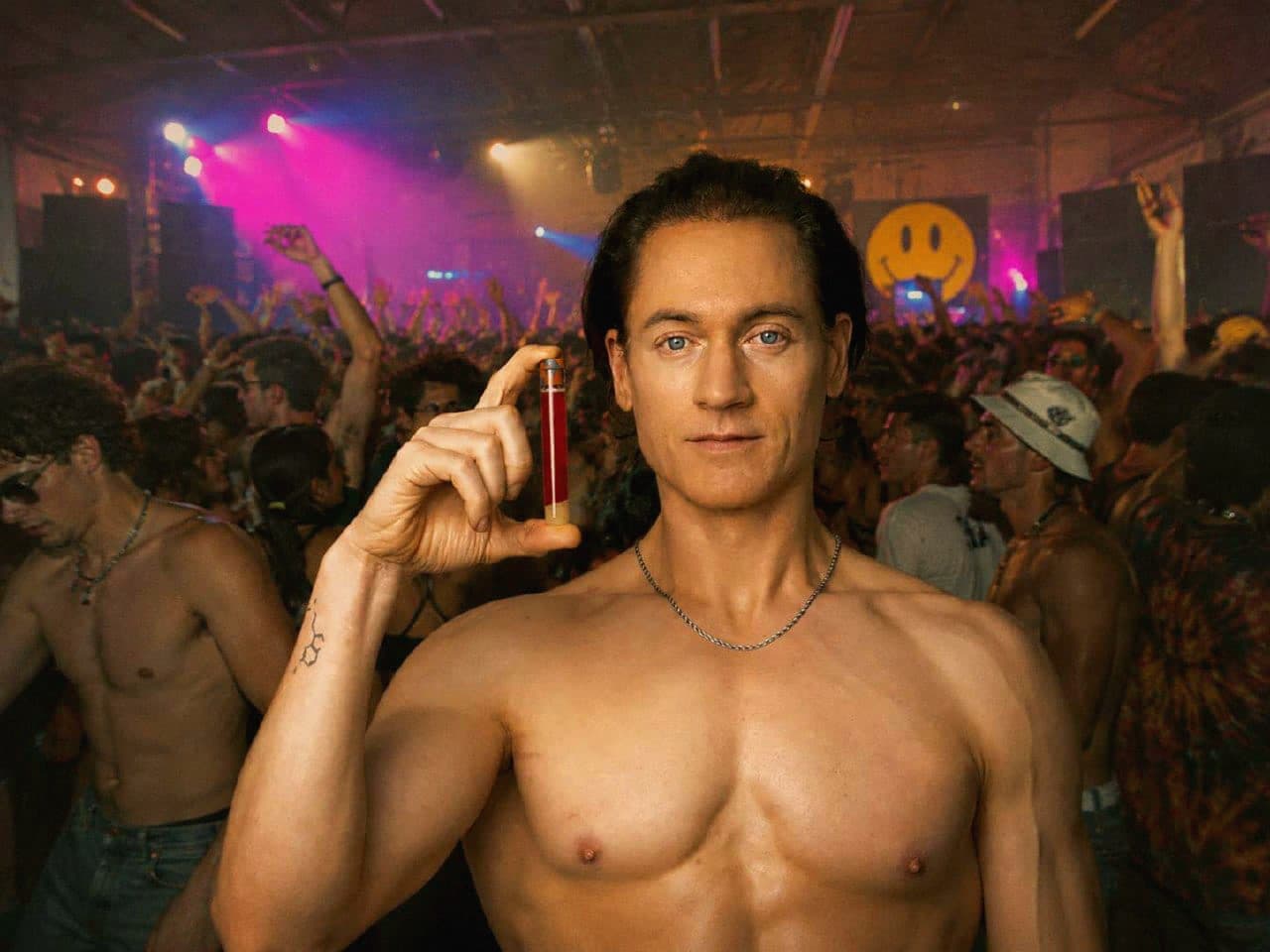
The rave puts movement, music, emotion and community in the same room.
That does not prove the combination is greater than the sum of its parts.
But it makes the dancefloor a legitimate health and longevity research question.
Like Any Physical Activity, Conditions Matter
Raving is not uniquely unhealthy because it can involve heat, exertion or dehydration.
Running a marathon can become dangerous without water, pacing and temperature management.
Contact sports carry injury risks.
Outdoor exercise can involve heat stress.
Almost every meaningful physical activity carries manageable risks.
The same standard should apply to dancing.
Hydration, ventilation, breaks, sensible duration and awareness of personal limits matter.
The most specific concern is hearing.
Prolonged exposure to high sound levels can damage hearing, regardless of whether someone is sober or intoxicated.
Sound management, quiet spaces and high-fidelity earplugs can reduce that risk without removing the central experience.
The question is not whether raving can be made completely risk-free.
Few worthwhile activities can.
The question is whether the benefits justify participating under sensible conditions.
By that standard, raving deserves to be evaluated alongside exercise, live music and community participation.
The Healthier Rave
A health-oriented rave does not need to become a sterile wellness retreat.
It still needs bass, sweat, intensity and release.
But it can be designed around conditions that preserve the benefits.
Daytime or early-evening hours can protect sleep.
Alcohol-free spaces can reduce intoxication-related harm.
Water, ventilation and rest areas can support sustained movement.
Sound management and earplugs can protect hearing.
Inclusive programming can bring together different generations and communities rather than treating dance culture as the exclusive property of the young.
These changes do not weaken the rave.
They reveal what was valuable about it all along.
The essence was never alcohol.
It was movement, music and people.