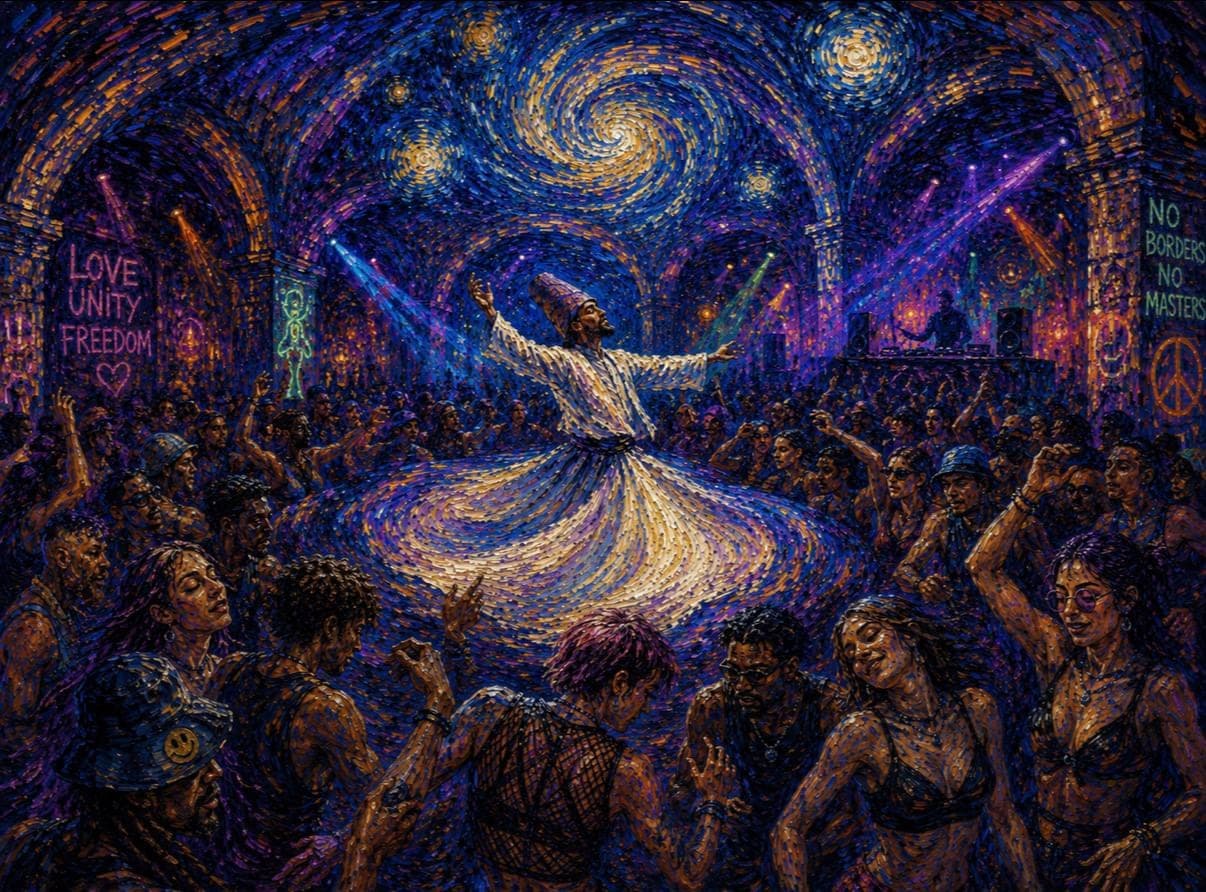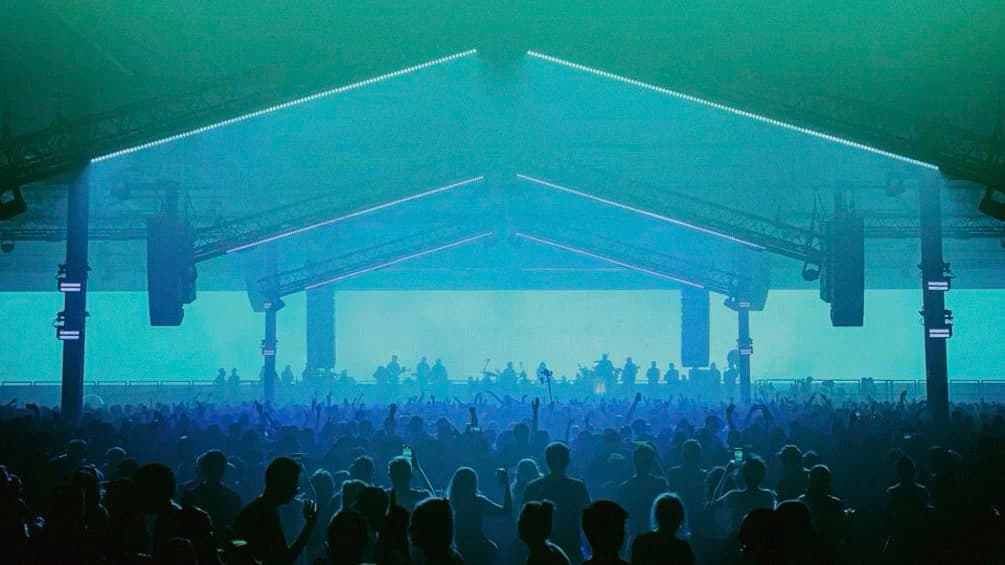
It's 2am, the kick drum has not let up in four hours, and you are grinning at a stranger because the breakdown just dropped. Anyone who has stood in that room knows house does something to your head. What is newer is that the people in white coats are starting to agree, and to measure it.
House was communal before it was clinical. It came up out of Black and gay Chicago at the start of the eighties, Frankie Knuckles reworking disco and gospel records at the Warehouse for a crowd that came to be held, not just to dance. "House is a feeling," the saying goes, and the feeling has always been church-shaped: a congregation, a steady pulse, a place that takes you in. The science is only now catching up to what the floor already knew.
What does the research actually say about dancing and your mind?
Start with one number: 91%. In a 2025 University of Leeds study published in Psychology of Music, Alinka Greasley, Alice O'Grady and Shauna Stapleton surveyed 136 women aged 40 to 65 who still go clubbing, and 91% said it contributed positively to their wellbeing, with most also reporting that electronic-music nights felt like home, connected them to others and gave them lasting friendships. One put it plainly: "Dancing has always been a form of therapy to me, losing myself to hours on a dance floor definitely helps me manage stress."
Why house, specifically?
Dig under the survey and you find the mechanism, and it runs straight through house's defining feature: the four-on-the-floor kick. A team at Oxford led by Bronwyn Tarr, in Robin Dunbar's group, showed that dancing in synchrony with other people, not just dancing hard, raises the pain threshold (a recognised stand-in for endorphin release) and makes dancers feel closer to the group. They reproduced it in a silent disco, so it is the moving-together, not the volume, doing the work.
Now think about what a 4/4 house track is. A steady kick on every beat is a metronome the whole room locks onto at once: nobody can drift, everyone lands on the same pulse. House is almost literally engineered to produce the in-time-together effect the Oxford work says drives endorphins and bonding. The gospel roots make sense of the rest, the call-and-response, the build to a release, the room moving as one body. "House is a feeling" turns out to be a fairly accurate description of a neurochemical event.
The floor gives you the two things modern life is worst at: a body that has moved, and a room that has you in it. House just keeps perfect time while it does it.
Why are sober and daytime raves suddenly everywhere?
If the active ingredients are movement, a shared pulse and connection, none of them need a drink. That is the bet behind the sober-rave wave. Daybreaker in New York and Morning Gloryville in London have thrown booze-free morning parties for over a decade, often with yoga and breathwork on the same bill as the DJ. CNN reported in January 2026 that the format is spreading fast, from matcha raves in Singapore to sunrise floors built for wellness rather than escape. A younger crowd that treats the hangover and the comedown as costs, not rites of passage, is voting with its feet, in daylight, on caffeine.
So is house just good for you, then?
No, and any honest insider will tell you so. The same floor that lifts you can flatten you. A 2025 study of the European nightlife scene found a real drop in wellbeing in the three days after MDMA use, the so-called "Tuesday blues," worsened by lost sleep, mixing substances and a shaky baseline. Chronic sleep loss alone is one of the surest ways to wreck your mental health. Benefit and harm live on the same dancefloor, and which one you carry home depends a lot on how you do it. That is why harm reduction and support matter: within the industry, Help Musicians runs Music Minds Matter, a line for everyone who builds these nights, because they burn out too. House can be medicine. It is just not a drug to take recklessly.