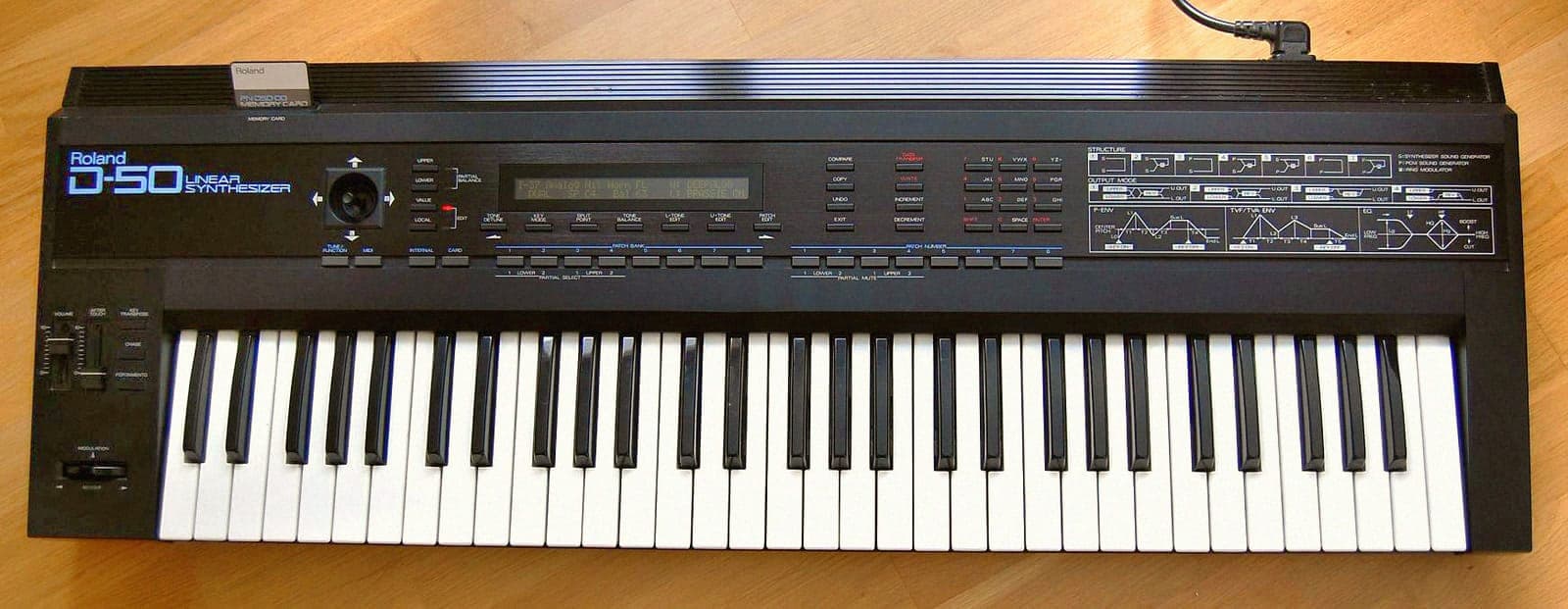
The Roland D-50 turned the corner from analog to digital synthesis in 1987 and became one of the defining sounds of late-80s and 90s house and pop records. What it never got was a decent way to manage its own memory. Thirty-plus years on, D-50 owners were still doing what owners did in 1989: swapping RAM cards in and out of the back panel and picking through a cramped internal bank just to find a patch.
That workflow is now optional. Independent synthesist Ian Dixon has built a free, browser-based editor and librarian for the D-50 that runs on Web MIDI, the same browser technology that has quietly turned Chrome and Edge into MIDI utility apps for gear with no official software of its own.
What does the tool actually do?
Dixon's editor connects to a D-50 over standard MIDI, enables SysEx, and pulls the synth's current edit buffer straight into the browser. From there it can receive a full bulk dump, save it as a local library backup, and import old SysEx bank files so decades of card sounds land in one searchable place. On the synthesis side, it exposes the D-50's upper and lower tone structure, its PCM and synthesis (LA) partials, ring modulation, and the filter and amp envelopes that gave the D-50 its glassy, cutting pad and bell sounds. Nothing gets uploaded anywhere: the tool works entirely client-side, so a patch library stays on the owner's own computer.
"My free Roland D-50 Editor Librarian is a browser-based Web MIDI tool for backing up, browsing, importing and editing D-50 sounds without sending your patch data to the cloud."
Why is a manufacturer-free fix the whole story?
Roland never shipped a modern editor for the D-50, and it has no commercial reason to build one for a 37-year-old discontinued synth. This is the same lane as beat-link and dysentery for Pioneer CDJs, or the open community tools that gave Mixxx DJs feature parity with commercial software: gear a manufacturer has moved on from getting a second life because someone in the community decided the workaround wasn't good enough anymore. For a synth whose entire memory system was designed around physical cards in 1989, a browser tab that reads and writes SysEx is a genuine generational leap, not just a convenience patch.
Who is Ian Dixon?
Dixon operates as an independent developer building free Web MIDI tools for vintage synths, distinct from commercial editor/librarian suites like Sound Quest's MIDI Quest or Patch Base, which charge for D-50 support. His D-50 tool follows a similar D-05/D-50 WebMIDI patch editor he put out in 2018, refined into a fuller librarian with bulk dump and import support.