Soundpaint has quietly become one of the more interesting free tools in sample-based production, and version 5.0, released September 22, 2026 according to the developer's own change log, pushes it further into territory usually reserved for paid synths.
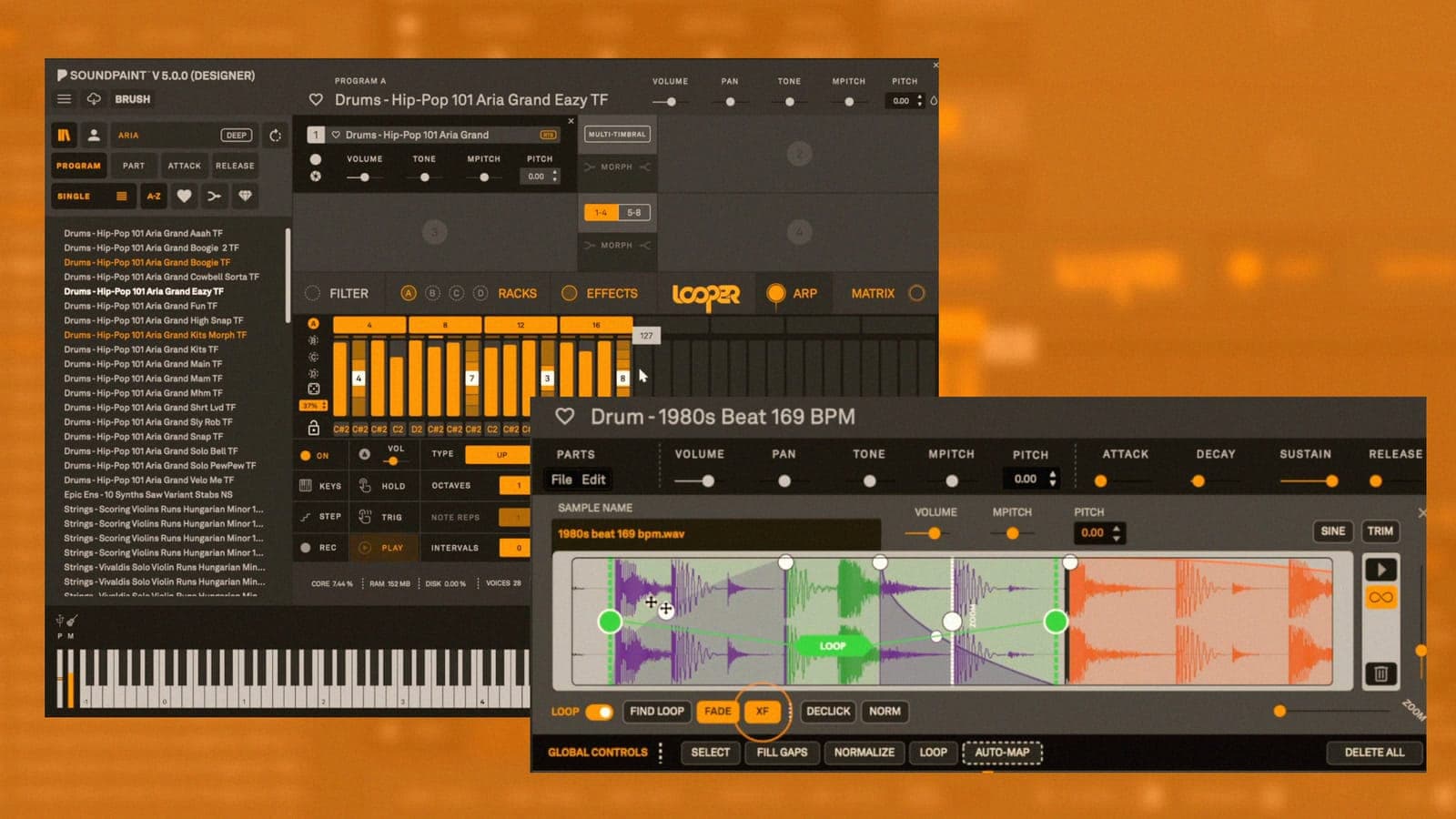
The headline addition is Brush, a built-in sample editor. Until now, turning your own recordings into a playable Soundpaint instrument meant leaning on external editors or the platform's more limited import tools. Brush folds that workflow into the app itself.
Why does a 2,000-step arpeggiator matter for house and techno producers?
The bigger shift is under the hood. Soundpaint's arpeggiator now supports up to 2,000 steps, reached by subdividing individual steps rather than running one flat sequence, and each step can carry its own stutter and glue settings, on top of new swing and inversion modes. That is the kind of granular step-sequencing depth that has historically been a selling point for paid synths like [[gear:xfer-serum|Serum]] and [[gear:reveal-sound-spire|Spire]], per KVR Audio's coverage of the release. For a producer building looped, sample-chopped house or tech-house lines, per-step stutter and glue on a free instrument lowers a real barrier: that kind of sequencing texture used to come bundled with a purchase.
Per the Soundpaint change log: "Up to 2000 steps, per-step stutter and glue, new swing and inversion modes."
The update also adds five new effects, Boost, Transient, Pump Shape, Limiter and Expander, and four new Racks, Micro Tune, Round Robin, Vintage Drift and the 505, plus a multi-timbral mode that hosts up to 32 instruments in one program, according to rekkerd.org's write-up of the release.
What's the catch with Looper?
There isn't really one, but there is a paywall this time. The core Soundpaint engine stays free for Windows and macOS in VST, VST3, AU, AAX and standalone formats, the platform's long-standing pitch of a "free engine for life." Looper, the new optional add-on, is a separate purchase: five parallel tape machines that can run synchronized or drift against each other, each capable of recording up to 60 seconds of audio from a microphone, system audio or Soundpaint's own instruments. It is priced at $69 as an introductory offer running through October 1, 2026, after which it moves to $99, according to Soundpaint's own product page.
Why it matters
Soundpaint's free-engine model has already made deep-sampled instruments accessible to producers who would never buy a $200 synth on spec. Shipping a 2,000-step arpeggiator and a built-in editor for free narrows the practical gap between what a bedroom producer can sequence and what a paid VST offers, without forcing a purchase to get there.
What we think
The smart move here is keeping the sequencing depth free and putting the paywall on something genuinely extra, the tape-machine workflow, rather than gating the arpeggiator itself. That is the right call for a platform that built its audience on "free for life." Whether Looper's $69 to $99 tape rig earns its keep against dedicated looping plugins is a separate question, but it does not touch what makes 5.0 worth downloading.