What exactly can artists upload now?
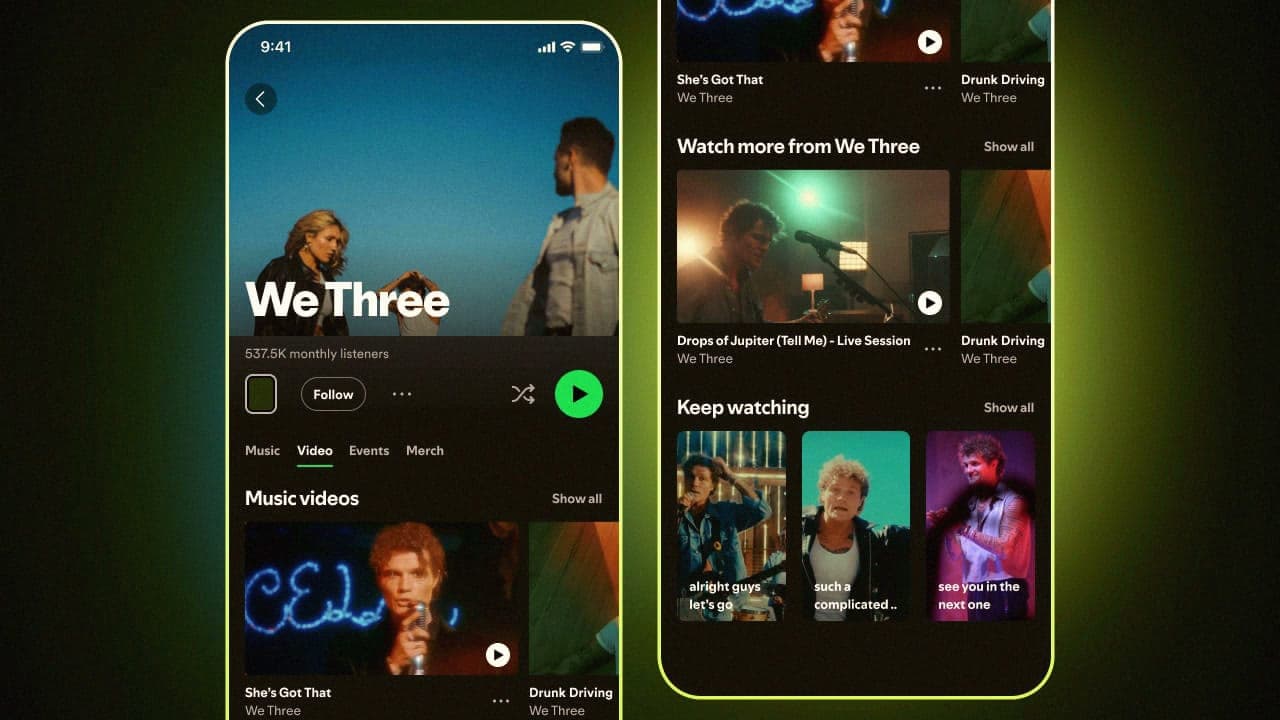
Through the Spotify for Artists dashboard, musicians in the beta can upload finished videos directly: official music videos, live sessions, acoustic versions, studio recordings, covers. The clips have to be tied to a release, contain music, and be shot landscape in 16:9. Spotify is leaving out visualizers, lyric videos, full concert films and anything without music, at least for now. Crucially, the videos are royalty-bearing and can count toward charts, so they are not just promo, they are a payable format.
Why does this matter for independents?
Until now, putting video on Spotify generally meant going through a label or distributor. Opening direct uploads removes that gatekeeper, which is the part independent and underground artists should care about. A producer with no label can now put a live take or a club video on the same platform where their streams already live, and earn from it. Spotify is dangling the numbers to push adoption: it claims a 64% lift in a song's streams in the three weeks after someone watches its video, and that viewers are 1.4 times more likely to save, share or playlist the track.
Is this a real threat to YouTube?
For two decades, YouTube has been where music video lives, and where a lot of artist video money is made. Spotify moving full-length video in-house, royalty-bearing and chart-eligible, is the most direct challenge it has mounted. It will not dethrone YouTube overnight, and the beta is small. But pulling video onto the platform that already owns the listening habit, and paying for it, is a serious play for a slice of attention and ad money that has lived on Google's side of the fence.